
As a Filipino traveling in Bali, warungs instantly reminded me of our neighborhood carinderias back home—rice, ulam, and lots of kwento in between bites.

Bali is one of the easiest places in Southeast Asia to eat well on a budget, especially if you know how to find real warungs in Bali instead of only tourist cafés and beach clubs.

After a few days of nasi campur and mie goreng, my Pinoy heart started craving adobo and sinigang, and that’s how I ended up at Kilig Filipino Warung in Ubud.
In this guide, I’ll show you how to eat like a local in Bali—on a budget—plus where to find Filipino comfort food when homesickness kicks in.
You’ll learn:
- What a warung is and how it works
- Typical Bali food prices (with PHP & USD estimates)
- How to “eat like a local” and avoid overpriced spots
- The best areas and styles of warungs to try
- Where to find Filipino food in Bali (hello, Kilig in Ubud)
Table of Contents
What Is a Warung in Bali?
A warung is a small, usually family‑run eatery that serves affordable, home‑style Indonesian and Balinese dishes in a casual setting. Think of it as Bali’s version of a Filipino carinderia—simple tables, a display of ulam dishes, and lots of locals eating on their lunch break.
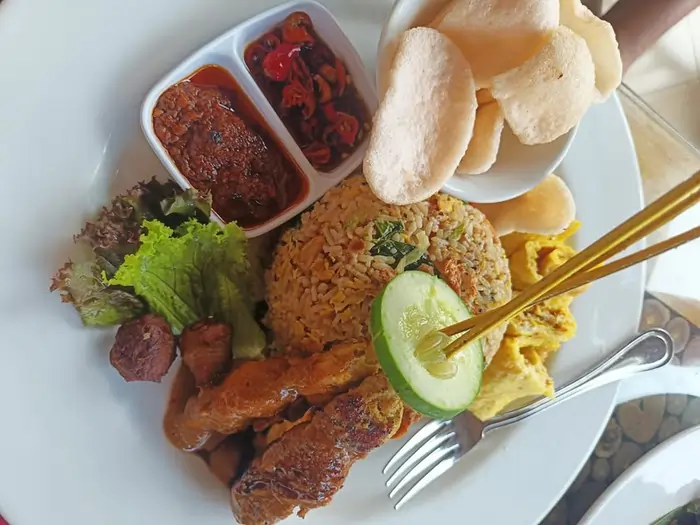
Typical features of a Bali warung:
- Family‑owned, often attached to a house or small shop
- Menu focused on nasi (rice dishes), noodles, and a few specialties
- Prices written on a board, wall, or simple printed menu
- “Point and choose” style: you pick your ulam for nasi campur from trays behind glass
Many warungs open from morning until late evening and are where locals grab their everyday nasi campur, nasi goreng, mie goreng, soto, and more. If you want a deeper primer, this expert guide to warungs in Bali breaks down types, etiquette, and what to expect.
How Much Does Food Cost in Bali Warungs? (With PHP & USD)
If you’re used to Philippine prices, Bali feels familiar or even cheaper, especially if you avoid tourist‑only spots. In early 2026, the average rate is around 1 IDR ≈ 0.0035 PHP (so 10,000 IDR ≈ 35 PHP) and 1 IDR ≈ 0.00006–0.00007 USD.

Typical warung prices:
- Nasi campur (mixed rice plate): 15,000–35,000 IDR (~55–120 PHP / 1–2.5 USD).
- Nasi goreng / mie goreng: 20,000–40,000 IDR (~70–140 PHP / 1.5–3 USD).
- Sate portions: 20,000–50,000 IDR (~70–175 PHP / 1.5–3.5 USD).
- Ayam / bebek dishes: 40,000–80,000 IDR (~140–280 PHP / 3–6 USD) at popular spots, especially touristy areas.
- Drinks (tea, water, basic juices): 5,000–20,000 IDR (~18–70 PHP / 0.3–1.5 USD).
If you mostly eat in warungs, many travelers manage with a daily food budget of around 150,000–250,000 IDR (~525–875 PHP / 9–15 USD) for three meals plus a snack or drink.
If you want to check updated rates, you can quickly verify using tools like XE’s IDR–PHP converter or the Wise IDR–PHP rate history.
Must‑Try Local Dishes at Warungs
To really eat like a local, focus on dishes that keep appearing in Bali food guides, local blogs, and warung menus.
- Nasi campur (mixed rice): Rice with small portions of ulam—curried vegetables, fried tempeh, a bit of chicken, sambal, sometimes sate lilit.
- Nasi goreng: Indonesian fried rice with egg, vegetables, and meat; the safest “first dish” for many tourists.
- Mie goreng: Stir‑fried noodles with vegetables and meat, very similar comfort energy to pancit.
- Sate lilit: Minced fish or chicken mixed with grated coconut and spices, wrapped around a lemongrass stick and grilled.
- Bebek betutu / ayam betutu: Duck or chicken marinated in rich spice paste, wrapped in banana leaves, and slow‑cooked until tender.
- Soto ayam: Turmeric‑yellow chicken soup with noodles, egg, and herbs—light, comforting, and flavorful.
For more background and examples, you can check this local explainer: What to eat in Bali: 7 dishes and places you will crave for more.
Note for Filipino and Muslim travelers: babi guling
Babi guling is an iconic Balinese pork dish prepared as a whole roasted suckling pig, deeply rooted in Hindu‑Balinese ritual and celebration.
Many Filipinos who love lechon will find it familiar and exciting, but remember: this is specific to Bali and a few other Hindu‑majority pockets; in most of Indonesia (which is predominantly Muslim), pork dishes like babi guling are much harder to find.
Eat Like a Local: How to Find Real Warungs (Not Just Tourist Cafés)
Bali is full of Instagrammable cafés and beach clubs, but if your goal is budget‑friendly, authentic food, warungs are your best friends.
Signs you’ve found a good local warung:
- More locals than tourists at the tables, especially during meal times
- Pre‑cooked dishes displayed behind glass, with steady turnover
- Simple interior—plastic chairs, plain tables, sometimes a TV in the corner
- Clear, reasonable prices and no surprise “++” charges
Tips:
- Walk one street behind the main tourist road; that’s usually where cheaper local warungshide.
- Go at local lunch hours (around 12:00–13:30) to see where workers and families eat.
- Learn a few phrases like “nasi campur satu, pedas sedikit” (one mixed rice, a bit spicy) to make ordering easier.
For more guidance, you can read this detailed breakdown: Warungs in Bali: An Expert’s Guide. Another perspective on budget spots is this list of cheap eats across Bali.
Best Areas in Bali for Local Warungs and Cheap Eats
Rather than chasing only viral names, it helps to know which neighborhoods are naturally full of local warungs.
- Ubud (Gianyar)
Around Ubud Market, Ubud Palace, and streets like Jalan Gootama, you’ll find small warungs tucked between guesthouses, shops, and rice fields. Ubud is great for nasi campur, vegetarian‑friendly warungs, and cozy spots with rice‑field views. Guides like Cheap Eats Bali: Best Budget-Friendly Places to Eat often highlight Ubud as a top area. - Canggu (North Kuta)
Behind Batu Bolong and Berawa’s main café strips, there are warungs serving nasi campur, nasi goreng, and Indonesian comfort food to locals and workers. Some cheap‑eat lists and vlogs like “Shockingly Cheap Eats!! Tasting Canggu, One Warung at a Time” show how many full meals stay under 50,000–60,000 IDR. - Seminyak & Kuta (Badung Regency)
These areas are known for tourist restaurants and nightlife, but if you step away from the beachfront roads into more residential streets, you’ll still find affordable warungs and small noodle shops. - Jimbaran & Denpasar
Jimbaran is famous for beachfront seafood dinners, while Denpasar has more everyday local warungs at lower prices than main tourist hubs.
To see concrete examples and addresses, you can look at:
- 30 Best Cheap Eats in Bali
- Cheap Eats Bali: Best Budget-Friendly Places to Eat
- 18 Best Warungs & Indonesian Food in Bali
- Best Warungs in Uluwatu 2026
You can also get a feel for budget picks via traveler‑curated lists like Tripadvisor’s “Cheap Eats in Bali”.
How to Avoid Bali Belly While Eating Local
You can enjoy warung and street food and still protect your stomach with a few simple habits.
- Pick busy warungs where food doesn’t sit too long; high turnover usually means fresher food.
- Choose freshly cooked dishes—grilled, fried, or boiled—over items that look like they’ve been out for hours.
- Be careful with raw salads and ice from unknown sources, especially in smaller stalls.
- Drink bottled or filtered water, and sanitize your hands before eating.
Most food‑savvy Bali resources repeat the same advice: if a place is clean, busy, and cooking food hot, your chances of a smooth stomach are much higher.
Filipino Perspective: Bali Food Feels Like Home (But Different)
If you’re Filipino, Bali’s warung culture will feel oddly familiar. Rice at the center of the plate, ulam all around, soup options on the side—it’s basically a different version of “kanin + ulam + sabaw.”
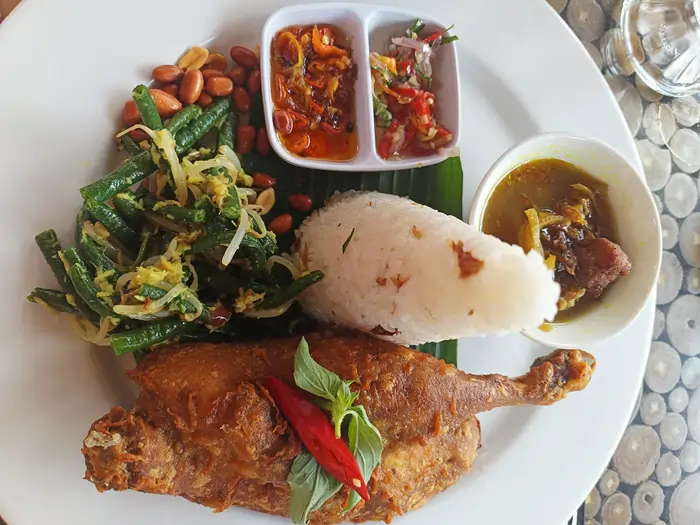
Similarities:
- Rice and ulam style eating—nasi campur looks like a Balinese cousin of our turo‑turo plates.
- Comfort dishes: fried chicken, soups, grilled skewers that feel like home.
- Family‑run, community‑based places where regulars chat with the owners.
Differences:
- Everyday spices: more turmeric, galangal, lemongrass, and different sambal styles compared to Filipino sawsawan.
- Hindu‑Balinese specialties like babi guling and betutu, which you won’t find often in the Philippines.
- Sambal matah—a raw shallot and lemongrass chili mixture—that gives a fresh, sharp kick instead of our usual calamansi‑soy‑chili combo.
As a Filipino in Bali, you get the best of both worlds: food that feels close to home, but with flavors and rituals that remind you you’re in a different island culture.
Kilig Filipino Warung: Filipino Comfort Food in Ubud, Bali
In the middle of Ubud’s Balinese and international food options, Kilig Filipino Warung is a home away from home for Filipinos and anyone curious about Pinoy food. “Kilig” is that joyful, excited feeling we use in Filipino, and the restaurant is designed to give you that with every kagat (bite).

Kilig Filipino Warung sits along Jl. Raya Goa Gajah No.94 in Peliatan, Gianyar—just a short ride from Ubud Palace and Ubud Art Market, but far enough that you’re eating with rice‑field views instead of traffic noise.
Founded in 2024, it was born from a desire to share Filipino cuisine and hospitality with Bali’s locals, expats, and tourists. The restaurant is owned and managed by Chef Juan Gadi.
You can explore their story and menu here: Kilig Bali – A Filipino Restaurant in Bali or on their main homepage What to Order at Kilig.
Kilig Bali focuses on traditional Filipino dishes cooked with high‑quality ingredients and a mix of Filipino and local produce.
Highlights include:
- Adobo (chicken, pork, or mushroom)
Classic soy‑vinegar‑garlic adobo with options for meat or mushroom; the mushroom version is a nice plant‑based twist for veggie‑leaning travelers. - Lechon & Lechon Belly Sisig
Crispy, tender lechon belly served as is or chopped into sizzling sisig with that perfect mix of crunchy and savory. - Lumpia
Filipino‑style spring rolls, ideal as sharable starters before your main dish. - Sinigang
Sour tamarind soup that hits differently when you’re abroad—perfect when Bali weather turns rainy or you just miss home. - Mango Sago & other desserts
Sweet Mango Sago and other desserts that end the meal on a nostalgic note.
Reviews on Tripadvisor’s Kilig Filipino Warung page describe Kilig as a gem in Ubud with authentic Filipino flavors, warm staff, and a cozy bamboo hut setting. You can also follow them on Facebook for promos or special menus.
Why Include a Filipino Restaurant in Your Bali Budget Itinerary?
Even if you aim to eat cheap in warungs most days, planning one “comfort food” stop can make your trip feel more balanced.
Why Kilig deserves a spot in your itinerary:
- Emotional reset: After days of unfamiliar spices, adobo, lechon, and sinigang taste like a hug from home.
- Unique story: “I ate like a local in Bali and also found a Filipino warung with rice‑field views” is a stronger story than just listing cheap nasi goreng spots.
- Cultural bridge: You can share Filipino food with new friends you meet in Bali—travelers, expats, even locals curious about our cuisine.
One‑Day “Eat Like a Local” Itinerary (With Kilig Stop)
Here’s a sample day you can follow or adapt—and it works perfectly as a blog or video script structure.
Breakfast – Local warung near your stay
Find a nearby warung and order nasi campur, nasi goreng, or mie goreng with coffee or tea. It’s simple, filling, and usually very affordable.
Lunch – Ubud warung + market snacks
Head to Ubud centre around Ubud Market, Ubud Palace, or Jalan Gootama and pick a busy warung for sate lilit, bebek/ayam dishes, or soto ayam. Grab a snack or dessert from a nearby stall.
Late afternoon – Filipino comfort stop at Kilig
Make your way to Kilig Filipino Warung in Ubud for early dinner or heavy merienda. Order adobo, lechon belly sisig, lumpia, or sinigang and enjoy the rice‑field views and Filipino hospitality.
Evening – Night warung or seafood
If you can reach Jimbaran, try a beachfront seafood dinner once during your trip. Otherwise, return to a local night warung in Ubud or Canggu for one more cheap, local meal before ending the day.
FAQ: Cheap Eats, Warungs, and Filipino Food in Bali
Is food cheap in Bali?
Yes, food can be very cheap in Bali if you eat at local warungs, where dishes like nasi campur, nasi goreng, or mie goreng often range from 15,000–40,000 IDR (~55–140 PHP / 1–3 USD).
What is a warung in Bali?
A warung is a small, usually family‑run eatery serving home‑style Indonesian and Balinese dishes at affordable prices—similar to a Filipino carinderia.
Where do locals eat in Bali?
Locals mainly eat at warungs and small street‑side spots near markets, schools, offices, and residential streets, not just on the main tourist roads.
How much should I budget per day for food in Bali?
If you mostly eat in warungs, a daily food budget of around 150,000–250,000 IDR (~525–875 PHP / 9–15 USD) works for many travelers, covering three meals plus snacks or drinks.
Is there Filipino food in Bali?
Yes, Kilig Filipino Warung in Ubud serves Filipino favorites like adobo, lechon belly sisig, sinigang, lumpia, and Mango Sago in a cozy, rice‑field setting.
Is Bali street food safe to eat?
Many travelers enjoy Bali street food and warung dishes without issues, especially at busy spots with high food turnover, but it’s still best to choose freshly cooked food and drink bottled or filtered water.
