
Last Updated: April 9, 2026
Davao City is a premier food destination in the Philippines, famous for being the country’s durian capital. Essential local eats include fresh Durian and processed treats like Durian Candy from Apo ni Lola, the classic breakfast of Puto Maya & Sikwate at Delmar Painitan, and the fiery Halang Halang beef soup. Don’t miss Mindanao’s halal heritage dishes like BBQ/Satti and Balbacua, a slow-cooked beef stew. For the best pasalubong, visit Apo ni Lola Pasalubong Center or Bankerohan Public Market.
Let me tell you something about Davao.
Most people think of this city as a pit stop—a place you pass through on your way to Samal’s white beaches or Mount Apo’s challenging trails. But here’s the thing: Davao is the kind of food destination that rewards those who linger. This is a city built on abundance, where the soil is so rich that everything from cacao to the infamous durian grows with an almost arrogant ease.
Davao’s food story is uniquely Mindanaoan. It’s a beautiful collision of indigenous traditions, Visayan migrant influences, and halal culinary heritage from neighboring Muslim provinces. You’ll taste it in the steaming bowl of lugaw at a market painitan, in the smoky char of Tausug piyanggang, and yes—in that intimidating spiky fruit that divides humanity into lovers and haters.
I’ve spent weeks eating my way through this city, and I’m here to walk you through the absolute must-try eats, complete with honest ratings, where to find them, and the stories that make each bite meaningful.
Kaon na ta! (Let’s eat!)
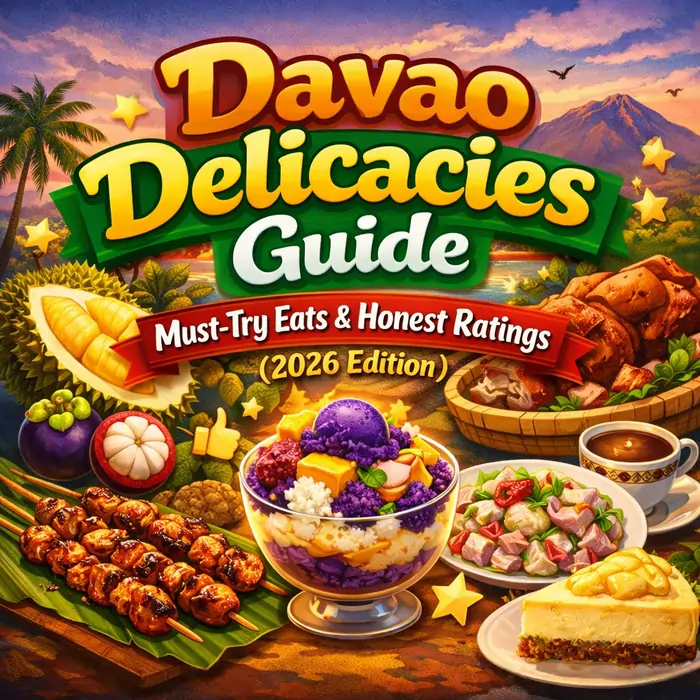
Table of Contents
Quick Reference: Davao Delicacies at a Glance
| Delicacy | Type | My Rating | Best For | Price Range (PHP) |
|---|---|---|---|---|
| Durian (Fresh) | Fruit | ★★★★★ | Adventurous eating | 100-300/kg |
| Durian Candy/Pastillas | Sweet snack | ★★★★★ | Pasalubong | 50-200/pack |
| Puto Maya & Sikwate | Breakfast set | ★★★★★ | Morning ritual | 50-100/set |
| Kinilaw | Appetizer | ★★★★★ | Lunch, pulutan | 150-300/serving |
| BBQ / Satti | Grilled skewers | ★★★★☆ | Breakfast, snack | 10-20/stick |
| Piyanggang | Grilled chicken | ★★★★☆ | Main course | 150-250/serving |
| Halang Halang / Hinalang | Spicy soup | ★★★★★ | Cold weather, hangover cure | 80-150/bowl |
| Balbacua | Slow-cooked stew | ★★★★★ | Breakfast, special occasions | 100-180/bowl |
| Bulalo | Bone marrow soup | ★★★★☆ | Rainy days, family meals | 250-450/serving |
| Lugaw with Tokwa’t Baboy | Porridge | ★★★★☆ | Breakfast, comfort food | 50-100/bowl |
| Sinuglaw | Seafood mix | ★★★★☆ | Appetizer, pulutan | 180-350/serving |
| Beef Rendang | Halal main | ★★★★☆ | Lunch/dinner | 200-350/serving |
| Durian Coffee | Beverage | ★★★★☆ | Unique experience | 80-150/cup |
| Marang | Fruit | ★★★★☆ | Sweet snack | 80-200/kg |
| Pancit Molo | Soup | ★★★★☆ | Merienda, rainy days | 60-120/bowl |
The King of Fruits: Durian (★★★★★)
Let’s address the elephant—or rather, the spiky, pungent, controversially-scented king—in the room.
Davao is synonymous with durian. This is where the Philippines’ finest varieties grow, including the prized Puyat (creamy, bittersweet) and Duyaya (sweeter, milder) cultivars. The fruit thrives in the volcanic soil surrounding the city, and during peak season (August to October), the air around Magsaysay Park and Bankerohan Market is thick with its unmistakable aroma.
For the first-timer: I get it. The smell can be… challenging. It’s been described as everything from “custard and almonds” to “gym socks and onions.” Here’s my advice: start with durian in a processed form. Lola Abon’s or Apo ni Lola (the legacy brand that started Davao’s durian candy revolution in the 1950s) offers gentler introductions—durian candy, pastillas, jam, and even durian coffee. Once your palate acclimates, graduate to the fresh fruit. Buy it pre-opened from a vendor at Bankerohan, take a deep breath, and go for it.
The flesh is custard-soft, rich, and complex. It tastes like vanilla-almond cream with hints of caramel and a whisper of garlic. It’s weird. It’s wonderful. It’s Davao.
Where to try:
- Magsaysay Park – Durian central during season
- Bankerohan Public Market – Fresh, affordable, authentic
- Apo ni Lola Pasalubong Center (Matina) – The biggest pasalubong center, with over 90 durian-based treats
Pro tip: Don’t bring fresh durian into your hotel room unless you want to pay a deep-cleaning fee. Many hotels have a strict “no durian” policy for good reason. Eat it at the market, wash your hands thoroughly, and move on with your life.
The Morning Ritual: Puto Maya & Sikwate (★★★★★)
If there’s one breakfast that defines the Davaoeño soul, it’s this: a slab of warm puto maya (sticky rice cake tinged with ginger and coconut milk), topped with ripe Davao mango and a sprinkle of muscovado sugar, served alongside a steaming cup of sikwate (thick, frothy hot chocolate made from local cacao).
This is the breakfast of champions at Delmar Painitan inside Bankerohan Market. Opened in 1972 by Alberto and Lourdes Delmar (migrants from Cebu and Bohol, respectively), this humble stall has become an institution. The Delmars brought Visayan recipes with them and “laced them with Davao flavor”—meaning they used the superior local cacao and the sweetest mangoes.
What makes this experience special isn’t just the food. It’s the painitan culture itself. These are warm, steamy market stalls where vendors and early risers gather before dawn, huddled over bowls of hot soup and cups of chocolate. It’s communal. It’s unpretentious. It’s the heartbeat of Davao.
For the adventurous: Order the Kinutil at Delmar’s. It’s sikwate spiked with tuba (coconut wine), raw egg, and milk—a Visayan hangover cure and energy drink rolled into one.
Where to try:
- Delmar Painitan (Bankerohan Market) – The gold standard
- Various painitan stalls throughout Bankerohan
Mindanao’s Halal Heritage: BBQ / Satti, Piyanggang, and Rendang (★★★★☆)
Davao’s proximity to Muslim Mindanao means the city is blessed with authentic halal cuisine that you simply won’t find executed this well in Manila or Cebu. Around the Roxas Night Market and in neighborhoods near local mosques, you’ll discover flavors shaped by Tausug, Maguindanaon, and Maranao traditions.
BBQ / Satti (★★★★☆)
Satti is the breakfast of champions in Zamboanga, but Davao has embraced it fully. These are small skewers of marinated beef or chicken, grilled over charcoal until slightly charred, then drowned in a bowl of thick, spicy, orange-red sauce. The sauce is everything—it’s complex, with notes of turmeric, lemongrass, chilies, and toasted coconut. You eat it by dunking the skewers and also spooning the sauce over puso (hanging rice). It’s messy, fiery, and absolutely essential.
Don’t confuse this with regular barbecue. While Davao has excellent standard BBQ stalls (look for the smoky ones along Roxas Avenue), satti is a distinct category—a beautiful Muslim Mindanaoan tradition that deserves its own spotlight.
Piyanggang is Tausug soul food. Chicken (or sometimes fish) is marinated in a paste of burnt coconut, turmeric, ginger, and chilies, then grilled or simmered until the meat takes on an almost blackened hue and a deep, smoky, earthy flavor. It’s unlike any chicken dish you’ve had before—hauntingly good, with a flavor that lingers.
Beef Rendang here is a beautiful adaptation of the Indonesian original, slow-cooked with coconut milk and spices until the sauce reduces to a thick, caramelized coating on the meat. It’s rich, tender, and worth seeking out.
Where to try:
- Roxas Night Market – Multiple halal stalls for BBQ, satti, and piyanggang
- Areas near San Pedro Cathedral and local mosques
- Ask locals for “halal food Davao” recommendations
The Soul-Warming Soups: Halang Halang, Balbacua, and Bulalo
Davaoeños love their soups. These aren’t dainty starters—they’re hearty, filling meals in a bowl, designed to fortify you against rainy afternoons, late nights, or just the general demands of life.
Halang Halang / Hinalang (★★★★★)
Let me be clear: if you only try one soup in Davao, make it Halang Halang (also called Hinalang in some parts of Mindanao).
This is a spicy, coconut-milk based soup that’s pure comfort in a bowl. The name literally comes from “halang”—the Visayan word for spicy. And yes, it brings the heat. But it’s not one-dimensional burn; it’s a complex, layered spice profile built on ginger, turmeric, lemongrass, and plenty of siling haba (green finger chilies).
The beef version is supreme. Tender chunks of beef shank or brisket are simmered for hours until they surrender to the broth, which is enriched with gata (coconut milk) until it’s velvety and luxurious. Vegetables—usually green papaya, malunggay (moringa), or chili leaves—add freshness and balance.
This is the ultimate hangover cure, rainy day companion, and “I need something that feels like a hug” meal. Every Davaoeño has their favorite halang halang spot, and debates about who makes the best version can get heated (pun intended).
Where to try:
- Dencia’s Restaurant – Their version is legendary
- Local carinderias in Bankerohan
- Bulcachong eateries (they often serve both)
Balbacua (★★★★★)
If halang halang is Davao’s spicy soul, Balbacua is its slow-cooked heart.
This is a dish that demands patience. Beef skin, oxtail, and knuckles are simmered for anywhere from 6 to 12 hours until the collagen breaks down completely, creating a broth that’s thick, gelatinous, and deeply savory. The name is said to derive from the Spanish “barbacoa”(barbecue), though the dish itself is a uniquely Filipino-Mindanaoan creation.
The best balbacua is almost sticky—you can feel the richness coating your lips with every spoonful. It’s traditionally eaten for breakfast (yes, breakfast—Davaoeños are built different), often with puso (hanging rice) and a dipping sauce of calamansi and chilies. Some versions include banana or saba, which add a subtle sweetness to the savory depth.
This is not light eating. This is “I’m going back to sleep after this” food. And it’s glorious.
Where to try:
- Bulcachong stalls in Bankerohan and Agdao
- Look for eateries with “Balbacua” prominently displayed on their signs
- Dencia’s Restaurant also does a respectable version
Bulalo (★★★★☆)
Yes, bulalo is famous throughout the Philippines—particularly associated with Tagaytay and Batangas. But Davao’s version deserves recognition.
What makes Davao bulalo distinct is the quality of the beef. Mindanao’s cattle industry produces excellent meat, and the beef shanks used here are notably tender and flavorful. The broth is clean, clear, and deeply beefy, with the marrow from the bone enriching every spoonful.
The classic accompaniments are present: corn on the cob, cabbage, pechay, and sometimes green beans. But the Davao touch often includes a side of calamansi-soy dipping sauce punched up with fresh siling labuyo (bird’s eye chilies) and sometimes a drizzle of the beef fat that’s risen to the surface.
It’s perfect for family meals, rainy season comfort, or any time you need something restorative.
Where to try:
- Jack’s Ridge – Bulalo with a view
- Dencia’s Restaurant – Consistently good
- Roadside bulalohan along Diversion Road
The Raw and the Cooked: Kinilaw and Sinuglaw (★★★★★)
Cebuanos will claim kinilaw as their own, and they do it beautifully. But Davao’s version—made with the day’s freshest catch from the Davao Gulf, bathed in sharp suka (vinegar) and bright calamansi, with ginger, onions, and chilies—is a revelation.
What sets Davao kinilaw apart is the tuna. The city is a major tuna hub, and the quality of the yellowfin and skipjack here is world-class. The fish is so fresh it practically quivers, and when “cooked” in vinegar and citrus, it transforms into something silky, tangy, and alive with flavor.
Sinuglaw takes this a step further. It’s a glorious mash-up of sinugba (grilled pork belly) and kinilaw (raw fish ceviche). The smoky, fatty, crispy pork plays off the clean, acidic brightness of the fish. It’s designed for drinking sessions, but honestly, I’d eat it with rice for any meal.
Where to try:
- Jack’s Ridge – Stunning city views plus excellent kinilaw and sinuglaw
- Seafood restaurants along the coastline
- Roxas Night Market – Casual, affordable versions
Comfort in a Bowl: Lugaw and Pancit Molo (★★★★☆)
Every Filipino city has its comfort food institution. In Davao, it’s Dencia’s Restaurant, a no-frills eatery that’s been serving generations of Dabawenyos. Their lugaw—a silky, savory rice porridge topped with crispy garlic, scallions, and a squeeze of calamansi—is the kind of food that heals whatever ails you. Pair it with their tokwa’t baboy (crispy tofu and pork in a vinegary soy sauce), and you’ve got a meal that costs pocket change but feels like a hug.
For something soupier, seek out Pancit Molo. This is Davao’s take on the dumpling soup—a rich, garlicky broth swimming with plump pork wontons. Cecil’s Snack Inn is the go-to spot, and it’s the perfect antidote to a rainy afternoon or a lingering hangover.
Where to try:
- Dencia’s Restaurant – For lugaw, tokwa’t baboy, halang halang, and balbacua
- Cecil’s Snack Inn – For pancit molo and durian roll
Beyond Durian: Marang and Mangosteen (★★★★☆)
Durian hogs the spotlight, but Davao’s fruit basket runs deep.
Marang is the unsung hero. It looks like a smaller, rounder breadfruit, but crack it open and you’ll find pillowy-soft white lobes that taste like a cross between jackfruit, custard, and pear. It’s sweet but not cloying, with a melt-in-your-mouth texture that’s utterly addictive. The only downside? It has a shelf life of approximately 12 hours before it starts to oxidize and ferment. Eat it immediately.
Mangosteen is the “Queen of Fruits” and the perfect palate cleanser after durian’s intensity. The deep purple rind yields to delicate, snow-white segments that are sweet-tart and refreshing. It’s also packed with antioxidants.
Where to buy:
- Bankerohan Public Market – Best selection and prices
- Roadside fruit stands along the highway to Calinan
Pasalubong Shopping: What to Bring Home
Davao is a pasalubong paradise. Here’s your shopping list:
| Item | Best Brand/Place | Notes |
|---|---|---|
| Durian Candy/Pastillas | Lola Abon’s, Apo ni Lola | The classics. Shelf-stable and travels well. |
| Durian Jam | Apo ni Lola | Spread on toast for a taste of Davao. |
| Durian Coffee | Apo ni Lola | Instant coffee with real durian—actually delicious. |
| Tablea Cacao | Davao-based brands | Pure, local chocolate tablets. |
| Pomelo | Magsaysay Park vendors | Davao’s pomelos are legendary—sweet and juicy. |
| Marang (fresh) | Bankerohan | Only if eating within 24 hours. |
Where to shop:
- Apo ni Lola Pasalubong Center (San Miguel Village, Matina) – The biggest and most comprehensive. Three floors of Davao goodies plus a coffee shop.
- Aldevinco Shopping Center – For crafts, textiles, and souvenirs alongside food items.
- Magsaysay Park – For fresh fruits.
For a complete guide to Davao pasalubong: Check out my detailed Davao Pasalubong Guide: Best Souvenirs and Where to Buy Them for an even deeper dive into the best shops, price comparisons, and tips for packing your haul.
Davao Delicacies by Meal: A Suggested Itinerary
| Meal | What to Eat | Where |
|---|---|---|
| Breakfast (6-8 AM) | Puto Maya with Mango & Sikwate OR Balbacua with Puso | Delmar Painitan (for puto maya) or Bulcachong stalls (for balbacua) |
| Mid-Morning Snack | BBQ / Satti skewers with spicy sauce | Halal stalls near San Pedro Cathedral |
| Lunch (12-2 PM) | Kinilaw na Tuna, Sinuglaw, Grilled Tuna Belly | Jack’s Ridge or seaside restaurant |
| Merienda (3-5 PM) | Lugaw with Tokwa’t Baboy OR Pancit Molo | Dencia’s Restaurant or Cecil’s Snack Inn |
| Dinner (7-9 PM) | Halang Halang (beef) or Bulalo | Dencia’s or roadside bulalohan |
| Late Night | Piyanggang chicken, Beef Rendang, BBQ | Roxas Night Market |
| Dessert | Fresh Durian & Marang | Magsaysay Park |
| Pasalubong Run | Durian candy, Tablea, Pomelo | Apo ni Lola Center |
My Honest, No-BS Ratings
| Delicacy | Taste | Value | Uniqueness | Cultural Weight | Overall |
|---|---|---|---|---|---|
| Durian (Fresh) | 5 | 4 | 5 | 5 | 5 |
| Durian Candy | 5 | 5 | 4 | 4 | 5 |
| Puto Maya & Sikwate | 5 | 5 | 5 | 5 | 5 |
| Kinilaw | 5 | 4 | 4 | 4 | 5 |
| Halang Halang (Beef) | 5 | 5 | 5 | 5 | 5 |
| Balbacua | 5 | 5 | 5 | 5 | 5 |
| BBQ / Satti | 4 | 5 | 5 | 4 | 4.5 |
| Piyanggang | 4 | 4 | 5 | 5 | 4.5 |
| Bulalo | 4 | 4 | 3 | 4 | 4 |
| Sinuglaw | 4 | 4 | 4 | 4 | 4 |
| Marang | 4 | 4 | 5 | 3 | 4 |
| Lugaw | 4 | 5 | 3 | 3 | 4 |
| Durian Coffee | 4 | 4 | 5 | 3 | 4 |
| Beef Rendang | 4 | 3 | 4 | 4 | 4 |
Final Word: Davao rewards the curious eater. The must-not-miss items are fresh durian (at least try it), puto maya with sikwate, kinilaw, halang halang (beef version), balbacua, and durian candy for pasalubong. Come with an open mind and an empty stomach.
Frequently Asked Questions
1. What is Davao most famous for food-wise?
Durian. The city is the durian capital of the Philippines, and the fruit is central to its culinary identity. Even if you don’t love it, you should try it once.
2. Where can I buy the best pasalubong in Davao?
Apo ni Lola Pasalubong Center in Matina is the most comprehensive. For fresh fruits, Bankerohan Market or Magsaysay Park. For a complete shopping guide, visit my Davao Pasalubong Guide .
3. Is Davao halal-friendly?
Yes. Davao has a significant Muslim population, and halal options are widely available, especially around the Roxas Night Market and near mosques.
4. When is durian season in Davao?
Peak season is August to October, but durian is available year-round. The best varieties (Puyat, Duyaya) are more plentiful during peak months.
5. Can I bring durian on a plane?
Fresh durian is generally not allowed in the cabin of most Philippine airlines due to the strong odor. Checked baggage policies vary. Processed durian products (candy, jam, coffee) are fine. Always check with your airline.
6. What does “painitan” mean?
It refers to warm, steamy market stalls that serve hot breakfast and merienda items—sikwate, puto maya, lugaw—traditionally where vendors and early risers gather. It comes from “painit” (to warm up).
7. What’s the difference between Halang Halang and Balbacua?
Halang Halang is a spicy coconut milk-based soup with beef and chilies—it’s rich, creamy, and packs heat. Balbacua is a slow-cooked beef stew made from skin, oxtail, and knuckles, simmered for hours until gelatinous and deeply savory. Both are essential Davao experiences.
8. What’s the difference between Satti and regular BBQ?
Satti is a Muslim Mindanaoan dish of grilled skewers served drowning in a thick, spicy orange sauce made with turmeric and lemongrass. Regular BBQ is the classic Filipino grilled meat on a stick with a sweeter, soy-based marinade. Both are excellent; try them side by side.
9. Where can I learn more about Davao souvenirs?
I’ve written a comprehensive Davao Pasalubong Guide covering the best shops, price ranges, packing tips, and which items are actually worth buying. It’s the perfect companion to this delicacies guide.
About the Author – Jin Grey
Jin Grey is an Ilongga by blood, a Davaoeña by appetite, and a storyteller at heart. Born in Iloilo and raised with a deep appreciation for the rich culinary traditions of the Visayas, she found her second home in Davao’s vibrant food scene.
With over 18 years in digital marketing, she combines SEO expertise with a genuine passion for honest food and travel writing. Along with her partner Kenn, Jin documents the messy, delicious reality of life on the road across the Philippines and Southeast Asia. No filters, no fluff, just lami moments.
📧 ceo@jingrey.com | 🌐 https://jingrey.com
Originally published on DigiLamon. Read our Cebu Delicacies Guide for more Filipino food adventures, or dive into the Davao Pasalubong Guide for the complete shopping experience.
