
Places to Visit in Dubai Key Takeaways
Dubai blends futuristic skyscrapers with ancient souks, desert dunes with pristine beaches.
- The top places to visit in Dubai range from the iconic Burj Khalifa to the historic Al Fahidi neighborhood.
- Plan around the weather: November to March offers the most comfortable temperatures for sightseeing.
- Budget-conscious travelers can enjoy free attractions like the Dubai Fountain show and public beaches without spending a dirham.
Table of Contents
- Why These Places to Visit in Dubai Should Top Your List
- 1. Burj Khalifa — The Sky-High Marvel
- 2. The Dubai Mall — More Than Shopping
- 3. Palm Jumeirah — The Man-Made Island
- 4. Dubai Creek and Al Fahidi Historical Neighbourhood
- 5. Jumeirah Beach and The Beach at JBR
- 6. Dubai Marina and The Walk
- 7. The Gold Souk and Spice Souk
- 8. Desert Safari — Dune Bashing and Stargazing
- 9. Burj Al Arab — The Sail-Shaped Icon
- 10. Dubai Frame — A Walk Through Time
- 11. La Mer — A Beachfront Neighborhood
- 12. Museum of the Future — A Glimpse Into Tomorrow
- 13. Global Village — A World of Entertainment
- 14. Ain Dubai — The World’s Largest Observation Wheel
- 15. Hatta — Mountain Escape
- How to Choose Which Places to Visit in Dubai Based on Your Interests
- Practical Tips for Visiting Places to Visit in Dubai
- Useful Resources
- What is the number one tourist attraction in Dubai?
- How many days do you need in Dubai?
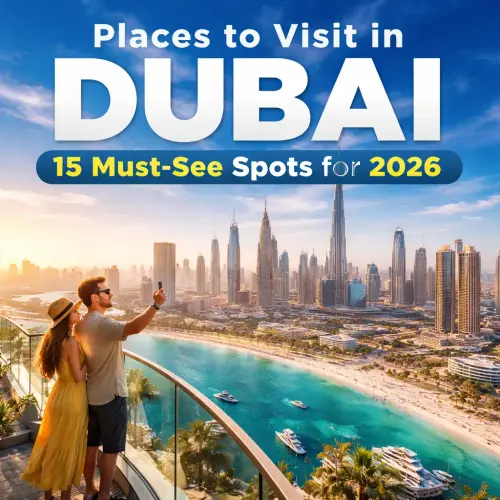
Why These Places to Visit in Dubai Should Top Your List
Dubai is not just a stopover; it is a destination that demands to be explored. The city has transformed from a fishing village into a global hub of innovation, luxury, and cultural fusion. From record-breaking architecture to serene desert landscapes, the diversity of attractions is staggering. Whether you are visiting for a weekend or a week, these 15 spots will give you a well-rounded taste of what Dubai has to offer. For a related guide, see Instagram-Worthy Spots in Dubai: 12 Must-Visit Places.
Each entry below includes why it is unforgettable, a practical tip, and how to make the most of your visit. Let’s dive in.
1. Burj Khalifa — The Sky-High Marvel
Opened in 2010, the Burj Khalifa’s design was inspired by the Hymenocallis flower, with a stepped, spiraling form that minimizes wind loads on the structure. Beyond its record 828-meter height, the tower features the world’s highest observation deck (At the Top Sky, level 148) and the world’s highest restaurant, At.mosphere on level 122. For the best photo, capture the tower from the Dubai Fountain promenade at dusk, when the sky turns royal blue and the building’s LED facade begins to shimmer. Alternatively, for a unique angle, head to the public park at Burj Park or the lower level of the Dubai Mall’s Fashion Avenue, where a curved glass ceiling frames the spire perfectly. Book your tickets online at least two weeks in advance (starting from 125 AED) and choose a sunset slot (around 4:30-5:30 PM, depending on the season) for the most dramatic light show over the city and the gulf.
2. The Dubai Mall — More Than Shopping
Spanning over 12 million square feet, the Dubai Mall opened in 2008 and quickly became the world’s most visited retail and leisure destination. It houses the 10-million-liter Dubai Aquarium and Underwater Zoo, which features one of the largest suspended acrylic viewing panels on the planet. For a truly cinematic photo of the Dubai Fountain, head to the lower ground floor at the Waterfront promenade — the water jets are visible from multiple angles, but the view from the bridge near Zabeel is especially stunning during the 6 PM and 7:30 PM shows. Don’t miss the VR Park on the second floor or the Olympic-sized ice rink on the ground floor. A less-known tip: the mall’s Grand Atrium hosts changing art installations, such as the “Galeries Lafayette” dome, which offers a colorful backdrop for interior shots.
3. Palm Jumeirah — The Man-Made Island
Completed in 2006 after 5 years of land reclamation using 94 million cubic meters of sand, the Palm Jumeirah remains one of the world’s largest man-made islands. Its iconic frond shape is visible from space. Visit Atlantis, The Palm (opened 2008) for its Aquaventure Waterpark and the Lost Chambers Aquarium, which features 65,000 marine animals in a setting inspired by the legend of Atlantis. For a free view with a twist, walk the boardwalk on the crescent — the 11-kilometer path offers unobstructed photos of the Dubai skyline and the Arabian Gulf at golden hour. Alternatively, ride the Palm Monorail from the Gateway Station (just off Sheikh Zayed Road) to the Atlantis: the elevated track provides a bird’s-eye perspective of the fronds and villas. Insider tip: book a sunset table at the Nobu restaurant at Atlantis for a front-row seat to the resort’s evening lights.
4. Dubai Creek and Al Fahidi Historical Neighbourhood
Dubai Creek was the lifeline of the city’s early economy, where pearl divers and fishing boats operated for centuries. Today, the Al Fahidi Historical Neighbourhood (built in the 19th century) preserves the original wind-tower architecture — a passive cooling system using tall, chimney-like towers that channel air downward into homes. For the best photos, walk the narrow alleyways at sunrise (around 6:30 AM) when the light casts warm, long shadows across the sandstone walls, and tourist crowds are absent. The Dubai Museum (in Al Fahidi Fort, built 1787) is partially open during renovations but still showcases artefacts from the pre-oil era. Hop on an abra (traditional wooden boat) for just 1 AED to cross to the Deira side, where you can capture the perfect contrast between weathered dhows and the gleaming skyline behind. The textile souk on the Bur Dubai side is a colorful, under-photographed gem.
5. Jumeirah Beach and The Beach at JBR
Stretching over 1.2 kilometers of white sand, Jumeirah Beach offers views of the Burj Al Arab with crystal-clear waters that are perfect for swimming. The Beach at JBR (opened 2011) is a pedestrian-friendly waterfront with outdoor gyms, children’s play areas, and a weekly farmers market. For a photo without the crowds, arrive at 7 AM on a weekday — the soft morning light highlights the sand’s golden hue, and the Burj Al Arab appears nearly silhouette-like against the horizon. Rent a sun lounger (around 50 AED) or simply spread a towel on the public sand. Free public showers and changing rooms are available near the JBR entrance. A lesser-known spot: the northwest end of the beach near the Hilton Dubai Jumeirah offers a quieter stretch with fewer swimmers and better photo angles of the sail-shaped hotel.
6. Dubai Marina and The Walk
Dubai Marina is a man-made canal city covering 4.8 million square feet, built between 2003 and 2008. The Walk at JBR is a 1.7-kilometer promenade lined with over 300 retail outlets, art installations, and al fresco cafes. For the best evening photo, stand on the bridge near Marina Mall where the canal reflects the illuminated skyscrapers — the view is especially dramatic during the 7 PM to 10 PM hours when buildings are fully lit. Take a dhow dinner cruise (around 150-250 AED per person) for a meal under the stars; the wooden boats navigate the canal, offering a changing urban vista. A quieter alternative: the public pier at the end of Pier 7 allows uninterrupted views of the marina without crowds. Insider tip: head to the second-floor balcony of the Marina Walk at sunset for a raised perspective of the yachts and the skyline.
7. The Gold Souk and Spice Souk
Located in Deira, the Gold Souk (established in the 1940s) features over 300 retailers displaying gold, diamonds, and precious gems. The air is thick with commerce — shop windows burst with 18k to 24k jewelry. For the best photo of the souk’s arched ceiling and glittering displays, arrive early on a Saturday morning (around 9 AM) when the alleyway light streams through the glass roof and the crowd is thin. The nearby Spice Souk is a maze of aromatic stalls selling saffron (often cheaper than in supermarkets), dried limes, rosewater, and incense. Haggling is part of the culture: start at 50% of the quoted price and negotiate politely. A lesser-known spot: the tiny “Khor Al Duba” restaurant in the Spice Souk serves traditional Arabic snacks, but its rooftop offers an unexpected view of the creek and the Gold Souk’s gold-leaf sign.
8. Desert Safari — Dune Bashing and Stargazing
The Arabian Desert around Dubai is a stark landscape of red-gold dunes reaching up to 300 meters high. The region was once part of an ancient trade route connecting the Gulf to the Indian Ocean. Most tours operate in the Dubai Desert Conservation Reserve (established 2002), a 225-square-kilometer protected area. For the best sunset photo, book an evening safari that includes a stop at a high dune ridge around 5:30 PM — the light casts long, dramatic shadows across the sand. Choose a morning safari for quad biking (8 AM start) when the temperatures are cooler and the dunes are less disturbed. Stargazing is a highlight: after the BBQ dinner, operators often switch off all lights, revealing the Milky Way on clear nights. Look for operators with safety certifications and avoid the cheapest tours, which may skip the reserve and drive in less regulated areas.
9. Burj Al Arab — The Sail-Shaped Icon
Completed in 1999 on its own artificial island, the Burj Al Arab is designed to resemble a billowing sail. The 321-meter tower was the world’s tallest hotel until 2010. You can’t go inside without a reservation, but for the iconic photo, head to the beach at Umm Suqeim (known as “Sunset Beach”) on the northern side of the hotel — the angle captures the full sail shape against the open sea. Alternatively, walk along the Surf Beach path about 500 meters to the right, where a small jetty offers a less-common perspective with the hotel rising behind palm trees. For an exclusive experience, book afternoon tea at the Skyview Bar (level 27) for 450 AED per person — the view of the coastline and the Palm Jumeirah is worth the premium. Insider tip: weekdays in the late afternoon (around 2 PM) have the fewest tea guests, giving you more room to enjoy the interior’s gold-leaf atrium.
10. Dubai Frame — A Walk Through Time
Opened in 2018, the Dubai Frame stands 150 meters tall and 93 meters wide, designed to resemble a giant picture frame. Its structure references the city’s past (the right tower represents Old Dubai) and future (the left tower with its glass bridge). For the best photo, walk to the Zabeel Park entrance — the vertical framing works best when the sky is cloudless, typically between 10 AM and 2 PM. The glass bridge on the top floor offers a 360-degree view: look south toward the older neighborhoods of Bur Dubai (with wind towers and low-rise buildings) and north toward the skyscrapers of Sheikh Zayed Road. The museum inside (on the basement level) tells the story of Dubai’s transformation from a fishing village to a global hub. An under-visited angle: the photography deck on the north side of the roof provides a direct alignment with the Burj Khalifa in the distance, creating a layered shot with the frame in the foreground.
11. La Mer — A Beachfront Neighborhood
La Mer opened in 2017 on a 1.4-kilometer stretch of coastline, developed on reclaimed land. The area is divided into two zones: La Mer North, with its colorful street art by local and international artists, and La Mer South, a quieter promenade. For the best photo of the neighborhood’s murals and the Arabian Sea, visit around 4 PM when the sun is lower and the light softens the colorful facades — the shade from the palm trees creates dappled patterns on the pathways. The water park, Laguna Waterpark, features a wave pool and slides, but its viewing platform (free to enter from the La Mer side) offers a unique overhead perspective of the beach. A less-crowded spot: the small pier at the far southern end of La Mer South provides a secluded view of the skyline without the resort crowds. Parking is free, but spaces fill by noon on weekends.
12. Museum of the Future — A Glimpse Into Tomorrow
Opened in February 2022, the Museum of the Future is a 77-meter-tall torus-shaped building covered in Arabic calligraphy by artist Matar bin Lahej. The design symbolizes the fusion of humanity, technology, and spirituality. The best photo is from the Sheikh Zayed Road side, where the building’s elliptical shape and engraved script are fully visible. Capture it at sunrise (around 6:30 AM) when the building’s glass facade reflects the golden light, and the road is nearly empty of traffic. Inside, the “Tomorrow Today” exhibition explores space travel (including a simulated trip to a space station), climate change solutions, and AI-powered biotech. The museum is best for kids aged 10 and up due to the interactive nature of most exhibits. Book tickets (149 AED) at least three weeks in advance, especially for weekends. An insider tip: the hidden garden behind the museum (accessible via the basement level) offers a quiet spot with sculptural seating and a view of the building’s base.
13. Global Village — A World of Entertainment
Running from October to April, Global Village first opened in 1996 in a small area of 11 pavilions; today it covers 1.6 million square meters with pavilions representing over 70 countries. The design pays homage to traditional Arabian marketplace architecture, with rustic-looking alleyways and wooden detailing. For the best photo of the country pavilions, arrive during the 5 PM opening time (especially on a weekday) — the soft golden light hits the facades, and the rides are not yet in motion, offering clear compositions. The “Flying Cup” ride near the entrance provides a moving platform high enough to capture the entire park in a single frame. The food alley (“Riyadh Street”) is a sensory overload, but the Turkish and Bahrain pavilions offer the most photogenic food presentations. Insider tip: weekdays (Sunday-Wednesday) are significantly less crowded, and some vendors offer discounts on entry tickets if you arrive after 7 PM.
14. Ain Dubai — The World’s Largest Observation Wheel
Located on Bluewaters Island, Ain Dubai stands 250 meters tall (over 80 stories) and completed its first rotation in 2021. The wheel’s 48 capsules are inspired by marine elements, with wave-like curves on their glass surfaces. For the best photo from outside, stand on the Bluewaters Island promenade near the beach — the wheel’s reflection in the pool at the base creates a symmetrical shot. The ride itself takes 38 minutes to complete one full rotation, offering panoramic views of the Palm Jumeirah, the Dubai skyline, and the Arabian Gulf. It is currently operating with limited hours; check the official schedule before visiting. Combine the ride with a dinner at the “Mes Amis” restaurant on the island’s ground floor, where a window seat frames the wheel as a backdrop. A lesser-known angle: walk to the public art installation of a giant gold ring on the island — from that position, the wheel appears to be a modern take on a classic carnival attraction. For a related guide, see Best Things to Do in Dubai: 15 Amazing Attractions for 2026.
15. Hatta — Mountain Escape
Hatta is a historic mountain village that was once a key stop on the trade route between the Gulf and the interior. The Hatta Dam (built 1999) is a concrete arch dam holding back emerald-green waters in the Hajar Mountains. The best photo is from the kayak rental area at sunrise (around 6:30 AM), when the water is perfectly still and reflects the surrounding cliffs. The heritage village (free entry) features restored watchtowers and a traditional falaj irrigation system — the stone buildings and palm-thatched roofs are best photographed in the soft early-morning light (between 7 AM and 8 AM). Hike the Hatta Mountain Nature Reserve trail (3.5 kilometers, moderate difficulty) for views of the entire valley without crowds. Pack a picnic (no restaurants inside the reserve) and arrange transport — the 90-minute drive is scenic but requires a car. Insider tip: weekdays (especially Tuesday and Wednesday) have the fewest visitors, and the kayak rental (around 50 AED per hour) often has no wait.
How to Choose Which Places to Visit in Dubai Based on Your Interests
Dubai caters to different travel styles. Below is a quick guide to help you decide:
| Travel Style | Top Picks | Time Needed |
|---|---|---|
| Luxury and Shopping | Burj Khalifa, Dubai Mall, Palm Jumeirah | 2 days |
| Culture and History | Al Fahidi, Gold Souk, Dubai Frame | 1 day |
| Nature and Adventure | Desert Safari, Hatta, Jumeirah Beach | 1-2 days |
| Family with Kids | La Mer, Aquaventure, Global Village | 2-3 days |
If you have limited time, focus on one neighborhood per day. Use the Dubai Metro to move between attractions — it is cheap, clean, and connects most key locations.
Practical Tips for Visiting Places to Visit in Dubai
To make your trip smoother, keep these pointers in mind:
- Best time to visit: November to March, when temperatures range from 20-30°C. Summers (June-September) are extremely hot, but indoor attractions are air-conditioned.
- Dress code: Modest clothing is appreciated in public areas, especially in malls and souks. Swimwear is fine at beaches and pools.
- Hydration: Carry a reusable water bottle; Dubai’s tap water is safe to drink in most areas.
- Skip the line: Book tickets online for Burj Khalifa, Museum of the Future, and observation decks to avoid wasting hours in queues.
Useful Resources
For more detailed planning, check these trusted sources:
- Visit Dubai Official Tourism Website — the most comprehensive guide to events, attractions, and permits.
- Lonely Planet’s Dubai Travel Guide — expert reviews, itineraries, and budget advice.
Frequently Asked Questions About Places to Visit in Dubai
What is the number one tourist attraction in Dubai?
The Burj Khalifa is the most visited landmark, attracting millions each year for its observation decks and architectural significance.
How many days do you need in Dubai?
Five to seven days is ideal to cover

Jin Grey is a Filipino Senior SEO Consultant and AI-First SEO Strategist who helps international brands grow through modern search strategies. She specializes in technical SEO, semantic keyword research, and AI-ready content creation. She is also the owner of JinGrey.com.
As a digital nomad, she loves exploring the world and trying different cuisines during her free time.