
Introduction
Cambodia’s street food scene in 2026 is bolder, busier, and more photogenic than ever, with markets and sidewalks turning into open-air dining rooms from dawn to late night.
Traditional Khmer favorites like nom banh chok, bai sach chrouk, and fish amok share space with Instagram-ready drinks, fusion bites, and modern restaurants that reimagine street flavors for a new generation of travelers.
As Filipino expats and long-term travelers increasingly base themselves in Phnom Penh and beyond, Cambodia is also emerging as a relaxed hub for slow food trips, café hopping, and foodie-focused weekend getaways.
For a broader overview of destinations, markets, and day trips, you can explore the main Cambodia travel guide section. If you want a deeper background on traditional Cambodian cuisine, this concise traditional Cambodian cuisine guide is a great starting point before you hit the streets.
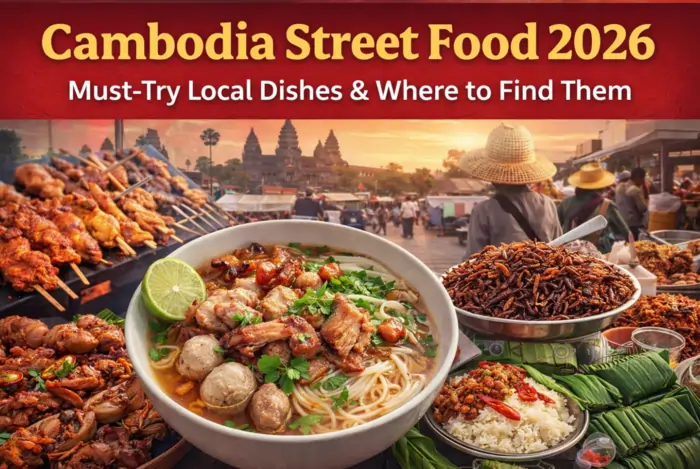
Table of Contents
Why Cambodia Street Food Belongs on Your 2026 Bucket List
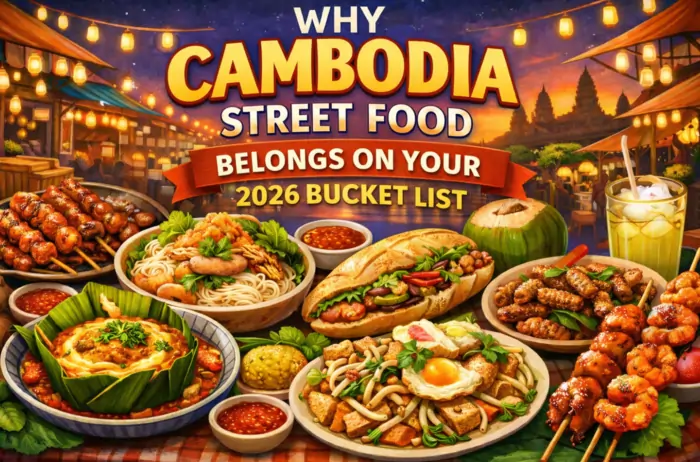
Cambodian street food blends fresh herbs, river fish, grilled meats, and fragrant kroeung spice pastes into dishes that are comforting yet surprisingly light. You’ll find bowls of noodles cooked in seconds, skewers grilled over charcoal, and desserts based on coconut and palm sugar instead of heavy dairy.
Key reasons to explore Cambodia street food in 2026:
- Authentic flavors still dominate, even as social media and tourism grow.
- Prices remain accessible in markets across Phnom Penh, Kampot, Battambang, and Kep.
- Local chefs are reinventing classics in modern restaurants, creating an easy bridge between street stalls and sit‑down dining.
Most travelers still think in USD, but for street food you will often pay in Cambodian Riel: expect to pay around 4,000–16,000 KHR (about 1–4 USD) for most meals at local stalls.
If you love in‑depth features, this ultimate Cambodian food guide is a useful companion to your trip: Cambodian Food: The Ultimate Guide to Khmer Cuisine.
As Filipinos, we often find the flavors of Cambodia—especially the balance of sweet, salty, and sour—reminiscent of home, yet distinctively unique with the heavy use of fresh river fish and aromatic kroeung spice pastes.
Must-Try Cambodian Street Food Dishes (2026 Edition)

For a classic list of iconic eats, you can also check this guide to Cambodian street food: 12 Best Cambodian Street Foods To Try.
Nom Banh Chok (Khmer Rice Noodles)
Nom banh chok is Cambodia’s iconic breakfast: soft rice noodles topped with a light green fish curry, herbs, and crunchy vegetables. Vendors often sell it in the early morning from large pots, either at markets or from bicycles and carts.
Where to try it in 2026:
- Phnom Penh: Breakfast stalls inside and around Central Market (Phsar Thmey) and Orussey Market.
- Siem Reap: Local corners around Psar Chas (Old Market) before temple tours.
Bai Sach Chrouk (Grilled Pork and Rice)
Bai sach chrouk features thin slices of pork marinated with garlic and palm sugar, grilled over charcoal, and served with rice, pickles, and a light broth. It is simple, filling, and one of the easiest dishes for first-time visitors to enjoy.
Look for it:
- Early mornings near schools, office districts, and major markets in Phnom Penh and provincial towns.
Kuy Teav (Phnom Penh Noodle Soup)
Kuy teav is a savory rice noodle soup with a clear pork or beef broth, topped with minced meat, herbs, and fried garlic. You customize it with chili, lime, sugar, and fish sauce from condiments on the table.
Best spots:
Lort Cha and Mee Cha (Stir-Fried Noodles)
Lort cha uses short, chewy rice noodles, while mee cha uses longer wheat or egg noodles, both stir-fried with vegetables, egg, and sometimes beef. They are cooked in very hot woks, giving the noodles a smoky, slightly charred taste.
Find them:
Fish Amok (Amok Trey)
Fish amok is often described as Cambodia’s signature dish: freshwater fish steamed or simmered in a coconut-based curry infused with kroeung spice paste. It is more of a specialty curry than a classic “grab-and-go” street snack, but you can find casual versions in market-side eateries and small restaurants.
Pro tip: Look for fish amok served in banana leaf cups, which usually indicates a more traditional steamed version; if it is served in a plain plastic or generic bowl, it is often just a quick curry.
Where to taste it:
- Tourist-friendly markets and casual restaurants in Phnom Penh and Siem Reap.
- For a refined twist on traditional flavors, consider booking a table at La Baab Restaurant in Phnom Penh, known for its Lower Mekong–inspired dishes.
Lok Lak (Stir-Fried Beef)
Lok lak features marinated beef stir-fried and served with lettuce, onions, tomato, and a dipping sauce of lime and Kampot pepper. It is hearty and familiar, which makes it perfect if you are new to Southeast Asian cuisine.
You’ll see lok lak:
- On menus at casual street-side restaurants and family eateries in Phnom Penh, Battambang, and Siem Reap.
Kampot Pepper Crab and Coastal Seafood
Along the southern coast, Kampot and Kep are famous for fresh crab cooked with aromatic Kampot pepper. Simple open-air seafood shacks and market-side stalls offer dishes that feel as relaxed as city street food, just with ocean views.
For a slow-food base in Kampot, this detailed KKP Hotel Kampot review explains why the hotel works well for food-focused trips.
Sweet Treats and Snacks You Shouldn’t Miss

For more ideas, you can cross-check with this Cambodian street food snacks list: 12 Best Cambodian Street Foods.
Nom Krok (Coconut Rice Cakes)
Nom krok are small coconut rice cakes cooked in cast-iron molds, crispy on the outside and soft inside. They are lightly sweet and often eaten as an afternoon snack or quick breakfast bite.
Fried Banana and Coconut Desserts
Street vendors sell fried banana, coconut-based sweets, and sticky rice desserts near markets and busy streets. These pair perfectly with iced coffee or sugarcane juice when the afternoon heat peaks.
Fried Insects and Crunchy Snacks
Crickets, silkworms, and sometimes spiders are sold as crunchy snacks at night markets and roadside stalls. While many visitors try them for novelty, they remain part of local food culture and history.
For a deeper cultural context, this Cambodian food guide describes key ingredients and traditions behind many of these snacks: Cambodian Food Guide.
Where to Find the Best Street Food in 2026
Phnom Penh: Markets, Night Stalls, and Modern Khmer
Phnom Penh is still the easiest city for sampling the widest range of Cambodian street food in one place.
Key areas:
- Central Market (Phsar Thmey): Breakfast noodles, rice dishes, and snacks in one of the city’s most iconic buildings.
- Russian Market (Tuol Tom Poung): A busy daytime food court with classic Khmer meals and some expat-friendly options, plus legendary iced coffee with condensed milk (kafei tuek kok) from long-running stalls that many travelers call the best iced coffee in Phnom Penh.
- Toul Tom Poung Evening Stalls: 2026 walking tours show grills, noodle stalls, and drink vendors filling the streets after dark.
- Riverside (Sisowath Quay): Evening skewers, seafood, and dessert carts along the riverfront.
For a sit-down interpretation of Lower Mekong flavors, La Baab Restaurant in Phnom Penh is often mentioned as one of the restaurants reinventing Cambodian cuisine. To match places like this with other stops across the country, use the Cambodia destinations hub as a planning base.
Siem Reap: Markets and Night Food Streets
Siem Reap caters both to locals and Angkor-bound visitors.
Key spots:
- Old Market (Psar Chas): Morning stalls selling nom banh chok, kuy teav, and rice dishes before temple tours.
- Night markets near Pub Street: Tourist-friendly grills, noodles, sweets, and insect stalls for adventurous eaters.
For a curated list of Siem Reap–friendly dishes, this Khmer cuisine guide is a useful reference: Cambodian Food Overview.
Kampot, Kep, and Smaller Towns
Smaller towns offer more laid-back, local-focused street food experiences.
- Kampot: Riverside stalls with fried rice, noodles, and simple barbecue; cafés make it ideal for slow travelers.
- Kep Crab Market: Casual eateries serving pepper crab and local seafood in a setting that feels like a giant open-air food court.
For coastal and countryside planning, combine this guide with the Cambodia destinations section, which includes Kampot and Bokor Hill stories that help you design multi-day routes.
2026 Trends in Cambodia Street Food
For classic lists of dishes, see: 12 Best Cambodian Street Foods To Try and Cambodian Food: Ultimate Guide.
Social Media-Friendly Street Food and Cafés
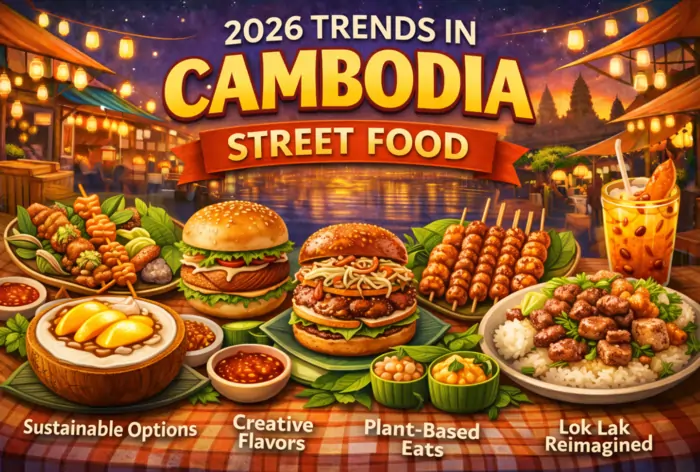
Across Southeast Asia, 2026 food trends lean toward photogenic dishes, layered drinks, and visually striking desserts. Cambodia mirrors this, especially in Phnom Penh and Siem Reap, where:
- Stalls and cafés decorate drinks with bright colors, foams, and toppings aimed at TikTok and Instagram.
- “Hidden” markets like Toul Tom Poung and Russian Market show up frequently in short-form videos featuring iced coffee, skewers, and noodle stalls.
Fusion and Modern Khmer
Restaurants such as La Baab Restaurant reinterpret Lower Mekong flavors with contemporary techniques and plating, echoing wider regional moves toward “modernized tradition.” Many travelers now:
- Eat breakfast at markets and dinner at modern Khmer restaurants.
- Use street food to understand core flavors, then seek upscale spots to see how chefs transform them.
A good external reference on this evolution is the article on restaurants reinventing Cambodian cuisine: Reinventing Cambodian Cuisine.
Health, Convenience, and Ready-to-Eat Snacks
Cambodia’s food industry is growing with more convenience products and health‑focused items. An overview of the Cambodian food industry market in 2026 highlights rising demand for packaged street-style snacks and ready meals among urban consumers: Food Industry Market 2026.
Law on Food Safety and Visible Hygiene in 2026
Cambodia’s Law on Food Safety came into force in June 2022, creating a clearer framework for food safety, hygiene, labeling, and inspection along the entire food chain. Legal briefs note that authorities can now set and enforce detailed requirements, inspect food businesses, and penalize unsafe or fraudulent practices.
By 2026, this has led to more visible hygiene and licensing efforts at formal food businesses and some street vendors, especially in Phnom Penh and major tourist areas, where you may see permits or certificates displayed at stalls. This shift reassures nervous travelers while still allowing traditional markets and vendors to thrive.
Tourism Rebound and Experience-Driven Eating
As tourism rebounds, street-food tours in Phnom Penh and Siem Reap are increasingly popular for first‑time visitors. These tours focus on:
- Safe, vetted stalls selected by experienced guides.
- Storytelling around prahok, Kampot pepper, and river fish, helping travelers connect flavors with history and geography.
Practical Tips: Budget, Safety, and Ordering
For a structured list of must-try dishes and prices, see this popular Cambodian street food list: Best Cambodian Street Foods.
How Much to Budget in 2026
Despite rising costs, Cambodia remains budget-friendly for street food. Typical ranges:
- Basic street meals (rice dishes, noodle soups, simple stir-fries): about 4,000–16,000 KHR (roughly 1–4 USD) per meal.
- Night market plates and grilled meat sets: still within the low single-digit USD range, depending on portion size.
- Coastal seafood such as pepper crab: higher than basic street food but still good value compared with many other seaside destinations.
The 2026 food industry outlook confirms that demand is up but street-level prices remain accessible: Cambodian Food Industry 2026.
Staying Safe While Eating Street Food
You can enjoy Cambodian street food safely by following simple precautions:
- Choose busy stalls with high turnover and fresh-looking ingredients.
- Prefer dishes cooked to order, such as stir-fries and soups.
- Start with milder, well-cooked dishes on your first day and gradually try more adventurous items like raw salads or insects.
The Law on Food Safety strengthens government oversight of food hygiene and labeling, which is a positive sign for consumers in the long term. Guides like 12 Best Cambodian Street Foodsalso highlight dishes that are typically served hot and fresh, which reduces risk: Street Food Guide.
Ordering Like a Local
Even with limited Khmer, you can navigate stalls easily:
- Point to displayed ingredients or prepared plates you want.
- Watch locals season kuy teav or lort cha, then copy their mix of lime, chili, and sauces.
- Carry small notes so transactions are quick and smooth, especially when paying in Riel for low-cost dishes.
For cultural context, this traditional Cambodian cuisine overview gives helpful background on ingredients and dining style: Cambodian Cuisine Overview.
Sample One-Day Phnom Penh Street Food Itinerary (2026)
Use this as a template and adjust around your schedule and hotel location.
Morning (Central Market Focus)
- 7:00–8:30 AM: Breakfast at Central Market with nom banh chok or bai sach chrouk plus iced coffee.
- 8:30–9:30 AM: Explore the market and surrounding streets, trying small snacks like nom krok when you spot them.
Midday
- 12:00–1:00 PM: Grab kuy teav or lort cha at a local eatery near Central Market or Orussey Market.
- 1:00–3:00 PM: Rest indoors or visit sights like the riverside or city landmarks featured in the Cambodia destinations guide.
Late Afternoon and Evening
- 5:30–7:00 PM: Head to Toul Tom Poung or the Riverside area for grilled skewers, fried rice, and noodle stir-fries as the city cools down.
- 7:30–9:00 PM: For a sit‑down dinner that still celebrates Khmer flavors, book a table at La Baab Restaurant for creative, Lower Mekong–inspired dishes.
For longer itineraries that combine Phnom Penh, Kampot, and other cities, use the Cambodia destinations section to connect specific dishes with specific towns.
FAQs About Cambodia Street Food in 2026
Is Cambodia street food safe to eat in 2026?
Cambodia street food can be safe if you choose busy stalls with high turnover, watch for clean cooking practices, and stick to dishes cooked to order, especially on your first days.
Lists like this Cambodian street food guide also help you focus on hot, freshly prepared dishes: Best Cambodian Street Foods. The Law on Food Safety introduced in 2022 further strengthens food safety obligations for businesses along the entire supply chain.
How much does Cambodia street food cost now?
In 2026, most local breakfasts and noodle dishes still cost about 4,000–16,000 KHR (roughly 1–4 USD), while coastal seafood and modern Khmer restaurants are higher but remain good value.
The Cambodian food industry 2026 overview notes that demand is rising, yet everyday street and market food stays affordable for most locals and visitors: Food Industry Market 2026.
What should I try first if I’m new to Khmer food?
Start with nom banh chok (Khmer rice noodles), bai sach chrouk (grilled pork and rice), and lok lak, which are flavorful but not overly spicy. You can get more ideas from this Khmer cuisine guide: Ultimate Guide to Khmer Cuisine.
Are there vegetarian or lighter options in Cambodia street food?
Yes, you can find vegetable fried rice, stir‑fried noodles with tofu or egg, and salads, although fish sauce and shrimp paste are common in broths and dressings. For inspiration on lighter dishes and salads, see this traditional Cambodian cuisine overview: Cambodian Cuisine Overview.
Where can I learn more about Cambodian food culture before I go?
For a deeper dive into ingredients, regional specialties, and iconic dishes, read this Cambodian food guide: Cambodian Food: 10 Traditional Dishes You Should Eat. Then use the Cambodia destinations section to match dishes with specific cities, markets, and routes.
Jin Grey’s Note
As Filipino expats and long-term travelers based in Phnom Penh, we spend most weekends exploring new markets, riverfront stalls, and modern Khmer restaurants—from Kampot’s riverside food scene to Lower Mekong–inspired spots like La Baab Restaurant in the capital.
As Filipinos, we often find the flavors of Cambodia—especially the balance of sweet, salty, and sour—reminiscent of home, yet distinctively unique with the heavy use of fresh river fish and aromatic kroeung.
Our Cambodia coverage in the destinations hub combines personal experience with up‑to‑date food and travel research, so you can plan confidently even if it is your first time in the Kingdom.
Conclusion
Cambodia street food in 2026 offers the best of both worlds: deeply rooted traditions and a fast-evolving scene shaped by social media, tourism, new food safety rules, and a growing middle class that loves to eat out.
From early-morning bowls of nom banh chok in Phnom Penh’s markets to pepper crab in Kampot and modern Khmer plates at La Baab Restaurant, every day brings new flavors and stories to discover.
By combining local markets, night stalls, and well-chosen restaurants—and using resources like the Cambodia travel guide hub plus external cuisine guides and 2026 food industry insights—you can build a food-focused Cambodia trip that feels both authentic and trend-aware.

I’m Jean Palabrica, known in the industry as Jin Grey—a name reflecting my specialized expertise in Grey Hat SEO.
With over 18 years of experience as a “Chief Everything Officer,” I provide data-driven strategies for high-competition niches like iGaming. As a Senior SEO and Digital Marketing Consultant, I help brands navigate complex markets, optimize technical systems, and scale sustainably