
Written by Jin Grey | DigiLamon.com | April 9, 2026
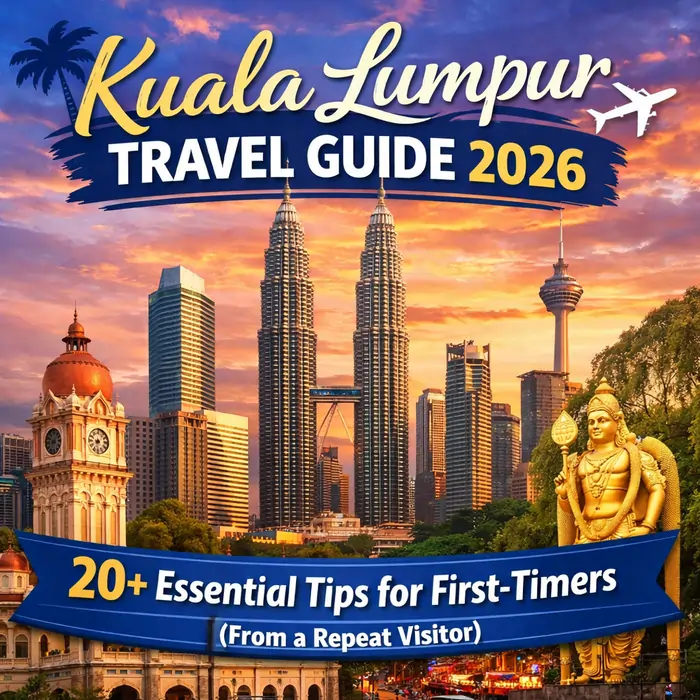
Kuala Lumpur in 2026 offers a seamless blend of heritage and modern marvels, highlighted by the newly opened Merdeka 118 and the iconic Petronas Towers. For first-timers, the best time to visit is during the drier months of December to February.
Essential experiences include eating at Jalan Alor, visiting Batu Caves early to beat the heat, and using the KLIA Ekspres for fast airport transfers. The city is highly affordable, with a mix of high-end malls and local kopitiams making it ideal for both budget backpackers and comfort seekers.
I still remember my first time.
It was 2017. I stepped out of KLIA2, slightly disoriented, into that unmistakable tropical humidity that feels like home to a Mindanaoan like me. I didn’t know it then, but that trip would change how I travel.
Since that first visit, I’ve returned to Kuala Lumpur over 20 times. Sometimes with my partner Kenn. Sometimes with friends. Sometimes with family. And yes, sometimes solo—because this city has a way of making you feel comfortable in your own company.
Kuala Lumpur isn’t flashy in the way Singapore is. It doesn’t try too hard. What it does is simpler and harder to pull off: it feels real. The mix of Malay, Chinese, and Indian cultures isn’t a curated tourist experience—it’s daily life here. The soaring Petronas Towers cast shadows over century-old shop houses. You can eat nasi lemak from a plastic plate for RM3 or splurge on a rooftop dinner with the skyline glowing beneath you.
I’ve now visited enough times to know where to stay, what to skip, and—most importantly—where to find the nasi lemak that’ll ruin all other nasi lemak for you.
Let me walk you through my Kuala Lumpur.
If you’re Filipino : Read this Kuala Lumpur Travel Guide for Filipinos (2026 Edition)
Table of Contents
1. Why KL Became My Favorite Destination
I’ve been asked this question enough times that I’ve had time to think about the answer.
It’s not the Petronas Towers, though they’re magnificent. It’s not the shopping, though Bukit Bintang has swallowed entire afternoons of my life. It’s not even the food—though, honestly, the food alone could justify 20 visits.
It’s the ease.
Kuala Lumpur is a city that doesn’t demand much from you. The trains work. Grab rides are cheap. English is widely spoken. The food is everywhere and affordable. You can have a RM5 breakfast at a kopitiam and a RM150 dinner with a skyline view in the same day, and both will feel worth it.
As someone from Davao, I recognize something familiar in KL: it’s a city with big-city energy but provincial warmth. People smile. They’ll help you with directions. They’re proud of their food and want you to love it too.
After 20 visits, I’m still not bored. That says something.
2. When to Visit: KL’s Weather Reality
Let me be honest: Kuala Lumpur is hot and humid year-round. There’s no escaping it. Temperatures hover between 24°C and 33°C (75°F to 91°F) regardless of the month .
What you’re actually choosing between is rain frequency.
| Season | Months | What to Expect |
|---|---|---|
| Drier | May–July, December–February | Afternoon thunderstorms still happen, but generally less rain |
| Wetter | March–April, September–November | More frequent downpours, usually in late afternoon |
My personal strategy: I’ve visited in almost every month. The rain rarely ruins a full day—it comes hard for an hour, then clears. Pack a small umbrella or be prepared to duck into a mall or cafe. KL’s indoor spaces are excellent, so wet days aren’t wasted days.
Shopping tip: If you’re coming for sales, the Malaysia Mega Sale runs from June to August, with additional year-end sales in November–December.
Cultural events to consider:
- Hari Raya Aidilfitri (end of Ramadan): Festive atmosphere, but some eateries close during the day
- Chinese New Year (January/February): Chinatown comes alive, but some businesses close
- Thaipusam (January/February): Massive Hindu celebration at Batu Caves—incredible to witness but extremely crowded
3. Getting from KLIA to the City: Your Options
Kuala Lumpur International Airport (KLIA) is about 50-60 kilometers from the city center. You have several options, and I’ve tried all of them.
KLIA Ekspres (Train)
- Duration: 28 minutes to KL Sentral
- Cost: RM55 one-way, RM100 round-trip
- Frequency: Every 15-20 minutes
- Best for: Solo travelers, avoiding traffic, reliability
This is my go-to. It’s fast, air-conditioned, and drops you at KL Sentral where you can connect to the LRT, Monorail, or Grab to your final destination. After a long flight, I don’t want to negotiate with taxi drivers or sit in traffic.
Grab (Ride-Hailing)
- Duration: 45–70 minutes depending on traffic
- Cost: RM65–85 (standard car)
- Best for: Groups, lots of luggage, door-to-door convenience
Download the Grab app before you arrive. It’s essential for getting around KL, not just from the airport. Pricing is transparent and you can pay with cash or card .
Airport Taxi
- Duration: Similar to Grab
- Cost: Fixed-rate coupons available at airport counters (RM75–100)
- Best for: When you don’t have data/wifi for Grab
Bus
- Duration: 60–75 minutes
- Cost: RM12–15
- Best for: Extreme budget travelers
The bus is fine, but after a flight, I’d rather spend the extra money for comfort and speed.
My advice: Take the KLIA Ekspres unless you’re traveling with 3+ people. The time saved is worth the premium.
4. Getting Around: Trains, Grab, and Walking
KL’s public transport is genuinely good. Coming from the Philippines, where train options are limited, I appreciate how connected this city is.
Train Systems You’ll Use
| System | Coverage | What It’s Best For |
|---|---|---|
| LRT | Major corridors | KLCC, Chinatown, Pasar Seni |
| MRT | Suburbs to city | Longer distances, newer trains |
| Monorail | Bukit Bintang corridor | Shopping areas |
| KTM Komuter | Outlying areas | Batu Caves, suburbs |
Touch ‘n Go Card: Buy one at any station counter. It works on all trains and many convenience stores. RM10–20 load is plenty for a short trip.
Grab
Grab is my default for short trips, late nights, or when I’m tired. Rides within the city center rarely exceed RM15. The app shows the price upfront—no haggling, no surprises.
Pro tip: During heavy rain or rush hour (5–7 PM), Grab prices surge. Sometimes waiting 20 minutes saves you 50%.
Walking
KL is more walkable than people admit, especially around:
- Bukit Bintang to KLCC: Connected by an air-conditioned pedestrian walkway (about 15 minutes, a lifesaver in the heat)
- Chinatown to Central Market: 5–10 minutes
- Pasar Seni to Merdeka Square: 10–15 minutes
The challenge is the heat and occasional sidewalk gaps. Plan indoor routes where possible—KL’s malls are interconnected in ways that reward exploration.
5. Where to Stay: My Personal Recommendations
I’ve stayed in probably 15 different places across KL. These two stand out for very different reasons.
For Budget & Location: The Bed KLCC & Bukit Bintang
If you’re a solo traveler or on a tight budget but refuse to compromise on location, The Bed Bukit Bintang is my pick.
I’ve stayed here multiple times. It’s a hostel, yes—but it’s clean, well-run, and positioned within walking distance of the Petronas Towers, Bukit Bintang, and the Monorail station .
What I like:
- Location. You’re steps from fancy malls but paying hostel prices.
- Cleanliness. The dorms and common areas are consistently well-maintained.
- Vibe. Social without being a party hostel. Good for meeting other travelers.
- Rating: 8.8/10 from thousands of reviews
What to expect: It’s a hostel. You’ll share bathrooms. Bring earplugs if you’re a light sleeper.
Best for: Solo travelers, backpackers, anyone prioritizing location over luxury.
For Comfort & Value: Starus Hotel Bukit Bintang
This is my newest favorite. I discovered Starus Hotel (formerly Stay with Bintang) on a recent trip and it’s now my go-to for a slightly elevated stay without the premium price tag .
Why I keep coming back:
- Location. Right in Bukit Bintang, steps from Jalan Alor food street and Changkat nightlife.
- View. Request a high floor facing the city—the Petronas Towers are visible from many rooms.
- Pool. A legit swimming pool with city views. Rare at this price point.
- Price. 4-star experience at 3-star prices. I’ve paid RM180–250 per night.
Honest notes from my stays: Some rooms show minor wear. I’ve seen reviews mentioning noise from nearby nightlife—if you’re a light sleeper, request a room on a higher floor away from Changkat . The hotel is newer and still finding its rhythm, but the value is undeniable.
Best for: Couples, friends traveling together, anyone who wants comfort without luxury pricing.
Other Areas to Consider
- KL Sentral: Convenient for airport access, but less atmosphere
- Chinatown: Budget-friendly, great food, more “old KL” character
- Chow Kit: Up-and-coming, trendy cafes, more local vibe
6. Nasi Lemak: The National Obsession
I need to talk about nasi lemak properly, because this dish is why I keep coming back.
Nasi lemak is Malaysia’s unofficial national dish. At its core: fragrant coconut rice cooked with pandan leaves, served with spicy sambal, crunchy fried anchovies (ikan bilis), peanuts, cucumber slices, and a boiled egg .
Add ayam goreng berempah (spiced fried chicken) and it becomes transcendent.
Where I Go for Nasi Lemak
Village Park Restaurant (Damansara Uptown)
This is the one. The queue snakes out the door even on weekdays, but it moves fast. Their fried chicken is legendary—crispy, aromatic, juicy. The sambal has depth, not just heat. The rice is consistently perfect .
*Address: 5, Jalan SS 21/37, Damansara Utama, 47400 Petaling Jaya*
Grab from KLCC: ~20 minutes, RM15–20
Nasi Lemak Burung Hantu (Desa Hartamas)
24 hours. Let me repeat: 24 hours. I’ve stumbled here at 2 AM after a late flight and eaten nasi lemak that rivals daytime spots. The sambal leans savory and the portions are generous .
Supergrai (REXKL, Chinatown)
A newer discovery inside the revamped REXKL complex. They serve nasi lemak with two sambals—a classic version and a darker, tangier sambal hitam. The rice is genuinely excellent, rich with santan. The fried chicken was slightly tough on my visit, but the overall experience is solid, especially if you’re already exploring Chinatown .
What Makes Great Nasi Lemak
- Rice: Fragrant, slightly rich, not greasy. You should want to eat it plain.
- Sambal: Balanced—sweet, spicy, savory. Not just heat.
- Chicken: Crispy exterior, juicy interior, spiced (berempah) properly.
- Anchovies/Peanuts: Crunchy, fresh, not stale.
I’ve eaten nasi lemak from roadside stalls, hotel buffets, and everywhere between. The humble versions often win.
7. Beyond Nasi Lemak: What Else to Eat
KL’s food scene is vast. Here’s what I make sure to eat on every trip.
Hainan Tea & Kaya Toast
Head to Ho Kow Hainam Kopitiam near Petaling Street for the full experience. Hainan tea blends coffee and black tea with condensed milk—rich, creamy, slightly bitter. Pair it with kaya toast (coconut jam and butter on charcoal-grilled bread). Go early; it gets packed .
Bak Kut Teh
Herbal pork rib soup, slow-cooked until the meat falls off the bone. Seng Huat (Under the Bridge)in Klang is the pilgrimage site. The broth is dark, deeply herbal, and addictive. Dip youtiao (fried dough) into the soup and thank me later .
Note: Klang is 30–40 minutes from KL. Worth the Grab ride for serious eaters.
Char Kuey Teow
Flat rice noodles stir-fried with soy sauce, prawns, cockles, bean sprouts, and egg. The key is wok hei—that smoky breath of the wok. Many Jalan Alor stalls do respectable versions.
Roti Canai
Flaky flatbread served with dhal (lentil curry). Found everywhere. Best eaten fresh off the griddle at mamak stalls. Perfect 3 AM food.
Cendol
Shaved ice with green rice flour jelly, coconut milk, and gula melaka (palm sugar). Essential cooling mechanism in KL’s heat.
Teh Tarik
“Pulled tea”—frothy, sweet, milky tea. The pulling aerates it and creates the signature foam. Watch the mamak stall guys do it; it’s performance art.
8. Jalan Alor: Street Food Central
If you only have one night in KL for street food, make it Jalan Alor in Bukit Bintang.
This street transforms after sunset. Hundreds of hawker stalls and seafood restaurants line both sides. The air fills with smoke from grills and the chatter of diners. It’s chaotic, sensory, and absolutely essential .
What to eat:
- Wong Ah Wah (corner restaurant): Famous roasted chicken wings. Smoky, sweet, charred edges.
- Black pepper crab: Messy, spicy, worth the effort.
- Satay: Grilled skewers with peanut sauce.
- Grilled stingray: Wrapped in banana leaf with sambal.
- Fresh fruit: Durian, mangosteen, rambutan—depending on season.
Tips from my visits:
- Go around 7–8 PM when everything is open but before the largest crowds.
- Cash is king here. Bring small bills.
- If a restaurant looks empty, there’s usually a reason. Follow the crowds.
- Don’t be shy about pointing at what you want. Most vendors speak enough English for food orders.
9. Petronas Twin Towers: The Non-Negotiable
You can’t come to KL and skip the Petronas Towers. I’ve been up multiple times and still find it impressive.
Skybridge & Observation Deck:
- Skybridge: 41st and 42nd floors, connects the two towers
- Observation Deck: 86th floor, panoramic city views
- Tickets: RM98 for adults (both Skybridge and Observation Deck)
- Hours: 9 AM – 9 PM, closed Mondays
Critical advice: Book online in advance. Tickets sell out, especially for sunset slots. I’ve seen disappointed travelers turned away at the counter. Book at least 3–5 days ahead.
If tickets are sold out:
- The KLCC Park below offers excellent ground-level views
- Suria KLCC mall has a food court with decent tower views
- SkyBar at Traders Hotel offers cocktails with the towers as backdrop
Photo tip: The best exterior shots are from the KLCC Park water fountains (front) or the Public Bank building area (side angle).
10. Batu Caves: Steps, Monkeys, and Respect
The massive golden statue of Lord Murugan stands 42.7 meters tall—the tallest in the world. Behind it: 272 colorful steps leading into a limestone cave temple .
What to know before you go:
- Dress code: Strict. Shoulders and knees must be covered. Sarongs available for rent/purchase at the entrance .
- Monkeys: They’re everywhere. Don’t feed them. Secure your belongings—they grab sunglasses, water bottles, anything loose.
- Timing: Go early (before 9 AM) to beat both heat and crowds. The steps offer zero shade.
- Getting there: KTM Komuter train to Batu Caves station (RM2.60 from KL Sentral, ~30 minutes). Much cheaper than Grab.
Inside the main cave, natural light streams through openings in the ceiling. There are Hindu shrines and the occasional bat overhead. The climb is manageable if you’re reasonably fit—take breaks, drink water.
11. Merdeka 118: KL’s Newest Giant
Completed in 2024, Merdeka 118 is now the second-tallest building in the world (678.9 meters). Its spire dominates the skyline from almost anywhere in the city .
What’s there:
- High-end shopping mall
- Observation deck (newer, often less crowded than Petronas)
- Luxury hotel
I’ve only been once since it opened. The viewing experience feels more modern than Petronas, with sleek design and fewer time restrictions. The 360-degree view is genuinely spectacular.
Comparison to Petronas:
- Petronas: Iconic, classic, twin-tower uniqueness
- Merdeka 118: Taller, newer, often easier to get tickets
If you can only do one, Petronas is the icon. If you want the highest view, Merdeka 118 wins.
12. Chinatown & Kwai Chai Hong: Old Meets New
Petaling Street is Chinatown’s main artery—covered market stalls selling everything from fake bags to fresh durian. It’s chaotic and touristy, but I still walk through every trip.
Kwai Chai Hong (literally “Ghost Lane”) is tucked just off Petaling Street. This restored alleyway features murals depicting 1960s KL life—barbers, chess players, children playing. Red lanterns hang overhead. By day, it’s a photo spot. By night, the hidden speakeasies open .
Nearby:
- Central Market: Air-conditioned handicrafts and souvenirs. Good for batik and local art.
- Pasar Seni MRT: Easy access to both Chinatown and Central Market.
- REXKL: A former cinema turned cultural hub. Bookshops, cafes, Supergrai (the nasi lemak spot I mentioned) .
13. Bukit Bintang: Shopping and People-Watching
This is KL’s shopping and entertainment heart. I’ve spent countless hours (and ringgit) here.
Key Malls:
| Mall | Vibe |
|---|---|
| Pavilion KL | Upscale, international brands, excellent food court |
| Suria KLCC | Connected to Petronas Towers, high-end |
| Berjaya Times Square | Massive, indoor theme park, more budget-friendly |
| Lot 10 | Japanese-focused (Isetan), great food basement |
| Fahrenheit88 | Younger crowd, Uniqlo flagship |
The KLCC-Bukit Bintang Walkway:
An air-conditioned pedestrian bridge connects Pavilion to KLCC. It takes about 15 minutes and saves you from heat, traffic, and rain. Look for signs inside Pavilion’s Level 2.
Nightlife:
Changkat Bukit Bintang is the bar street. It’s lively but can get rowdy. I prefer quieter spots, but if you want a night out, this is where it happens.
14. Cultural Hotspots: Mosques, Temples, and Heritage
KL’s multicultural identity is visible everywhere, but these sites deserve dedicated visits.
Masjid Jamek (Jamek Mosque)
One of KL’s oldest mosques, built in 1909 at the confluence of the Klang and Gombak rivers. The Moorish architecture is stunning. Visitors welcome outside prayer times; dress modestly (robes provided).
Thean Hou Temple
A six-tiered Chinese temple on a hill with city views. Ornate, colorful, and peaceful. I visit during Chinese New Year when it’s spectacularly decorated. Free entry.
National Mosque (Masjid Negara)
Modernist design, capacity for 15,000 worshippers. Visitors can enter outside prayer times. The reflecting pools and geometric architecture are photogenic.
Sultan Abdul Samad Building & Merdeka Square
Colonial-era landmark across from Merdeka Square (where Malaysian independence was declared in 1957). The copper domes and arched verandas are iconic. Best photographed in morning light .
Sri Mahamariamman Temple
KL’s oldest Hindu temple, founded in 1873. The entrance tower (gopuram) is intricately carved with deities. Located in Chinatown, walking distance from Petaling Street.
15. Day Trip Options from KL
If you have extra days, KL makes a solid base for exploration.
Genting Highlands
- What: Hill resort with cooler air, casino, theme park, shopping
- Travel time: 1 hour by bus from KL Sentral or Grab (~RM60–80)
- My take: The cable car ride (Awana SkyWay) is the highlight. The resort itself is… a lot. Good escape from city heat.
Melaka (Malacca)
- What: UNESCO World Heritage city, colonial history, Peranakan culture
- Travel time: 2 hours by bus from TBS (Terminal Bersepadu Selatan)
- My take: Worth an overnight stay. Jonker Street night market (weekends) is fantastic. The Baba Nyonya food alone justifies the trip .
Putrajaya
- What: Malaysia’s administrative capital, grand architecture, pink Putra Mosque
- Travel time: 30 minutes by KLIA Transit train
- My take: Half-day is enough. The mosque is striking. Good for architecture photography.
Batu Caves
Mentioned earlier—technically a day trip but so close it’s essentially a KL attraction.
16. Souvenirs Worth Buying
I’ve brought back a lot of KL over the years. Here’s what’s actually worth suitcase space.
Food Items:
- Milo: The Malaysian formulation is richer and maltier. Seriously better.
- BOH Tea: Malaysian-grown tea. The Cameron Highlands varieties are excellent.
- Beryl’s Chocolate: Especially the durian-filled and tiramisu varieties .
- Bak Kut Teh spice packets: A1 and Kee Hiong brands. Recreate the soup at home .
- OldTown White Coffee: Instant packets make decent pasalubong.
Non-Food:
- Batik: Fabric and clothing with traditional wax-resist designs. Central Market has good selections .
- Pewter: Royal Selangor is the famous brand. Small items like keychains are affordable.
- Local snacks: Dodol (sticky coconut toffee), kuih bahulu (sponge cakes), fish crackers.
Where to shop:
- Supermarkets: Best for Milo, tea, chocolate at local prices
- Central Market: Batik, crafts, souvenirs
- Petaling Street: Bargain items, but quality varies
17. Money Matters: Cash, Cards, and Costs
Currency: Malaysian Ringgit (RM/MYR). At time of writing, 1 USD ≈ 4.7 MYR.
Cash vs. Card:
- Malls and chain restaurants: Cards accepted
- Hawker stalls, street food, small shops: Cash essential
- Grab: Can link card or pay cash
ATMs: Widely available. Maybank, CIMB, and Public Bank are reliable. I withdraw from ATMs attached to actual bank branches—safer and fewer issues.
Tipping: Not expected. Some restaurants add 10% service charge. Round up taxi/Grab fares if you want, but it’s not required.
Budget estimates (per person, per day):
| Travel Style | Daily Budget (MYR) | What You Get |
|---|---|---|
| Backpacker | RM80–120 | Hostel dorm, street food, public transport |
| Mid-range | RM200–350 | Private room, mix of street and restaurant meals, some Grab rides |
| Comfortable | RM400+ | Nice hotel, proper restaurants, more convenience |
KL is genuinely affordable compared to Singapore or even Manila.
18. Connectivity: SIM Cards and WiFi
At the Airport:
SIM cards are available at KLIA arrival halls. Celcom, Maxis, Digi, and U Mobile all have counters.
Typical tourist SIM:
- 7–30 days validity
- 10–50GB data
- RM20–50
- Passport required for registration
My preference: Celcom or Maxis for better coverage in buildings and on trains.
eSIM Option: If your phone supports eSIM, you can purchase and activate before arrival. More expensive but convenient.
WiFi: Most hotels and cafes offer free WiFi. Speed varies. Coworking spaces exist if you need reliable connectivity (Common Ground, WORQ).
19. Cultural Etiquette: What I’ve Learned
KL is multicultural, and awareness goes a long way.
General:
- Right hand: Use for eating, passing items, handshakes. Left hand considered unclean in Malay and Indian cultures.
- Shoes off: Remove before entering homes and some temple/mosque areas.
- Public affection: Moderate is fine; excessive PDA draws attention.
Mosques:
- Dress modestly (robes provided at major mosques)
- Non-Muslims avoid prayer times
- Silence phones, speak quietly
Temples:
- Remove shoes before entering inner areas
- Don’t point feet at altars or Buddha statues
- Ask before photographing ceremonies
During Ramadan:
- Eating/drinking in public during daylight hours is disrespectful. Many food stalls close or operate limited hours. Hotel restaurants remain open.
Alcohol:
- Available in bars, hotels, and Chinese/Indian restaurants
- Not served in Malay/Muslim establishments
- Higher prices than you might expect due to taxes
20. Safety and Practical Tips
KL is generally safe. I’ve walked alone at night in Bukit Bintang and Chinatown without issues. Standard urban awareness applies.
Water: Don’t drink tap water. Bottled water is cheap and everywhere.
Heat: Stay hydrated. Duck into air-conditioned spaces regularly. Sunscreen is essential.
Traffic: Look both ways—twice. Motorcycles can come from unexpected directions.
Scams to ignore:
- Overly friendly strangers offering “special deals” on tours or shopping
- Taxis refusing to use meter (insist or use Grab)
- “The temple/mosque is closed today” (it’s usually not—they want to take you somewhere else)
Emergency numbers:
- Police/Ambulance: 999
- Tourist Police: 03-2149 6590 (KL branch)
21. Sample 4-Day KL Itinerary
Based on my actual trips. This pacing works.
Day 1: Arrival & Orientation
- Land at KLIA, take KLIA Ekspres to KL Sentral
- Check into accommodation (The Bed KLCC or Starus Hotel)
- Evening: Jalan Alor for street food dinner
- Walk through Bukit Bintang, soak in the energy
Day 2: Icons & Culture
- Morning: Petronas Twin Towers (pre-booked tickets, 9 AM slot)
- Midday: Suria KLCC food court lunch, KLCC Park photos
- Afternoon: Batu Caves (KTM train, bring water)
- Evening: Rest, then Changkat for drinks or early night
Day 3: Heritage & Food
- Morning: Chinatown (Petaling Street, Kwai Chai Hong murals)
- Lunch: Supergrai at REXKL or Ho Kow Hainam Kopitiam
- Afternoon: Central Market, Masjid Jamek, Merdeka Square
- Evening: Nasi Lemak at Village Park (Grab to Damansara)
Day 4: Choose Your Adventure
- Option A: Merdeka 118 observation deck, last-minute shopping at Pavilion
- Option B: Day trip to Genting Highlands (cable car, cooler air)
- Option C: More food—Bak Kut Teh in Klang, return for final night
If You Have More Days:
- Overnight in Melaka (2 days/1 night)
- Explore Chow Kit and Kampung Baru (traditional Malay neighborhoods)
- Food tour of Petaling Jaya and Bangsar (where locals actually eat)
22. Final Word from Jin
Twenty visits. I’ve lost count of the nasi lemak plates, the Grab rides, the times I’ve stood at the base of the Petronas Towers and still tilted my head up.
Kuala Lumpur isn’t the most glamorous city in Southeast Asia. It doesn’t have Bangkok’s chaos or Singapore’s polish. What it has is something I find harder to define and easier to love: it meets you where you are.
You can come here with RM100 a day and eat like royalty from hawker stalls. You can come with a bigger budget and find rooftop bars and fine dining that rival anywhere. You can be a solo traveler and find community in hostels like The Bed. You can be a couple looking for a comfortable room with a view at Starus. You can be a food obsessive like me and spend years working through the nasi lemak scene.
KL works for all of it.
I was born in Isulan, Sultan Kudarat. I’ve called Davao City home since 2003. But Kuala Lumpur has become something else—a destination I return to not because I haven’t seen it all, but because I know there’s always more. Another kopitiam. Another sambal recipe. Another sunset behind the towers.
If this is your first time: welcome. Eat the nasi lemak. Ride the trains. Let the city reveal itself at its own pace.
And if you see a Filipino guy at Jalan Alor, happily destroying a plate of chicken wings and char kuey teow, come say hi.
It might be me.
Jin Grey is the founder of DigiLamon.com, a food and travel site documenting honest eats and adventures across the Philippines and beyond. Born in Isulan, Sultan Kudarat, he has called Davao City home since 2003 and has visited Kuala Lumpur over 20 times since 2017. She writes about places that feel like home—even when they’re far from it.
Connect with Jin Grey
📧 Email: ceo@jingrey.com | jeaniusseo@gmail.com
🌐 Personal Website: jingrey.com
🍜 DigiLamon: digilamon.com
📘 Facebook: Jin Grey
💼 LinkedIn: Jean Diaz Palabrica
📝 Medium: jin-grey-seo
Summary Guide
General: Kuala Lumpur travel guide 2026, KL travel tips, first time in Kuala Lumpur, Malaysia travel guide
Attractions: Petronas Twin Towers, Batu Caves, Merdeka 118, Jalan Alor, Bukit Bintang, Chinatown KL, Kwai Chai Hong, KLCC Park, Merdeka Square, Sultan Abdul Samad Building
Food: Nasi lemak KL, best nasi lemak Kuala Lumpur, Village Park Restaurant, Nasi Lemak Burung Hantu, Jalan Alor street food, Hainan tea, Bak Kut Teh KL, Ho Kow Hainam Kopitiam, char kuey teow, roti canai, cendol, teh tarik
Accommodation: The Bed KLCC, Starus Hotel Bukit Bintang, budget hostel KL, mid-range hotel Bukit Bintang, where to stay Kuala Lumpur
Transportation: KLIA Ekspres, Grab Malaysia, KL train system, Touch n Go card, LRT KL, MRT KL
Souvenirs: Milo Malaysia, BOH tea, Beryl’s chocolate, Bak Kut Teh spice packets, batik KL, Central Market souvenirs
Budget: Kuala Lumpur travel cost, KL budget breakdown, is Kuala Lumpur expensive
Cultural: Kuala Lumpur etiquette, Ramadan in KL, mosque dress code KL, Batu Caves dress code
Day trips: Genting Highlands day trip, Melaka from KL, Putrajaya day tour
Solo travel: Solo travel Kuala Lumpur, KL for solo travelers, safe travel KL
This guide was last updated April 2026. Information is accurate to the best of my knowledge. Prices in MYR (Malaysian Ringgit).
