
Written by Jin Grey | DigiLamon.com | April 9, 2026
Bohol Travel Guide – Bohol in 2026 offers a world-class blend of geological wonders and marine biodiversity, recognized as a UNESCO Global Geopark. Highlights include the iconic Chocolate Hills (best viewed from December to May), the Philippine Tarsier Sanctuary in Corella, and the vertical coral walls of Balicasag Island.
For 2026, visitors can enjoy the newly rehabilitated Virgin Island sandbar. Travelers are advised to fly directly into Bohol-Panglao International Airport, use private cars for mainland tours, and prioritize reef-safe sunscreen to protect the island’s fragile marine sanctuaries.
I’ll be honest—Bohol wasn’t love at first sight for me.
My first trip was rushed. Two days, a packed itinerary, and that distinctly Filipino habit of trying to see everything in one go. I left feeling like I’d checked boxes but missed the soul of the place.
But Bohol has a way of calling you back.
I’ve returned three times since that first rushed visit, and each trip has revealed something I missed before. The way the morning light hits the Chocolate Hills from the less-crowded viewing deck. The eerie silence of the Bilar Man-Made Forest when you stop the engine and just… listen. The taste of kinilaw made from fish caught that morning off Panglao. The absurd cuteness of a tarsier’s unblinking stare.
As someone born in Isulan, Sultan Kudarat, and now calling Davao City home, I have a soft spot for places in the Philippines that balance tourism with authenticity. Bohol walks this line better than most. It’s developed enough to be comfortable—international flights land directly on Panglao now—but still raw enough that you can find empty beaches and local eateries untouched by influencer crowds.
This guide draws from my multiple visits, mistakes made, and lessons learned. Whether you’re coming for the iconic Chocolate Hills, the underwater paradise of Balicasag, or simply a peaceful island escape, here’s everything you need to know for 2026.
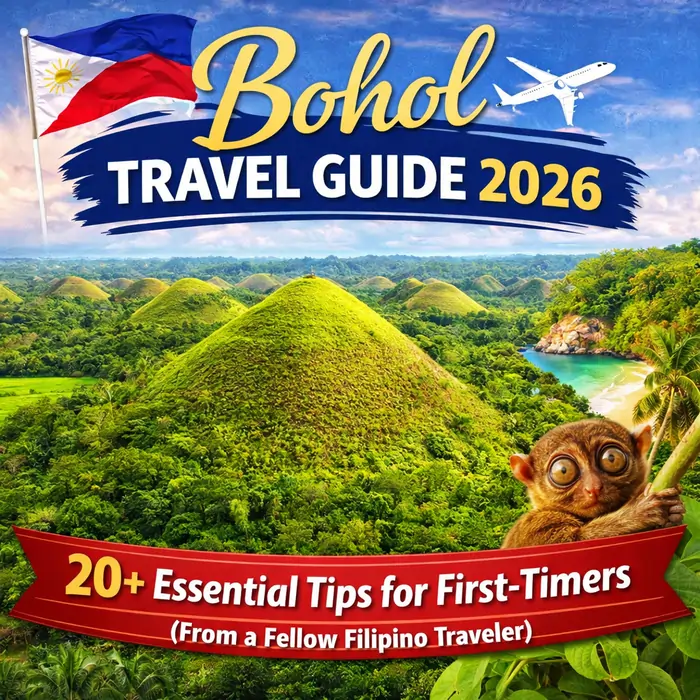
Table of Contents
1. Bohol at a Glance: Why This Island Matters
Bohol is the Philippines’ first UNESCO Global Geopark—a designation earned in 2023 that recognizes its unique geological heritage . But beyond the official titles, Bohol matters because it offers something increasingly rare: a destination that works for almost every type of traveler.
The Geography You Need to Understand:
Bohol isn’t one tiny island—it’s a province with a main island (Bohol proper) and a smaller attached island called Panglao, connected by two bridges. Most tourists stay on Panglao (Alona Beach area) and do day trips to mainland Bohol for the Chocolate Hills and Tarsier Sanctuary .
Key Areas:
- Panglao Island: Tourism hub, beaches, dive centers, resorts, restaurants. Alona Beach is the epicenter .
- Tagbilaran City: Provincial capital, port, some malls. Not a tourist destination itself but a transit point .
- Anda: Eastern Bohol, quieter, white-sand beaches, fewer crowds.
- Carmen: Home of the Chocolate Hills.
What Bohol Does Best:
- Geological wonders: The Chocolate Hills exist nowhere else on Earth.
- Wildlife encounters: Tarsiers, dolphins, sea turtles, whale sharks (seasonal, ethical considerations apply).
- Diving and snorkeling: Balicasag Island’s wall dive is world-class .
- Cultural heritage: Centuries-old stone churches, the Blood Compact site.
2. Best Time to Visit: Seasons, Crowds, and Chocolate Hills Colors
Bohol’s climate follows the Philippine pattern, but with some local nuances worth knowing.
Dry Season (November to May):
This is peak tourist season. December to February offers cooler temperatures and the best chance of seeing the Chocolate Hills in their namesake brown color—the grass dries out, transforming green mounds into chocolate-kissed cones .
Rainy Season (June to October):
Fewer tourists, lower prices, but afternoon downpours are common. August through October sees the most rain . The hills stay green year-round during wetter months—still beautiful, but not “chocolate.”
My Personal Take:
I’ve visited in February (perfect weather), April (brutally hot but clear skies), and October (rainy but wonderfully uncrowded). If you can handle some unpredictability, shoulder months like November and May offer a sweet spot—decent weather with thinner crowds.
Temperature Year-Round: 24°C to 32°C (75°F to 90°F). Humidity is constant. Pack accordingly.
2026 Note: Virgin Island sandbar reopened in January 2026 after a rehabilitation closure from October 2024 . It’s back and better protected—visitation is now more regulated, which is good for long-term sustainability.
3. Getting There: Flights and Ferries Explained
Bohol is more accessible than ever, thanks to Bohol-Panglao International Airport (TAG), which opened in 2018 and handles direct flights from Manila, Clark, and even some international routes .
By Air (Recommended):
- Manila to Panglao: 1 hour 30 minutes. Multiple daily flights (PAL, Cebu Pacific, AirAsia). Round-trip fares: ₱2,500–6,000 depending on booking window.
- Cebu to Panglao: 30 minutes. Short hop if you’re already in Cebu.
- Clark to Panglao: 1 hour 45 minutes. Good option if you’re coming from North/Central Luzon.
- International: Direct flights from Seoul, Busan, and occasionally China .
By Ferry (Budget Option):
From Cebu City, OceanJet and SuperCat operate fast ferries to Tagbilaran Port. Travel time: ~2 hours. Cost: ₱800–1,200 one-way .
Airport Transfer to Alona Beach (Panglao):
- Shared van: ₱150–200 per person, 20–30 minutes
- Tricycle: ₱300–400, about 30 minutes
- Private car: ₱600–800, pre-arranged through your hotel
My Advice: If you’re coming from Manila, fly directly to Panglao. The time saved versus flying to Cebu then ferrying is worth the marginally higher cost.
4. Getting Around: Tricycles, Motorbikes, and Private Cars
Bohol’s transport situation requires planning. This isn’t Manila where you can Grab anywhere anytime.
Tricycle (Short Distances):
The workhorse of Panglao and Tagbilaran. Fares: ₱50–150 depending on distance. Always negotiate before getting in. From Alona Beach to Dumaluan Beach: ~₱200–250 .
Motorbike Rental (For the Adventurous):
- Cost: ₱300–500 per day
- Requirements: International driver’s permit technically required. Many rental shops don’t ask, but if you get stopped, you’ll want proper documentation.
- My Experience: I’ve rented motorbikes twice in Bohol. The roads are generally good, but watch for sudden potholes, dogs, and tricycles that stop without warning. Wear a helmet—it’s the law and common sense.
Private Car with Driver (For Countryside Tours):
This is how most people see the Chocolate Hills and inland sights. A full-day private car (up to 8 hours) costs ₱2,500–3,500 and accommodates 4–6 people . You set the itinerary, the driver waits at each stop.
Cruise Passenger Note: If you’re arriving by cruise ship at Tagbilaran Port, private car hire is essentially mandatory for seeing inland sights. Public transport is too slow for a 6-8 hour port call. Expect to pay ₱3,000–4,500 for a full-day hire .
Ride-Hailing Reality:
Grab exists in Tagbilaran but is unreliable for inland trips. You might get a ride to the Chocolate Hills, but you’ll almost certainly be stranded there with no ride back. Do not rely on apps outside Panglao .
5. Where to Stay: Panglao vs. Anda vs. Tagbilaran
Your base determines your Bohol experience.
Panglao Island (Alona Beach Area)
Vibe: Lively, convenient, tourist-friendly
Best for: First-timers, divers, nightlife seekers, convenience
This is where 80% of tourists stay, and for good reason. Alona Beach concentrates restaurants, dive shops, tour operators, and nightlife into a walkable strip .
Accommodation Options:
| Category | Examples | Price Range (per night) |
|---|---|---|
| Budget | Alona Vida Beach Resort, guesthouses | ₱600–1,500 |
| Mid-range | Bluewater Panglao, Bohol Coco Farm | ₱2,000–4,500 |
| Luxury | Amorita Resort, South Palms, BE Grand | ₱6,000–15,000+ |
My Pick: I’ve stayed at Alona Vida Beach Resort twice. It’s basic but clean, steps from the beach, and priced fairly for the location. If you want pool access without beachfront prices, look at properties slightly inland—you’re still 5-10 minutes from everything.
Dumaluan Beach (South Panglao)
Vibe: Quieter, wider beach, more local
Best for: Families, couples seeking calm, longer stays
Dumaluan has finer white sand and fewer crowds than Alona. Resorts like Bohol Beach Club and South Palms dominate this stretch. Day-use passes available (₱600–1,000) if you’re staying elsewhere .
Anda (Eastern Bohol)
Vibe: Secluded, pristine, slow-paced
Best for: Honeymooners, return visitors, those seeking escape
Anda is what Panglao was 15 years ago—quiet, undeveloped, and genuinely peaceful. The beaches rival anywhere in the Philippines. The trade-off: you’re 2+ hours from the Chocolate Hills and other inland attractions.
Tagbilaran City
Vibe: Urban, functional, transit-oriented
Best for: Overnight before early flights/ferries, budget travelers
Only stay here if you’re transiting. The city has malls (Island City Mall is decent) and affordable hotels, but it’s not where you want to base a vacation .
6. Chocolate Hills: The Non-Negotiable
The Chocolate Hills are Bohol’s defining image—1,268 cone-shaped limestone formations spread across 50 square kilometers. In the dry season, the grass covering them turns brown, creating the “chocolate” effect .
Where to View Them:
Chocolate Hills Complex (Carmen):
The main viewing deck. 214 steps to the top. Panoramic views of the hills stretching to the horizon. Entrance: ₱50–100 .
Sagbayan Peak:
Alternative viewpoint with fewer crowds. Also has a small park, butterfly dome, and tarsier viewing area. Good for families.
ATV Rental:
At the base of the Chocolate Hills Complex, you can rent ATVs to ride through the foothills. Cost: ₱1,000–1,400 per hour . It’s touristy, yes. But driving an ATV through the shadow of those hills is genuinely fun. I did it on my second trip and don’t regret it.
Timing Tip: Go early (before 9 AM) or late (after 3 PM). Midday sun is brutal on that viewing deck, and tour buses arrive in waves between 10 AM and 2 PM .
Distance from Panglao: 75–90 minutes by car. Plan accordingly.
7. Tarsier Sanctuary: Ethics and Encounter Tips
Philippine tarsiers are among the world’s smallest primates—about 10–15 cm tall with enormous eyes that don’t move in their sockets (they swivel their heads 180 degrees instead) .
Where to Go:
I recommend the Philippine Tarsier Sanctuary in Corella. It’s a legitimate conservation center where tarsiers live in protected forest habitat. Entrance: ₱150 .
Important Ethical Rules:
- No flash photography. Tarsiers’ eyes are extremely sensitive.
- Absolute silence. They stress easily—loud noises can literally kill them.
- Never touch them. They’re wild animals, not props.
- Don’t support roadside “tarsier photo” operations. These animals are often captured, stressed, and die prematurely.
My Encounter:
The first time I saw a tarsier, I almost missed it. They’re so small and still, clinging to a branch, those massive eyes unblinking. Our guide pointed to a cluster of leaves, and suddenly—there it was. We stood in silence for maybe three minutes. It turned its head slowly, regarded us with what felt like ancient wisdom, then closed its eyes. That moment of quiet observation felt more meaningful than any selfie could have.
Timing: Tarsiers are nocturnal. During the day, they sleep clinging to branches. Go early morning when they’re slightly more active, or manage expectations—you’ll see sleeping tarsiers, which is still magical .
8. Loboc River Cruise: Buffet with a View
The Loboc River Cruise is the most touristy thing you’ll do in Bohol. It’s also genuinely pleasant if you approach it with the right mindset.
What It Is:
A floating restaurant—essentially a large bamboo raft with dining tables—that cruises up and down the emerald Loboc River while you eat a Filipino buffet. Local musicians play, and at a midway stop, you’ll see a cultural performance by the Loboc Children’s Choir (famous in the Philippines) .
Cost: ₱850–1,000 per person (includes buffet and 1-hour cruise) .
What to Expect:
The food is… fine. It’s buffet-style Filipino comfort food—grilled fish, chicken adobo, pancit, fresh fruit. You’re not here for Michelin stars. You’re here to glide through tropical forest on calm water, coconut trees lining both banks, while someone plays “Islands in the Stream” on a guitar.
Timing Tip: Peak hours (11:30 AM–1:30 PM) see long waits. Cruise ships often include this stop, making lines worse. Go for the 10 AM or 2 PM slot if possible .
Alternative: If lines are insane, skip the cruise and eat at a riverside restaurant. You still get the view without the wait.
9. Island Hopping: Balicasag and Virgin Island
This is the water-based counterpart to the countryside tour. Book through any operator on Alona Beach or your hotel.
The Standard Route:
Dolphin Watching → Balicasag Island (snorkeling/turtle sanctuary) → Virgin Island Sandbar
Dolphin Watching:
Boats leave Alona Beach around 6 AM to catch dolphins feeding. Important: Dolphins are wild. Sightings aren’t guaranteed. I’ve had trips where we saw dozens of spinner dolphins leaping alongside the boat, and trips where we saw nothing but water. Manage expectations .
Balicasag Island:
This is world-class snorkeling and diving territory. The island sits on a marine sanctuary with a dramatic 300-meter vertical coral wall . What you’ll see:
- Sea turtles: Almost guaranteed. They glide through the shallows, utterly unbothered by snorkelers.
- Jackfish storms: Massive schools of trevally swirling in formation.
- Vibrant coral: The wall is alive with color.
Costs for Balicasag:
- Group island-hopping tour: ₱800–1,200 per person (includes snorkel gear)
- Local guide fee (mandatory): Additional ₱250–300
- Environmental fees: Small amounts collected at various points
Virgin Island Sandbar:
A crescent-shaped sandbar that emerges at low tide. In 2026, it’s reopened after rehabilitation, and visitation is now better managed . Local vendors sell fresh sea urchins (₱20–30 each) and coconuts. The sand is blindingly white. At high tide, it disappears entirely.
What to Bring:
- Reef-safe sunscreen (chemical sunscreen damages coral)
- Waterproof phone case
- Cash (small bills for fees and snacks)
- Hat (Virgin Island has zero shade)
- Seasickness medication if prone
10. Alona Beach: The Social Hub
Alona Beach is Bohol’s tourism nerve center. It’s not the most pristine beach in the Philippines—it’s busy, lined with restaurants and dive shops—but it’s functional and fun.
What Works:
- Sunsets. Alona faces west. Evenings here are reliably spectacular.
- Convenience. Restaurants, ATMs, tour operators, and massages (₱300/hour) are steps away .
- Nightlife. Live music at Hey Jude Bar and similar spots. Not wild like Boracay, but lively enough.
What Doesn’t:
- Crowds. Peak season means peak people.
- Beach quality. It’s nice, but Dumaluan and Anda are objectively better sand.
My Routine on Alona:
Late afternoon: find a beachfront spot, order a mango shake (₱100–150), watch the sun sink into the Sulu Sea. Then wander the beach path, grab grilled seafood from one of the open-air restaurants, and let the evening unfold.
11. Hidden Gems: Anda, Pamilacan, and Beyond
Beyond the standard itinerary, Bohol rewards those who venture further.
Anda
Eastern Bohol’s secret. White-sand beaches, limestone cliffs, cave pools. Cabagnow Cave Pool is a natural swimming hole inside a limestone cave—crystal-clear water, perfect for a refreshing dip . Anda is 2+ hours from Panglao; worth an overnight stay.
Pamilacan Island
Quieter alternative to Balicasag. Known for dolphin and whale watching (seasonal). The snorkeling is excellent, and the island itself has a laid-back fishing village vibe. Day trips available, or stay overnight in basic homestays .
Can-umantad Falls (Candijay)
Bohol’s tallest waterfall. Multi-tiered cascades with a natural pool at the base. Less visited than the Chocolate Hills circuit. Combine with a visit to the Cadapdapan Rice Terraces nearby .
Abatan River Firefly Watching
Evening boat tour through mangrove forests. When the boat cuts its engine and lights, the trees illuminate with thousands of fireflies—like Christmas lights in the jungle. Magical, quiet, and worth the evening trip .
12. Baclayon Church and Bohol’s Heritage
The Baclayon Church (Church of Our Lady of the Immaculate Conception) is one of the oldest coral stone churches in the Philippines, dating back to 1727. It’s a National Cultural Treasure and part of Bohol’s UNESCO Geopark designation .
The 2013 Bohol earthquake severely damaged the church. Restoration work has been ongoing for over a decade. When I last visited, you could see the painstaking efforts to preserve what remained while rebuilding what was lost.
Adjacent Museum: The church complex includes a small museum with religious artifacts, vestments, and historical items. Entrance: ₱50–150.
Blood Compact Site (Tagbilaran):
A monument commemorating the 1565 blood compact between Spanish explorer Miguel López de Legazpi and Datu Sikatuna—considered the first treaty of friendship between Filipinos and Europeans . The monument itself is small, but it’s a significant historical marker.
13. Man-Made Forest and Butterfly Garden
Bilar Man-Made Forest:
A 2-kilometer stretch of towering mahogany trees planted in the 1960s as a reforestation project. The canopy creates a natural tunnel—cooler, darker, and eerily beautiful .
How to Experience It:
Don’t make this a “destination.” Have your driver pull over safely for 5–10 minutes. Step out, look up at the canopy, and listen. The silence here is different—muffled, green, alive. It’s a quick stop between Loboc and the Chocolate Hills, and it’s worth the pause .
Bohol Habitat Conservation Center (Butterfly Garden):
Near Bilar. Small but well-maintained butterfly enclosure with local species. Also has a bird area and some tarsiers (though I recommend the Corella sanctuary for tarsier viewing). Good for families.
14. Food Worth Traveling For
Bohol’s food scene blends Filipino staples with fresh seafood and a growing number of international options.
Must-Try Local Dishes
Kinilaw na Isda:
Fresh raw fish cured in vinegar, ginger, onions, and chili. Bohol’s version often uses coconut milk. Similar to Davao’s kinilaw but with local variations. Find it at any seafood restaurant.
Peanut Kisses:
Bohol’s iconic pasalubong. Peanut meringue cookies shaped like the Chocolate Hills. Crunchy, sweet, and genuinely good. Buy from the Bohol Bee Farm or souvenir shops.
Calamay:
Sticky rice cake cooked with coconut milk and brown sugar, traditionally sold in halved coconut shells. Sweet, dense, and best eaten fresh.
Seafood Platters:
Alona Beach restaurants offer “boodle fight” style seafood platters—grilled fish, prawns, squid, mussels, and crab laid out on banana leaves. Good for groups.
Recommended Restaurants
| Restaurant | Location | What to Order |
|---|---|---|
| Bohol Bee Farm | Panglao | Organic salads, honey-glazed chicken, homemade ice cream (malunggay flavor is surprisingly good) |
| Giuseppe Pizzeria | Alona Beach | Thin-crust pizza, legit Italian |
| Gerarda’s | Tagbilaran | Crispy pata, kinilaw, Filipino classics |
| Molly Bistro | Panglao | Honey-glazed banana with ice cream (dessert) |
| Sisa Bakeshop | Tagbilaran | Coconut bread, local pastries |
Market Eating
Tagbilaran’s public market is where locals eat. Fresh fruits (Bohol mangoes are excellent), grilled meats, and carinderia-style meals for under ₱100. Go in the morning for the best selection .
15. Souvenirs That Actually Mean Something
Skip the generic keychains. Here’s what to bring home.
| Souvenir | Where to Buy | Notes |
|---|---|---|
| Peanut Kisses | Bohol Bee Farm, souvenir shops | Iconic, lightweight, travels well |
| Calamay | Local markets, roadside stalls | Best eaten fresh; buy the day before departure |
| Handwoven baskets | Antequera (Basket Capital of Bohol) | Traditional weaving, supports local artisans |
| Ube pastries | Local bakeries | Purple yam treats, uniquely Filipino |
| Tablea (chocolate tablets) | Public markets | For making hot chocolate at home |
| Dried mangoes | Any supermarket | Bohol mangoes are sweeter than other varieties |
Where to Shop:
- Island City Mall (Tagbilaran): One-stop for pasalubong, SIM cards, currency exchange
- Bohol Bee Farm Shop: Curated local products, slightly pricier but quality assured
- Antequera Market: For baskets and woven goods
16. Sample 4-Day Bohol Itinerary
Based on my actual trips. This pacing works without feeling rushed.
Day 1: Arrival & Alona Orientation
- Land at Panglao Airport, transfer to Alona Beach accommodation
- Afternoon: Beach walk, massage on the sand (₱300/hour)
- Evening: Sunset at Alona, dinner at beachfront seafood restaurant
- Nightcap: Live music at Hey Jude Bar
Day 2: Countryside Tour (Chocolate Hills Circuit)
- 7 AM: Start early to beat crowds
- First stop: Tarsier Sanctuary in Corella (arrive before 9 AM)
- Mid-morning: Bilar Man-Made Forest (quick photo stop)
- Late morning: Chocolate Hills Complex (climb the 214 steps, ATV optional)
- Lunch: Loboc River Cruise (aim for 1 PM slot to avoid peak crowds)
- Afternoon: Baclayon Church and museum
- Return to Alona by 5 PM
Day 3: Island Hopping (Balicasag & Virgin Island)
- 5:30 AM: Depart Alona Beach for dolphin watching
- Mid-morning: Balicasag Island snorkeling (turtles, coral wall, jackfish)
- Late morning: Virgin Island Sandbar (timing depends on tide)
- Lunch: Grilled seafood on the boat or back at Alona
- Afternoon: Rest—you’ve earned it
- Evening: Abatan River Firefly Watching (book through tour operator)
Day 4: Choose Your Adventure
- Option A (Relaxed): Dumaluan Beach day trip, massage, final seafood dinner
- Option B (Adventure): Day trip to Anda (Cabagnow Cave Pool, Can-umantad Falls)
- Option C (Heritage): Explore Tagbilaran’s Blood Compact site, ICM Mall for souvenirs
- Depart or extend
If You Have 5–7 Days:
- Add an overnight in Anda (2 days/1 night)
- Add Pamilacan Island day trip or overnight
- Dive certification course (3–4 days)
- Cebu extension: Moalboal sardine run or Oslob whale sharks (ethical considerations apply)
17. Budget Breakdown: What Things Actually Cost
2026 prices in Philippine Pesos (₱).
| Category | Budget (per person/day) | Mid-Range | Comfortable |
|---|---|---|---|
| Accommodation | ₱600–1,200 (hostel/guesthouse) | ₱1,500–3,500 | ₱5,000+ |
| Food | ₱400–600 (local eateries) | ₱800–1,500 | ₱2,000+ |
| Transport | ₱200–400 (tricycles, shared tours) | ₱500–1,000 | ₱1,500+ (private car) |
| Activities | ₱500–800 (group tours) | ₱1,000–1,500 | ₱2,500+ (private tours) |
| Daily Total | ₱1,700–3,000 | ₱3,800–7,500 | ₱11,000+ |
Activity Cost Reference (2026):
- Chocolate Hills entrance: ₱50–100
- Tarsier Sanctuary: ₱150
- Loboc River Cruise (with buffet): ₱850–1,000
- Island hopping group tour: ₱800–1,200
- Private car (full day, up to 6 pax): ₱2,500–3,500
- Motorbike rental (per day): ₱300–500
- Balicasag snorkeling fees (local guide): ₱250–300
Money-Saving Tips:
- Group tours for island hopping are significantly cheaper than private boats
- Eat at local carinderias (₱80–150 meals) for lunch instead of tourist restaurants
- Book countryside tours as a group—split the van cost
- Travel shoulder season (November, May) for lower accommodation rates
18. Connectivity: SIM Cards and WiFi Reality
At Panglao Airport:
SIM cards from Globe and Smart available at arrival. Typical tourist package: 5–10GB data, 7–30 days validity, ₱200–500 .
My Experience:
Smart has slightly better coverage in rural Bohol (Carmen, Anda). Globe works well in Panglao and Tagbilaran. If you’re doing the countryside tour, Smart is the safer bet.
eSIM Option:
If your phone supports eSIM, you can purchase and activate before arrival. More expensive but eliminates the airport SIM queue.
WiFi Reality:
- Hotels/resorts: Generally reliable, though speeds vary
- Cafes on Alona: Decent WiFi, but can slow during peak hours
- Rural areas: Spotty to nonexistent. Download offline maps before countryside tours
19. Cultural Etiquette and Safety Tips
General Etiquette:
- Bohol is conservative. Swimwear is for beaches only—cover up when entering towns, churches, or restaurants.
- Church dress code: Shoulders and knees covered. Some churches provide wraps.
- Tipping: Not mandatory but appreciated. ₱20–50 for guides, 10% at restaurants if service was good.
Wildlife Ethics:
- Never touch tarsiers. They’re highly sensitive; stress can kill them .
- Use reef-safe sunscreen. Chemical sunscreens damage coral. Look for zinc oxide or titanium dioxide formulas.
- Don’t feed fish or touch coral. Snorkeling etiquette matters.
Safety:
- Bohol is generally safe. Standard precautions apply: secure valuables, avoid isolated areas at night.
- Swimming safety: Watch for rip currents at Alona and Dumaluan. Heed local warnings.
- Road safety: If renting a motorbike, wear a helmet. Roads have potholes and unexpected obstacles (dogs, children, tricycles).
Emergency Numbers:
- Police: 117 or 911
- Coast Guard: (038) 411-3335
- Bohol Provincial Hospital (Tagbilaran): (038) 411-3301
20. What to Pack
Essentials
- Reef-safe sunscreen (reef-safe is non-negotiable for Balicasag)
- Insect repellent (evenings bring mosquitoes)
- Reusable water bottle (refill stations at most hotels)
- Dry bag (for island hopping and boat trips)
- Waterproof phone case
- Power bank
- Lightweight rain jacket (afternoon showers possible)
Clothing
- Lightweight, breathable shirts
- Shorts and comfortable pants
- Swimwear (at least 2 sets)
- Rash guard (sun protection while snorkeling)
- Sarong or cover-up (for entering towns/churches)
- Comfortable walking shoes (for Chocolate Hills steps)
- Flip-flops or sandals
- Light jacket (air-conditioned vans and evening boat trips)
Gear
- Snorkel and mask (if you prefer your own gear; rentals available)
- Action camera/GoPro (for underwater shots)
- Binoculars (for dolphin watching and tarsier spotting)
Documents and Money
- Valid ID or passport
- Cash in Philippine Pesos (small bills for tricycles and fees)
- Credit/debit card (notify bank of travel)
- Printed hotel reservations (backup)
21. Final Word from Jin
Bohol doesn’t shout.
It doesn’t have Boracay’s party reputation or Palawan’s UNESCO Underground River fame. What it has is something quieter—a geological wonder that exists nowhere else, a tiny primate with eyes too big for its body, and an island rhythm that rewards slowing down.
My first trip was rushed. I saw the Chocolate Hills, checked the box, and moved on. It took returning—sitting on Dumaluan’s empty beach at sunrise, watching tarsiers sleep in the forest, eating kinilaw made from fish caught hours earlier—to understand what I’d missed.
Bohol works best when you stop trying to see everything and instead let the island reveal itself. Go early to the Chocolate Hills, before the tour buses arrive. Sit in silence at the Tarsier Sanctuary. Take the longer route through Anda. Eat at the carinderia where no one speaks English but the food speaks for itself.
As a Mindanaoan who’s traveled much of the Philippines, I’ve learned that the best places aren’t always the most famous. They’re the ones that feel genuine. Bohol, for all its growing popularity, still feels genuine.
Come for the hills shaped like chocolate. Stay for the quiet moments between.
Maayong pag-abot sa Bohol. Welcome to Bohol.
Jin Grey is the founder of DigiLamon.com, a food and travel site documenting honest eats and adventures across the Philippines and beyond. Born in Isulan, Sultan Kudarat, he has called Davao City home since 2003. She writes about places that feel like home—even when they’re far from it.
Connect with Jin Grey
📧 Email: ceo@jingrey.com | jeaniusseo@gmail.com
🌐 Personal Website: jingrey.com
🍜 DigiLamon: digilamon.com
📘 Facebook: Jin Grey
💼 LinkedIn: Jean Diaz Palabrica
📝 Medium: jin-grey-seo
Summary for This Guide
General: Bohol travel guide 2026, Bohol Philippines itinerary, Bohol first-timer tips, Panglao travel guide
Attractions: Chocolate Hills, Tarsier Sanctuary Corella, Loboc River Cruise, Balicasag Island, Virgin Island sandbar, Alona Beach, Baclayon Church, Bilar Man-Made Forest, Anda Bohol, Pamilacan Island, Abatan River fireflies
Activities: Bohol island hopping, Balicasag snorkeling, dolphin watching Bohol, ATV Chocolate Hills, Bohol countryside tour, diving Bohol, firefly watching Bohol
Accommodation: Alona Beach hotels, Panglao resorts, Amorita Resort Bohol, South Palms Resort, Bohol Beach Club, budget accommodation Bohol, where to stay Bohol
Food: Peanut Kisses Bohol, kinilaw Bohol, Loboc River cruise buffet, Bohol Bee Farm, Gerarda’s Tagbilaran, Bohol delicacies, calamay Bohol
Transportation: Bohol-Panglao International Airport, Tagbilaran Port, OceanJet ferry, tricycle Bohol fare, private car Bohol, motorbike rental Bohol
Budget: Bohol travel cost 2026, Chocolate Hills entrance fee, Balicasag island hopping price, Bohol budget breakdown
Practical: Bohol SIM card, Smart vs Globe Bohol, Bohol weather seasons, tarsier ethics, reef-safe sunscreen Bohol
This guide was last updated April 2026. Information is accurate to the best of my knowledge. Prices in Philippine Pesos (₱).
