
Written by Jin Grey | DigiLamon.com | April 9, 2026
Camiguin’s signature delicacies center on three must-try items: Vjandep pastel (pillowy yema-filled buns, ₱300/box), sweet volcanic-soil lanzones (best in October during the Lanzones Festival), and suman moron (two-tone sticky rice with coconut and cocoa, ₱100/box of 13). The island’s savory star is surol—native chicken stewed in coconut milk with ginger and lemongrass.
Visit Vjandep Bakeshop in Mambajao for authentic pastel, Mambajao Public Market for fresh moron and seasonal lanzones, and J&A Fishpen near Benoni Port for floating-platform seafood dining. Most pastel lasts 3-5 days; turrones de mani and piniato travel best for pasalubong. For the complete experience, integrate food stops into the island circuit: Vjandep → market → Sunken Cemetery (BeeHive Cafe) → White Island dock (Checkpoint Food Camiguin).
Let me tell you something about Camiguin that guidebooks get wrong.
They’ll tell you it’s the “Island Born of Fire”—volcanoes, hot springs, the haunting Sunken Cemetery. They’ll hand you a checklist: climb Hibok-Hibok, swim at White Island, soak at Ardent. And yes, those are essential. But for me—someone who believes you haven’t really been somewhere until you’ve eaten its food—Camiguin’s real story unfolds in its kitchens and market stalls.
I almost missed it entirely. My first Camiguin trip was a blur of rented motorbikes and chasing viewpoints. I left with stunning photos and a vague sense that I’d skimmed the surface. It wasn’t until my return that I slowed down enough to notice: the boxes of pastel everyone clutched at the airport, the suman vendors in Mambajao, the way lanzones season transformed the entire island into a golden celebration.
As a Mindanaoan born in Isulan, Sultan Kudarat, and now calling Davao City home for over two decades, I have a deep appreciation for how volcanic soil—the same force that shaped Camiguin’s dramatic landscape—produces extraordinary food. The island’s lanzones are legendary. Its pastel has achieved cult status. But beyond these headliners lies a repertoire of delicacies that deserve equal billing.
This guide covers everything I’ve eaten, loved, and stuffed into my carry-on across multiple visits. Consider it your edible map of Camiguin.
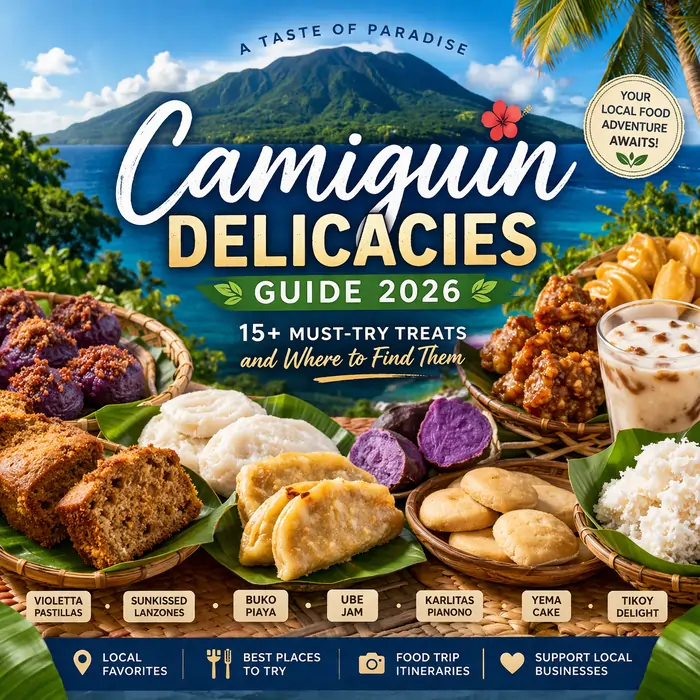
Table of Contents
Why Camiguin’s Food Deserves Your Full Attention
Camiguin’s cuisine is shaped by its geology. The same volcanic activity that created its seven volcanoes also produced some of the most fertile soil in the Philippines. This explains why Camiguin lanzones taste sweeter than anywhere else—the island’s terroir works its magic on this otherwise unremarkable fruit.
Beyond fruit, Camiguin’s food reflects its island identity. Coconut features prominently. Fresh seafood is abundant. Root crops thrive in the volcanic earth. And there’s a resourcefulness to Camiguinano cooking—transforming simple ingredients like cassava, corn, and glutinous rice into treats worth crossing oceans for.
The island’s delicacies aren’t fussy or pretentious. They’re honest, coconut-rich, often sweet, and made with the patience that comes from knowing some things can’t be rushed. Suman moron simmered until the coconut milk reduces to creamy perfection. Pastel dough left to rise until pillowy soft. Chicken surol slow-cooked until the meat falls from the bone.
This is food that tastes like Camiguin. Volcanic. Abundant. Unforgettable.
Iconic Camiguin Delicacies You Cannot Miss
These are the heavy hitters—the treats that define Camiguin’s culinary identity.
Pastel de Camiguín
If Camiguin had an edible ambassador, this would be it.
Pastel is a pillowy-soft sweet bun filled with yema—a rich, creamy custard made from egg yolks and condensed milk. The contrast is perfect: airy bread giving way to dense, sweet filling. It’s the kind of treat that makes you close your eyes on the first bite.
The origin story belongs to Eleanor Popera Jose and her family, who began commercially selling pastel in 1990. What started as a heirloom recipe for family gatherings has become Camiguin’s defining pasalubong. Today, Vjandep is the name synonymous with pastel—their boxes are ubiquitous at Camiguin Airport and beyond.
While classic yema remains the gold standard, modern variations include ube, mocha, macapuno, cheese, chocolate, durian, jackfruit, and mango. Purists stick with original yema. Adventurous eaters should try ube or durian. You really can’t go wrong.
Best for: Pasalubong, breakfast, merienda, airport impulse buys
Where to buy: Vjandep Bakeshop (Mambajao), Camiguin Airport, souvenir shops island-wide
Lanzones
This isn’t a prepared delicacy—it’s nature’s gift to Camiguin. And during lanzones season, the island practically glows golden with these grape-sized fruits hanging from trees everywhere.
Here’s what you need to understand: lanzones grown elsewhere in the Philippines range from sour to mildly sweet. Camiguin lanzones are different. The volcanic soil produces fruit so sweet it’s almost honeyed, with flesh that separates cleanly from the seed. Locals will tell you—with complete conviction—that Camiguin grows the sweetest lanzones in the country. They’re not wrong.
The annual Lanzones Festival (third week of October) celebrates this bounty with street dancing, parades, and enough lanzones to feed an army. If you can time your visit for October, do it. The island is at its most vibrant, and the fruit is at peak sweetness.
Best for: Seasonal eating, edible souvenirs (short shelf life), festival immersion
Where to buy: Roadside stalls, Mambajao Public Market, everywhere during Lanzones Festival (October)
Suman Moron
Forget what you know about regular suman. Camiguin’s moron is in a league of its own.
This kakanin combines white and black glutinous rice cooked in coconut milk, then rolled together into a striking two-tone cylinder before being wrapped in banana leaves and steamed. The result is visually dramatic—swirling black and white spirals—and texturally perfect: chewy, creamy, and rich with coconut flavor.
What makes moron distinct is the flavor depth. The black rice portion often includes cocoa or tableya, adding subtle chocolate notes that complement the coconut. Versions come sweet or savory (salty-sweet, really), and it’s traditionally paired with sikwate (hot chocolate) for breakfast or merienda.
The Kalipi-Balbagon Association in Mambajao has been perfecting suman moron since 2007, and their version is considered the gold standard. At around P8 per piece or P100 per box of 13, it’s one of Camiguin’s best-value delicacies.
Best for: Breakfast with sikwate, pasalubong (short shelf life), merienda
Where to buy: Mambajao Public Market, Kalipi-Balbagon Association stalls
More Sweet Treats and Snacks
Camiguin’s bakeries and markets offer plenty beyond the famous three.
Kiping
A humble but beloved delicacy made from grated cassava mixed with coconut and sugar, wrapped in banana leaves, and steamed until sticky and sweet. The texture is dense and satisfying, with the cassava’s earthy sweetness balanced by rich coconut. It’s the kind of treat that sustained generations of Camiguinanos, and it tastes like tradition.
Where to find: Local markets, roadside stalls, during fiestas and celebrations
Binaki
Camiguin’s version of steamed corn cakes. Fresh corn is ground, mixed with coconut milk and sugar, then wrapped in corn husks and steamed. The result is soft, sweet, and slightly grainy—comfort food that celebrates the island’s abundant corn harvest. The corn husk wrapper imparts a subtle grassy fragrance that distinguishes binaki from other steamed cakes.
Where to find: Local markets, special occasions, some roadside vendors
Turrones de Mani
Bite-sized cylinders of peanuts encased in thin wafer and coated with caramelized sugar. The texture is pure crunch—snap through the caramel shell, hit the peanut center, and keep chewing. Addictively simple and perfect with black coffee. They’re sold in small bags at markets and make excellent lightweight pasalubong.
Where to buy: Local markets, souvenir shops
Piniato
Peanuts and molasses transformed into sticky, crunchy candy. Similar to peanut brittle but with a more rustic, traditional flavor profile. The molasses gives it depth beyond simple sugar sweetness. It’s the kind of sweet that sticks to your teeth and makes you reach for another piece anyway.
Where to buy: Small stores, market stalls
Bibingka
Camiguin’s version of the classic Filipino rice cake follows tradition: ground rice, coconut milk, and sugar cooked in banana leaves over charcoal. The method matters—the charcoal heat creates a slightly smoky, caramelized exterior while the banana leaf imparts fragrance. The interior stays soft and custardy. It’s Christmas food in much of the Philippines, but you can find it year-round on Camiguin.
Where to find: Market stalls, especially during Christmas season and fiestas
Savory Camiguin Dishes Worth Seeking Out
Desserts dominate the delicacy conversation, but Camiguin’s savory side deserves equal attention.
Surol (or Sorol)
This is Camiguin’s comfort food—the dish locals crave when they’ve been away too long.
Surol features native chicken simmered in coconut milk with ginger, lemongrass, and tomatoes. The preparation is deceptively simple: boil the chicken until tender with aromatics, remove the bones, return the meat to the pot, whisk in coconut milk and salt, then finish with coconut cream and fresh tomatoes.
The result is a soup-stew hybrid—creamy from coconut, fragrant from lemongrass and ginger, brightened by tomatoes. The native chicken gives it deeper flavor than commercial poultry. It’s fiesta food, family gathering food, “someone important is visiting” food.
Some restaurants serve refined versions with boneless cuts and careful presentation. But the soul of surol lives in home kitchens and local carinderias, made the way grandmothers have made it for generations.
Where to try: Josh & Luke Restaurant (Naasag Beach), local carinderias, during fiestas
Fresh Seafood
Camiguin is surrounded by rich waters, and the seafood reflects this abundance. Grilled blue marlin appears on menus everywhere—meaty, flaky, and perfect with soy-calamansi dipping sauce. Baked scallops topped with butter and garlic are another staple.
The J&A Fishpen near Benoni Port offers the classic Camiguin seafood experience: eating on floating platforms over the lagoon, watching sea hawks circle while your grilled catch arrives. It’s not fancy. It’s better than fancy—it’s fresh and real.
Where to try: J&A Fishpen (Benoni), Alex Restaurant + Bar, seaside eateries
Chicken Surol Alternatives
At Josh & Luke Restaurant (Bintana sa Paraiso in Naasag), surol gets careful treatment—meaty cuts with fewer bones, allowing the coconut broth and spices to shine through. The restaurant also offers interesting fusion options like Thai Chicken Basil with Mango and Ube Pancakes, bridging local ingredients with international flavors.
Where to try: Josh & Luke Restaurant, Checkpoint Food Camiguin (Yumbing)
Where to Buy: Markets, Shops, and Bakeries
Vjandep Bakeshop (Mambajao)
Ground zero for pastel. This is the original source—the bakery that turned a family recipe into Camiguin’s most famous pasalubong. Beyond classic yema pastel, you’ll find flavor variations, leche flan (reportedly excellent), cakes, and other baked goods. The shop also sells souvenir items like shirts and ref magnets. Open daily 6:30 AM – 8:00 PM.
Mambajao Public Market
The island’s commercial heart. Fresh lanzones (in season), suman moron from various producers, kiping, binaki, and other local treats. Go early—before 8 AM—for the best selection and to watch the market wake up. This is where locals shop, and that tells you everything.
Kalipi-Balbagon Association Stalls
For suman moron, go to the source. This women’s association has been producing Camiguin’s definitive moron since 2007. Their version—available sweet or savory—is consistently excellent. Look for their stalls in Mambajao.
Roadside Stalls (Island Circuit Road)
Camiguin’s main circumferential road is dotted with vendors selling seasonal fruits, local snacks, and refreshments. During lanzones season (October), the road practically turns gold with fruit stands. Even outside harvest season, you’ll find coconuts, bananas, and assorted kakanin.
Camiguin Airport
Last-chance pasalubong central. Pastel boxes dominate, but you’ll also find packaged versions of other delicacies. Prices run slightly higher than in town, but the convenience is undeniable. The sight of travelers clutching Vjandep boxes has become part of the Camiguin departure experience.
Pasalubong Buying Guide: What to Bring Home
| Delicacy | Shelf Life | Travels Well? | Best For | Price Range |
|---|---|---|---|---|
| Pastel (Classic Yema) | 3-5 days | Yes—but best fresh | General pasalubong, office sharing | ₱300/box of 12 |
| Pastel (Other Flavors) | 3-5 days | Yes | Adventurous foodies, variety seekers | ₱300-350/box |
| Suman Moron | 2-3 days | Moderate—needs careful packing | Immediate family, short trips | ₱100/box of 13 |
| Turrones de Mani | 2-3 months | Yes—excellent | Lightweight pasalubong, kids | ₱50-100/pack |
| Piniato | 1-2 months | Yes | Sweet snack lovers | ₱50-100/pack |
| Lanzones | 3-4 days | Moderate—bruises easily | Immediate consumption, festival visits | ₱50-150/kilo (seasonal) |
Packing Tips from Someone Who’s Done This Many Times:
- Pastel: Eat within 2-3 days for best texture. The bread dries out over time.
- Suman Moron: Double-wrap in plastic. Refrigerate upon arrival. Consume quickly.
- Lanzones: Hand-carry if possible. These fruits bruise easily and don’t appreciate rough handling.
- Turrones/Piniato: Indestructible. Perfect for checked luggage.
Food Stops to Add to Your Island Circuit
Camiguin’s main road circles the island, making it easy to integrate food stops into your sightseeing route.
Stop 1: Vjandep Bakeshop (Mambajao)
Start your circuit by securing pastel. Buy extra—you’ll snack on them throughout the day.
Stop 2: Mambajao Public Market
After Vjandep, hit the market for suman moron, fresh lanzones (in season), and other local treats. Good for picnic supplies.
Stop 3: Sunken Cemetery (Catarman)
After paying respects at this haunting landmark, stop at The BeeHive Driftwood Cafe nearby. Italian coffee and honeycomb cookies in a rustic driftwood setting—surprisingly perfect.
Stop 4: Ardent Hot Springs
Post-soak hunger is real. Roadside vendors near the entrance often sell kiping, binaki, and fresh buko.
Stop 5: White Island Boat Dock
Before or after your White Island excursion, Checkpoint Food Camiguin in Yumbing offers affordable, home-style Filipino food. Fish tinola and lechon kawali are solid choices.
Stop 6: Katibawasan Falls
The cold water works up an appetite. Local vendors near the entrance sell snacks and refreshments.
Beverages Worth Seeking
Sikwate (Tablea Hot Chocolate)
Traditional hot chocolate made from pure cacao tablets. Rich, slightly bitter, and the traditional partner for suman moron. Nanaw Café in Binunsaran serves excellent sikwate alongside puto maya, with views of the airport below.
Specialty Coffee
Camiguin’s coffee scene has grown considerably. Saga Specialty Coffee serves serious espresso using quality beans (including Mt. Apo roasts). Their horchata is also noteworthy. Utopia Café offers the island’s most famous coffee view—perched where you can watch sunset over the mountains, White Island visible in the distance.
Final Word from Jin
Camiguin taught me something about food and place.
The lanzones from this island taste different. Sweeter. More complex. Put a Camiguin lanzones beside one grown elsewhere, and you’ll understand terroir—not as an abstract wine concept, but as something real, edible, undeniable. The same volcanic soil that shaped Hibok-Hibok and created the Sunken Cemetery’s haunting beauty also feeds the roots of fruit trees and cassava plants. You can taste it.
Pastel tells a different story—about family recipes becoming legacies. Eleanor Popera Jose started selling these soft buns in 1990. Today, Vjandep pastel boxes are as essential to the Camiguin experience as a White Island photo. That’s not just good marketing. That’s a product so perfectly suited to its place that it becomes inseparable from it.
And then there’s suman moron—the two-tone kakanin that a women’s association in Mambajao has turned into sustainable livelihood. When you buy their moron, you’re not just eating sticky rice. You’re supporting 53 families. You’re helping preserve a tradition. Food can do that. Food should do that.
As someone from Mindanao, I recognize this alchemy. It’s the same magic that makes Davao durian incomparable, that gives Sultan Kudarat coffee its distinct character. When food comes from somewhere—really comes from somewhere—you can taste the place in every bite.
So yes—buy the pastel. Bring home the suman moron. Time your visit for lanzones season if you can. But also sit down at a carinderia and order surol. Let the coconut milk broth and lemongrass remind you that simple ingredients, treated with patience, become something extraordinary.
The volcanoes will still be there when you’re done eating. And you’ll understand them better for having tasted what they helped create.
Jin Grey is the founder of DigiLamon.com, a food and travel site documenting honest eats and adventures across the Philippines and beyond. Born in Isulan, Sultan Kudarat, she has called Davao City home since 2003. She writes about food that tastes like place—and places that taste like home.
Connect with Jin Grey
📧 Email: ceo@jingrey.com | jeaniusseo@gmail.com
🌐 Personal Website: jingrey.com
🍜 DigiLamon: digilamon.com
📘 Facebook: Jin Grey
💼 LinkedIn: Jean Diaz Palabrica
📝 Medium: jin-grey-seo.medium.com
🦋 Bluesky: @jingrey.bsky.social
Summary For This Guide
General: Camiguin delicacies guide 2026, Camiguin food guide, Camiguin pasalubong, must-try food Camiguin, Camiguin culinary tourism, Island Born of Fire food
Specific Delicacies: Pastel de Camiguin, Vjandep pastel, yema buns Camiguin, Camiguin lanzones, Lanzones Festival food, suman moron Camiguin, Kalipi-Balbagon suman, kiping Camiguin, binaki corn cakes, turrones de mani Camiguin, piniato Camiguin, bibingka Camiguin, surol Camiguin, sorol chicken stew
Where to Buy: Vjandep Bakeshop Mambajao, Mambajao Public Market, Camiguin Airport pasalubong, Kalipi-Balbagon Association, J&A Fishpen, Josh & Luke Restaurant Camiguin
Beverages: Sikwate Camiguin, tablea hot chocolate, Saga Specialty Coffee Camiguin, Utopia Café Camiguin, Nanaw Café
Related Terms: Camiguin sweets, Filipino kakanin, Mindanao delicacies, yema filling, coconut-based desserts, pasalubong Philippines, Camiguin snacks, native delicacies Northern Mindanao
Cultural Context: Lanzones Festival Camiguin, Camiguinano cuisine, Filipino food heritage, volcanic soil agriculture Philippines, Eleanor Popera Jose pastel
This guide was last updated April 2026. Information is accurate to the best of my knowledge. Prices in Philippine Pesos (₱).

I’m Jean Palabrica, known in the industry as Jin Grey—a name reflecting my specialized expertise in Grey Hat SEO.
With over 18 years of experience as a “Chief Everything Officer,” I provide data-driven strategies for high-competition niches like iGaming. As a Senior SEO and Digital Marketing Consultant, I help brands navigate complex markets, optimize technical systems, and scale sustainably