
Written by Jin Grey | DigiLamon.com | April 2026
Davao City in 2026 is Mindanao’s premier gateway, offering a unique blend of urban discipline and natural abundance. Key highlights include the Kadayawan Festival in August, the world-class tuna and durian culinary scene, and the 15-minute ferry escape to Samal Island. For first-timers, staying in the Poblacion or Bajada districts is recommended for accessibility. The city is famous for its strict local ordinances, including a comprehensive smoking ban and a 1 AM liquor ban, which contribute to its reputation as one of the Philippines’ safest hubs.
Let me get something straight right away.
I wasn’t born in Davao City. I was born in Isulan, Sultan Kudarat—a small town in Mindanao’s heartland where the pace is slower and everyone knows everyone’s grandmother. But in 2003, I packed my bags and moved to Davao. That was 23 years ago. I’ve lived here longer than anywhere else. I built my career here. I learned to navigate its jeepney routes, its wet markets, and its unspoken social codes.
Davao shaped me. And after two decades, I can say this with confidence: I know this city the way you know a longtime friend—intimately, honestly, flaws and all.
Here’s what most travel guides won’t tell you about Davao: it’s not trying to be the next Cebu or Manila. It moves at its own rhythm. It’s cleaner than you expect. Safer than the headlines suggest. And the food? After 23 years of eating my way through every carinderia, food park, and hidden gem, I’m still discovering new favorites.
So consider this your insider’s guide—from someone who chose Davao as home.
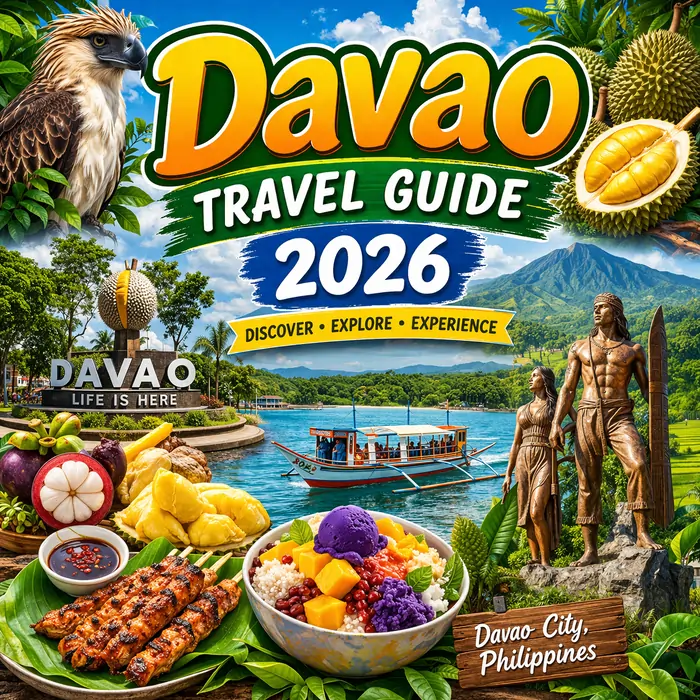
Table of Contents
1. When to Visit: Davao’s Year-Round Sweet Spot
Davao sits outside the typhoon belt. This is a big deal. While the rest of the Philippines braces for storms from June to November, Davao stays relatively calm. We get rain, sure—but not the catastrophic flooding and landslides that plague other regions.
Dry Season (December to May):
Peak tourist months. February to April are particularly pleasant—sunny days, cool evenings, perfect for outdoor activities. This is when Mount Apo climbs are most popular and Samal Island beaches are at their best.
Rainy Season (June to November):
Afternoon showers are common, but mornings are usually clear. August is wetter due to the southwest monsoon. The upside? Fewer tourists, greener landscapes, and lower accommodation rates.
Kadayawan Festival (Third Week of August):
This deserves special mention. Kadayawan is Davao’s crown jewel—a week-long celebration of the city’s 11 indigenous tribes featuring street dancing, floral floats, and fruit displays everywhere. If you can handle occasional rain, August is magical. Just book accommodations months in advance.
Temperature Year-Round: 24°C to 33°C (75°F to 91°F). Lightweight clothing, always.
2. Davao City vs. Samal Island: Where Should You Stay?
This is the first question every first-timer asks. The answer depends entirely on what kind of trip you want.
Stay in Davao City if:
- You want food options (from ₱50 carinderia meals to fine dining)
- You’re using Davao as a base for day trips
- You enjoy urban energy—malls, cafes, night markets
- You’re a digital nomad who needs reliable internet
- You want to experience Davaoeño daily life
Stay in Samal Island if:
- You want beachfront mornings and resort vibes
- You don’t mind a short ferry ride to access the city
- You’re celebrating something special (honeymoon, anniversary)
- You need to completely disconnect from city noise
- You’re a diver or snorkeler who wants immediate reef access
My personal setup: I live in Davao City proper, but I escape to Samal at least once a month. It’s a 15-minute ferry ride that feels like traveling to another world.
A Note on Where to Stay in the City
If you’re looking for a comfortable, no-fuss base in Davao that won’t destroy your budget, I’ll mention a place I’m personally familiar with—Buenas Diaz Comfort Stay. It’s a small condotel setup that I manage, located in a quiet residential area but still accessible to the city center. Nothing fancy—just clean rooms, reliable WiFi, hot showers, and the kind of place where you can actually sleep well after a long day of exploring.
📍 Location: Buenas Diaz Comfort Stay on Google Maps
No pressure—there are plenty of good accommodations in Davao across all budget ranges. I’m just putting it on your radar as a solid, honest option from someone who calls Davao home.
Other Recommended Areas to Stay:
- Poblacion / Downtown: Close to People’s Park, Aldevinco, and night markets. Budget-friendly hotels and inns.
- Bajada / Lanang: Near SM Lanang Premier and the airport. Mid-range to upscale hotels.
- Ecoland / Matina: Residential area with good food options. Close to malls but quieter.
- Toril: Gateway to Eden Nature Park and Mount Apo trailheads. More suburban.
3. Getting to Davao: The Gateway to Mindanao
Francisco Bangoy International Airport (DVO) is your entry point. It’s located right in the city—a rarity for Philippine airports—so you’re 15–30 minutes from most hotels upon landing.
Flight Routes and Approximate Durations:
| Origin | Flight Time | Airlines |
|---|---|---|
| Manila | 1 hr 50 min | PAL, Cebu Pacific, AirAsia |
| Cebu | 1 hr | PAL, Cebu Pacific |
| Clark | 2 hr | Cebu Pacific, PAL |
| Iloilo | 1 hr 15 min | Cebu Pacific |
| Zamboanga | 50 min | PAL, Cebu Pacific |
| Singapore | 3 hr 45 min | Scoot |
| Doha | 10 hr 30 min | Qatar Airways |
Airport Transfer Options:
- Metered Taxi: ₱200–350 to city center. Reliable and honest drivers.
- GrabCar: ₱250–400 depending on demand. Available 24/7.
- Hotel Shuttle: Some hotels offer free pickup—ask when booking.
- Jeepney: Not recommended with luggage. Save this for later exploration.
Pro Tip: Don’t bother with pre-booked transfers unless you’re arriving past midnight. The official taxi queue moves fast and uses meters without haggling.
4. Getting Around: Jeepneys, Taxis, and the Tricycle Truth
Davao’s public transport is functional but confusing for first-timers. Here’s the breakdown.
Jeepney (₱13 minimum fare)
The cheapest way to get around. Routes are painted on the side of the vehicle, but they’re color-coded and numbered. Honestly? The system takes time to learn.
First-Timer Strategy: Download the Davao Jeepney Guide app (available on Android) or simply ask locals. Davaoeños are genuinely helpful—just say your destination and someone will point you to the right jeepney.
Popular Routes:
- Route 10: Ecoland to Downtown
- Route 6: Matina to Downtown
- Route 4: Sasa to Downtown
Taxi (₱40 flagdown + ₱13.50/km)
Davao taxis are among the most honest in the Philippines. Drivers use the meter without being asked—a refreshing change from Manila. Keep small bills handy for payment.
Taxi Apps: Download the official Davao Taxi App for easy booking.
Tricycle (₱20–50 per person, short distances)
Important distinction: Davao tricycles are motorcycle sidecars, not the motorized rickshaws of Manila. They only operate in residential areas and subdivisions. You won’t find them on main roads.
GrabCar (₱150–400 depending on distance)
Available and reliable. Slightly more expensive than taxis but worth it during rush hour, rainy days, or when you want air-conditioned comfort with GPS tracking.
Habal-Habal (₱50–150, short to medium distances)
Motorcycle taxis for solo travelers. Use the Angkas or JoyRide apps for safety and transparent pricing. Avoid unregistered habal-habal drivers who approach you on the street.
Local Tip: Traffic in Davao is manageable compared to Manila or Cebu, but rush hour (7–9 AM, 5–7 PM) along major arteries like J.P. Laurel Avenue and Quimpo Boulevard can get congested. Plan accordingly.
5. The Durian Situation: What You Need to Know
Let’s address the spiky, pungent elephant in the room.
Davao is the Durian Capital of the Philippines. The fruit is everywhere. Malls have dedicated durian sections. Street vendors sell pre-packed durian flesh. And during harvest season (August to October), the whole city carries that unmistakable aroma.
Durian Varieties You’ll Encounter:
- Puyat (D101): Mild, creamy, slightly sweet. Best for beginners.
- D24: Buttery texture, balanced flavor. The “gateway” durian.
- Arancillo (D96): Small seeds, thick flesh, intense aroma.
- Native / Musang King: The heavyweight. Pungent, complex, bitter-sweet. For serious durian lovers only.
- Monthong: Thai variety, larger seeds, milder taste. Often cheaper.
First-Timer Advice:
- Start with Puyat or D24. Work your way up.
- Eat it fresh. Frozen durian is a sad imitation.
- Don’t consume durian with alcohol. The combination can cause serious digestive distress. I’ve witnessed this firsthand—it’s not a myth.
- Eat mangosteen after durian. It helps cool the body down. They’re seasonal companions for a reason.
- Bring wet wipes. The smell lingers on fingers.
Where to Try Durian:
- Magsaysay Park Fruit Stands: Reliable quality, tourist-friendly.
- Bangkerohan Public Market: Where locals buy. Go before 8 AM for the freshest selection.
- Roxas Night Market: Pre-packed durian flesh for immediate consumption.
- Lola Abon’s: For durian candy and freeze-dried durian (good pasalubong).
Durian Etiquette:
- Don’t bring durian into hotels, taxis, or air-conditioned spaces without permission. Many establishments ban it outright.
- If you don’t like the smell, that’s fine. But don’t make a scene. Respect that this fruit is culturally significant to Davaoeños.
6. The Food You Cannot Leave Without Eating
After 23 years in Davao, these are the non-negotiables. Skip any of these and you’ve missed the soul of the city.
Tuna Kinilaw
Davao is the Tuna Capital of the Philippines. Fresh yellowfin and skipjack arrive daily at the fish port. The best preparation? Kinilaw—raw tuna cubes cured in vinegar, ginger, onions, chili, and coconut milk. It’s bright, clean, and tastes like the ocean distilled.
Where to eat: Marina Tuna (multiple branches), Yellow Fin Seafood Restaurant, Luz Kinilaw(Banquerohan area).
Grilled Tuna Belly
Fatty, smoky, served with soy-calamansi dipping sauce and steaming white rice. Simple perfection. The belly cut is prized for its rich flavor and tender texture.
Where to eat: Marina Tuna, any Davao food park, or the seafood grills near Roxas Night Market.
Tuna Panga (Collar)
The collar cut—where the head meets the body—is the most flavorful part. Grilled over charcoal, the meat falls off the bone. Order this instead of regular tuna steak.
Where to eat: Jack’s Ridge (view included), Penong’s (budget-friendly chain).
Bulcachong
A lesser-known Davaoeño specialty. It’s a hearty soup made with carabao (water buffalo) meat and skin, slow-cooked until tender. Rich, gelatinous, and deeply satisfying—especially on rainy days.
Where to try: Bulcachong ni Tess near Bankerohan Market. They’ve been serving this for decades.
Pastil
Halal-friendly rice topped with shredded chicken or beef, wrapped in banana leaves. ₱20–30 gets you a filling breakfast or snack. This is Maguindanaon comfort food that Davao has fully embraced.
Where to try: Stalls near Roxas Night Market, Bankerohan Public Market, or any Muslim food stall.
Sinuglaw
A beautiful hybrid: sinugba (grilled pork belly) mixed with kinilaw (ceviche). Smoky, tangy, and utterly addictive. Best enjoyed with ice-cold beer.
Where to eat: Luz Kinilaw, Davao Famous Restaurant.
Taho with a Twist
Davao’s version uses tablea (local chocolate) instead of caramel syrup. Find the taho vendor near Rizal Park in the morning. He’s there by 7 AM.
Fresh Fruits
Davao’s fruit bounty is legendary. Beyond durian, look for:
- Mangosteen: Queen of fruits. Sweet-tart, cooling.
- Marang: Custard-like flesh, intensely sweet. Eat immediately—it spoils fast.
- Pomelo: Davao pomelos are huge, sweet, and less bitter than other varieties.
- Rambutan: Hairy red exterior, lychee-like interior.
Davao Delicacies: A Deeper Dive
This is just scratching the surface, of course. Davao’s culinary identity runs deep, and I’ve dedicated an entire guide to the flavors that define my adopted hometown. For a much deeper dive into everything from kinilaw variations to the best spots for bulcachong, check out my complete Davao Delicacies Guide—it’s essential reading for any food-focused traveler.
👉 Read the Full Davao Delicacies Guide
7. Coffee Culture: Davao is a Coffee Region
We grow coffee here. Arabica from Mount Apo’s slopes. Robusta from the lowlands. The coffee scene is legitimate, not a tourist gimmick.
Davao Coffee Background:
The Mount Apo highlands produce some of the Philippines’ finest Arabica beans. Smallholder farmers, many from indigenous Bagobo and Manobo communities, cultivate coffee at elevations of 1,200–1,800 meters.
Where to Drink in the City:
- Purge Coffee Roasters: Serious third-wave coffee. Single-origin beans roasted in-house. The baristas know their stuff.
- Glasshouse Coffee: Aesthetic space, consistent espresso, good for remote work.
- Paramount Coffee: Davao-born chain with reliable brews and pastries.
- Coffee Grounds: Cozy neighborhood spot in Ecoland.
Coffee Farm Tours:
Drive up to Buda (Marilog District) for coffee farm visits with mountain views. Buda Highway is lined with small coffee shops and farms offering tours. The drive takes about 1.5–2 hours from the city center.
Where to Visit in Buda:
- Seagull Mountain Resort: Coffee farm tours and sea of clouds viewing.
- Buda Coffee Farm: Small-batch Arabica production.
- Epol Falls: Combine coffee with a waterfall hike.
Local Tip: Buy whole beans from Purge or directly from Buda farms. They make excellent pasalubong for coffee-loving friends.
8. Samal Island: Your 15-Minute Tropical Escape
I mentioned Samal earlier. Let me expand on why it matters.
The Island Garden City of Samal (IGACOS) sits just across the Davao Gulf. It’s not one island—it’s actually two main islands (Samal and Talikud) plus several smaller islets. This is where Davaoeños go to breathe.
How to Get There
From Sasa Wharf (North Davao):
- Ferry to Babak or Peñaplata
- ₱15–30 per person
- 15–20 minutes
- Frequent departures, first trip around 5 AM, last trip around 10 PM
From Sta. Ana Wharf (Downtown):
- Ferry to Kaputian or Talikud Island
- ₱60–80 per person
- 45–60 minutes
- Less frequent departures
Davao-Samal Bridge Update:
The Samal Island-Davao City Connector Bridge is under construction. Expected completion is 2027–2028. Once operational, this 3.98-kilometer bridge will transform access to Samal—expect major tourism growth and development.
Samal Highlights for First-Timers
Canibad Beach:
White sand, dramatic rock formations, and cliff-jumping spots. The road getting here is rough—hire a habal-habal driver who knows the way. The effort pays off with that “hidden cove” feeling.
Entrance: ₱50–100 depending on the resort.
Hagimit Falls:
A series of cascading pools perfect for cooling off after beach time. Multiple levels, shallow areas for wading, deeper pools for swimming. Cottages available for rent.
Entrance: ₱50 adults, ₱30 children.
Monfort Bat Cave:
Home to the world’s largest colony of Geoffroy’s Rousette fruit bats. Over 2 million bats. The cave entrance is a massive sinkhole—you’ll hear them before you see them. The sight of millions of bats spiraling out at dusk is surreal.
Entrance: ₱100. Best visited late afternoon for bat emergence.
Kaputian Beach:
Public beach with clear water, white sand, and affordable cottages. Less crowded than resort beaches. Good for families.
Entrance: ₱30.
Talikud Island:
For snorkeling and diving. Coral gardens, occasional turtle sightings, and the Coral Garden Marine Park. Day trips from Davao are possible—boats leave from Sta. Ana Wharf.
Pearl Farm Beach Resort:
The iconic Samal luxury resort. Even if you’re not staying overnight, consider a day tour (₱2,000–3,000 per person including lunch). The Mandaya-inspired architecture and private beach are worth experiencing.
Samal Practical Tips
- Bring cash. ATMs on Samal are scarce and sometimes offline.
- Download offline maps. Cell signal can be spotty in remote areas.
- Book ferries in advance during peak season. Especially for Talikud Island trips.
- Respect marine sanctuaries. Many areas have designated no-fishing zones. Don’t touch coral.
- Giant Clam Sanctuary: Located in Adecor, Samal. Educational and worth a stop.
9. Mount Apo: The Grandfather of Philippine Mountains
Visible from Davao City on clear mornings, Mount Apo is the highest peak in the Philippines at 2,954 meters (9,692 feet) above sea level. It’s sacred to the indigenous Bagobo, Manobo, and Klata peoples—the name “Apo” means “grandfather” or “revered elder.”
Climbing Options
Kapatagan Trail (Davao del Sur):
- Most popular route
- 3–4 days round trip
- Starting point: Kapatagan, Digos City (2–3 hours from Davao)
- Features: Boulder face challenge, Lake Venado, summit views
Kidapawan Trail (North Cotabato):
- Hot springs and sulfur vents along the route
- 3–4 days round trip
- Starting point: Kidapawan City (2.5 hours from Davao)
- Features: Agco Blue Lake, boiling mud pools
Sta. Cruz Trail (Davao del Sur):
- Longer but more scenic
- 4–5 days round trip
- Less crowded
- Features: Dense mossy forests, wild orchids
First-Timer Reality Check
This is not a casual day hike. You need:
- Permits: Secured through local tourism offices or accredited tour operators.
- Registered Guide: Mandatory. Guides know the terrain and weather patterns.
- Proper Gear: Layered clothing (temperatures can drop below 5°C at night), waterproof jacket, hiking boots, headlamp, trekking poles.
- Physical Preparation: The boulder face near the summit is physically demanding. Train with stair climbs and long hikes before attempting.
Altitude Sickness: It’s real. Summit elevation is 2,954 meters. Symptoms include headache, nausea, and fatigue. Ascend slowly, stay hydrated, and communicate with your guide.
Best Months to Climb: February to May (dry season). Avoid June to November (rainy, trails become slippery and dangerous).
Alternative: Mount Apo Foothills Experience
If you’re not up for the full climb, visit the foothills:
Eden Nature Park (Toril):
Cool mountain air, hiking trails, buffet lunch with mountain views. About 45 minutes from downtown Davao. Perfect for families and those who want the mountain vibe without the extreme effort.
Camp Sabros (Kapatagan):
Zipline over the mountains, horseback riding, and cool highland air. A popular weekend escape for Davaoeños.
10. Philippine Eagle Center: Meet the National Bird
The Philippine Eagle Foundation in Malagos, about an hour from the city center, is home to captive-bred Philippine Eagles and other raptors.
Why It Matters:
There are fewer than 400 pairs of Philippine Eagles left in the wild. This center does critical conservation work—breeding, rehabilitation, and public education. Visiting directly supports these efforts.
What to Expect:
- Educational exhibits about Philippine biodiversity
- A short forest trail
- Close-up views of Philippine Eagles and other raptors (hawks, owls, serpent eagles)
- The legacy of Pag-asa, the first Philippine Eagle bred in captivity (hatched 1992, passed 2021)
Visitor Information:
- Entrance: ₱150 adults, ₱100 children
- Hours: Daily 8 AM – 5 PM
- Location: Malagos, Calinan District (45–60 minutes from downtown)
- How to Get There: Bus from Ecoland Terminal to Calinan, then habal-habal to the center
Combine With:
- Malagos Garden Resort: Chocolate museum, bird feeding dome, butterfly sanctuary
- Malagos Chocolate Factory: Farm-to-bar chocolate experience. Davao’s premier chocolate maker.
Local Tip: Visit in the morning when the eagles are most active. Bring binoculars if you have them.
11. People’s Park: Davao’s Urban Oasis
Right in the city center, People’s Park is a 4-hectare public space featuring sculptures by Mindanaoan artist Kublai Millan, a dancing fountain, and plenty of shaded benches.
Why It’s Worth Your Time:
It’s free. It’s clean. It’s where Davaoeños actually go to relax—unlike some tourist attractions that only exist for visitors. You’ll see families picnicking, couples strolling, and kids playing.
Highlights:
- Kublai Millan Sculptures: Larger-than-life figures representing Mindanao’s indigenous peoples
- Dancing Fountain: Light and water show in the evenings (usually 6 PM and 7:30 PM)
- Rainforest Dome: Small indoor botanical garden
- Durian Dome: Iconic durian-shaped structure (photo spot)
Best Time to Visit: Late afternoon, when the heat softens and the fountain lights up. Evening visits are cooler and more atmospheric.
Nearby: Rizal Park (smaller, historic), San Pedro Cathedral, City Hall of Davao.
12. D’Bone Collector Museum: Odd, Fascinating, Worth It
This is not in most guidebooks. D’Bone Collector Museum houses one of the Philippines’ largest collections of preserved animal skeletons—from a 41-foot sperm whale to tiny bats and birds.
Why Visit:
It sounds morbid. It’s actually fascinating. The owner, an American expat named Darrell Blatchley, is passionate about wildlife education and conservation. Each skeleton tells a story about biodiversity and, often, human impact (many specimens died from plastic ingestion or boat strikes).
Collection Highlights:
- 41-foot sperm whale skeleton (centerpiece)
- Dugong (sea cow) skeleton
- Various dolphin and whale species
- Philippine Eagle skeleton
- Hundreds of bird, reptile, and small mammal specimens
Visitor Information:
- Location: San Pedro Street (near Magsaysay Park)
- Entrance: ₱100 adults, ₱80 students
- Hours: Monday–Saturday 10 AM – 6 PM (closed Sunday)
Local Tip: The guided tour is included with admission and highly recommended. Darrell or his staff provide context that makes the collection meaningful, not macabre.
13. Museums for History Buffs
Museo Dabawenyo
- Location: Corner of A. Pichon Street and Claveria Street (across from City Hall)
- Entrance: Free
- Hours: Monday–Friday 9 AM – 6 PM
- What to Expect: Covers Davao’s indigenous heritage, colonial history, World War II experience, and modern development. Compact but well-curated. Good starting point for understanding Davao’s layers.
Davao Museum of History and Ethnography
- Location: Insular Village, Lanang (near Damosa Gateway)
- Entrance: ₱100
- Hours: Monday–Saturday 9 AM – 5 PM
- What to Expect: Heavy focus on Lumad and Moro cultures of Mindanao. Traditional clothing, weapons, musical instruments, and agricultural tools. Smaller, quieter, and more academic than Museo Dabawenyo.
Japanese Tunnel
- Location: Near Davao International Airport (Diversion Road)
- Entrance: ₱50
- Hours: Daily 8 AM – 5 PM
- What to Expect: World War II-era tunnels used by Japanese forces. A small but historically interesting site. The tour takes about 20 minutes.
14. Roxas Night Market: Street Food Central
This is where Davao eats after dark. Roxas Night Market runs along Roxas Avenue from 6 PM to midnight (sometimes later on weekends).
Security Note:
You’ll pass through a checkpoint with bag inspection. This is normal—just cooperate and you’re in within minutes. The security presence is visible and reassuring.
What to Eat:
| Item | Description | Price Range |
|---|---|---|
| Isaw | Grilled chicken intestines. Crispy, smoky, surprisingly addictive. | ₱10–20 per stick |
| Pork BBQ | Sweet-savory marinade, charred edges. | ₱30–50 per stick |
| Balut | Fertilized duck egg. You either love it or you don’t. | ₱20–25 |
| Fried Ice Cream | Hot fried shell, cold vanilla inside. | ₱50–70 |
| Fresh Fruit Shakes | Durian, mango, avocado, or buko. | ₱50–80 |
| Proben | Deep-fried chicken proventriculus (stomach). Crunchy, chewy. | ₱15–20 per stick |
| Kwek-Kwek | Quail eggs in orange batter, deep-fried. | ₱15–20 per piece |
| Grilled Squid | Whole squid stuffed with onions and tomatoes. | ₱100–150 |
Beyond Food:
The night market also sells affordable clothing, accessories, phone cases, and souvenirs. Bargaining is acceptable but keep it friendly.
Local Tip: Go hungry. Go with friends. And don’t skip the mango shake with tapioca pearls from the drink stalls near the center.
15. Shopping: Where to Buy What
For Pasalubong (Souvenirs)
Aldevinco Shopping Center
- Location: Claveria Street (near Marco Polo Hotel)
- What to Buy: Batik fabrics, brassware, freshwater pearls, wood carvings, T’boli beadwork
- Haggling: Expected but keep it respectful. Start at 20–30% below asking price.
- Hours: Daily 9 AM – 7 PM
Pasalubong Center at Magsaysay Park
- Location: Magsaysay Park Complex
- What to Buy: Curated selection of Mindanao products, fixed prices
- Hours: Daily 8 AM – 8 PM
For Durian Candy and Freeze-Dried Fruit
Lola Abon’s
- The gold standard for durian candy. Multiple mall branches (SM City Davao, SM Lanang, Abreeza).
- Also sells durian jam, durian yema, and freeze-dried durian.
Apo ni Lola
- Another reliable brand. Slightly less sweet than Lola Abon’s.
For Fresh Produce
Bankerohan Public Market
- Go at 5–6 AM for the best selection. This is where Davaoeños shop.
- Fruits, vegetables, fresh fish, meat, and local delicacies.
- Bring cash. Be prepared for crowds and controlled chaos.
For Malls
| Mall | Vibe | Location |
|---|---|---|
| SM Lanang Premier | Higher-end, waterfront location, international brands | Lanang |
| Abreeza Mall | Mid-range, central, good food court, Ayala-managed | Bajada |
| SM City Davao | Large, comprehensive, department store anchor | Ecoland |
| Gaisano Mall | Budget-friendly, chaotic in an authentic way | Downtown |
16. The Davao Discipline: What First-Timers Need to Know
Davao City has ordinances that might surprise you. They’re part of what makes this city different.
No Smoking in Public Places
Strictly enforced. Designated smoking areas exist, but lighting up on the street will get you fined (₱500–2,500). This includes vaping in some areas. When in doubt, ask.
Speed Limits
- 30 km/h in the city proper
- 40 km/h on major roads
- 60 km/h on the highway
Drivers actually follow this. Traffic enforcers with radar guns are common.
Liquor Ban
Alcohol sales stop at 1 AM and resume at 8 AM. Some bars stay open later but stop serving alcohol at 1 AM sharp. Plan your night accordingly.
Firecracker Ban
Strictly enforced during Christmas and New Year. Davao’s holidays are quiet—no random firecracker explosions. It’s peaceful and safer.
The 911 System
Davao’s emergency response is legitimately good. Dial 911 for police, medical, or fire emergencies. They actually show up, and response times are reasonable.
Anti-Discrimination Ordinance
Davao protects LGBTQ+ rights and prohibits discrimination based on sexual orientation and gender identity. The city is generally inclusive and welcoming.
Why These Rules Exist:
These ordinances contribute to Davao’s reputation as one of the safest cities in the Philippines. Respect them—they exist for a reason.
17. Day Trips Beyond the City
Eden Nature Park (Toril)
- Distance from Downtown: 45–60 minutes
- What to Do: Hiking trails, buffet lunch with mountain views, fishing village, sky cycle, horseback riding
- Entrance: Day tour packages from ₱550–1,200
- Best For: Families, nature lovers, those wanting cool mountain air
Buda (Marilog District)
- Distance from Downtown: 1.5–2 hours
- What to Do: Coffee farm visits, sea of clouds viewing (early morning), cold nights by the fireplace
- Where to Stay: Seagull Mountain Resort, Epol Falls Viewing Deck
- Best For: Weekend escape, coffee enthusiasts, couples
Crocodile Park
- Distance from Downtown: 20–30 minutes (Riverfront, Diversion Road)
- What to Do: Crocodile feeding shows, small zoo, Tribu K’Mindanawan cultural show (evenings only)
- Entrance: ₱300 adults, ₱200 children (includes park access and show)
- Best For: Families, wildlife enthusiasts
Malagos Garden Resort
- Distance from Downtown: 45–60 minutes
- What to Do: Chocolate museum, bird feeding dome, butterfly sanctuary, petting zoo
- Entrance: Day tour packages from ₱500
- Best For: Families, chocolate lovers, educational visits
18. Festivals Worth Planning Around
Araw ng Dabaw (March)
Davao’s founding anniversary. Parades, food fairs, sports competitions, and the Mutya ng Dabawpageant. A week-long celebration culminating on March 16.
Kadayawan Festival (Third Week of August)
The big one. A week-long celebration of Davao’s 11 indigenous tribes and bountiful harvest.
Key Events:
- Indak-Indak sa Kadalanan: Street dancing competition featuring tribal and modern interpretations
- Pamulak sa Kadayawan: Floral float parade
- Hiyas sa Kadayawan: Indigenous people’s pageant
- Fruit Displays: Massive fruit arrangements throughout the city
Accommodation Warning: Book months in advance. Hotels fill up completely. Rates increase significantly.
Pasko Fiesta (December)
Davao’s Christmas celebration. City Hall and parks light up beautifully. Nightly cultural shows and food bazaars. Less crowded than Kadayawan but festive.
For more articles and stories about the city I’ve called home since 2003, browse all my Davao travel guides and features right here on DigiLamon.
19. Internet and Connectivity for Digital Nomads
Davao’s internet is… inconsistent. Some cafes have fiber connections. Some accommodations don’t. Here’s how to stay connected.
Reliable Coworking Spaces
Upstairs Coworking (Obrero)
- Fast WiFi (fiber connection)
- Good coffee from Purge Coffee Roasters
- 24/7 access for members
- Day pass: ₱350
Espacio (Bajada)
- Quiet, professional atmosphere
- Private meeting rooms available
- Great for focused work
- Day pass: ₱400
The Space (Lanang)
- Newer coworking space
- Near SM Lanang Premier
- Good for meetings and solo work
Cafe Work Sessions
Glasshouse Coffee
- Reliable WiFi
- Plenty of outlets
- Good for 2–3 hour work sessions
- Please order food/drinks regularly
Purge Coffee Roasters
- Excellent coffee
- WiFi works well
- Limited seating—best for short sessions
Coffee Grounds (Ecoland)
- Neighborhood spot
- Less crowded than downtown cafes
- Friendly for laptop users
Mobile Data
- Globe: Good coverage in the city, spotty in Samal and Buda
- Smart: Better coverage in rural areas and Samal
- DITO: Newer player, improving coverage
Recommendation: If you’re working remotely, get a Smart SIM for better overall coverage outside the city center.
Starlink
Increasingly available at resorts and private residences in Samal and Buda. If your accommodation advertises Starlink, it’s a good sign for reliable connectivity.
20. Safety and Practical Tips
Is Davao Safe?
Yes. I’ve lived here for 23 years and raised a family here. The city has its challenges like any urban center, but violent crime against tourists is rare. Exercise normal urban precautions:
- Don’t flash expensive jewelry or large amounts of cash
- Be aware of your surroundings at night
- Stick to well-lit areas
- Use Grab or metered taxis late at night
Healthcare
Major Hospitals:
- Davao Doctors Hospital: Private, comprehensive, English-speaking staff
- Southern Philippines Medical Center (SPMC): Public, largest in Mindanao, emergency services
- Brokenshire Memorial Hospital: Private, good reputation
Pharmacies: Mercury Drug, Watsons, and Rose Pharmacy are everywhere. Most medications are available over the counter.
Language
- Cebuano (Bisaya): The main language
- Tagalog: Widely understood
- English: Spoken in tourist areas, malls, and by educated professionals
Useful Phrases:
| English | Bisaya |
|---|---|
| Thank you | Salamat |
| Good morning | Maayong buntag |
| How much? | Tagpila? |
| Delicious | Lami |
| Yes | Oo |
| No | Dili |
Cash vs. Card
- Malls and Restaurants: Accept credit/debit cards
- Markets, Jeepneys, Small Eateries: Cash only
- ATMs: Widely available but occasionally offline. BPI, BDO, and Metrobank are most reliable.
Recommendation: Keep ₱1,000–2,000 in small bills (₱50s and ₱100s). Break larger bills at malls or convenience stores.
Tipping
Not mandatory but appreciated.
- Restaurants: 10% if service was good
- Hotel bellhops: ₱20–50
- Tour guides: ₱200–500 per day depending on group size and service quality
Electricity
220V, 60Hz. Same plugs as US (Type A and B). Power outages are occasional but usually brief.
Water
Don’t drink tap water. Bottled water is cheap and everywhere. Most accommodations provide complimentary bottles.
21. Sample 4-Day Davao Itinerary
Day 1: City Immersion
- Morning: Arrive at Davao Airport, check into accommodation
- Lunch: Marina Tuna (tuna belly and kinilaw)
- Afternoon: Museo Dabawenyo, San Pedro Cathedral, People’s Park
- Evening: Roxas Night Market for street food dinner
- Nightcap: Glasshouse Coffee or a rooftop bar
Day 2: Samal Island Escape
- Morning: Ferry from Sasa Wharf to Samal (Babak)
- Mid-Morning: Hagimit Falls for a refreshing swim
- Lunch: Resort restaurant or packed picnic
- Afternoon: Canibad Beach for white sand and cliff jumping
- Late Afternoon: Monfort Bat Cave (aim for bat emergence around 5 PM)
- Evening: Return ferry to Davao, dinner in the city
Day 3: Nature and Conservation
- Morning: Philippine Eagle Center in Malagos
- Midday: Malagos Chocolate Factory tour and tasting
- Lunch: Malagos Garden Resort buffet
- Afternoon: Eden Nature Park (if energy permits) OR return to city for rest
- Evening: Dinner at Jack’s Ridge (city lights view)
Day 4: Highlands or Leisure
- Option A (Adventure): Day trip to Buda for coffee farms and sea of clouds
- Option B (Relaxed): Morning at People’s Park, souvenir shopping at Aldevinco
- Afternoon: D’Bone Collector Museum
- Evening: Farewell dinner at a seafood restaurant, depart or extend
If You Have 5–7 Days:
- Add a Mount Apo climb (3–4 days minimum)
- Add Talikud Island overnight stay
- Add Kadayawan Festival events (if visiting in August)
22. Essential Packing Checklist
Clothing
- Lightweight, breathable shirts (cotton or moisture-wicking)
- Shorts and comfortable pants
- Light jacket or hoodie (for air-conditioned spaces and Buda highlands)
- Swimwear
- Rash guard (for snorkeling and sun protection)
- Comfortable walking shoes
- Flip-flops or sandals
Gear
- Reef-safe sunscreen (chemical sunscreen damages coral)
- Insect repellent (especially for evenings and Samal)
- Reusable water bottle (refill stations available)
- Dry bag (for boat trips and sudden rain)
- Waterproof phone case
- Power bank
- Universal travel adapter (if needed)
Documents and Money
- Valid ID or passport
- Cash in Philippine Pesos (small bills)
- Credit/debit card (notify your bank of travel)
- Travel insurance documents
- Printed or digital copies of hotel reservations
Health and Hygiene
- Personal medications
- Basic first-aid kit (bandages, antiseptic, pain relievers)
- Hand sanitizer
- Wet wipes
- Tissues (some public restrooms don’t provide toilet paper)
23. Final Word from Jin
Davao doesn’t shout for attention.
It doesn’t have Boracay’s white-sand fame or Palawan’s UNESCO-listed underground river. What it has is something quieter and, I think, more valuable: authenticity.
This is a city where you can eat ₱50 pastil for breakfast and ₱1,500 tuna belly for dinner in the same day. Where you can be in a modern mall at noon and a mountain coffee farm by 3 PM. Where durian is a cultural touchstone, not a dare. Where the rules—no smoking, no firecrackers, speed limits—actually work.
I moved here in 2003 from a small town in Sultan Kudarat. I was young, uncertain, and looking for a place to build a life. Davao gave me that. It gave me a career, a community, and a sense of belonging I hadn’t found elsewhere.
Is Davao perfect? No. The traffic on J.P. Laurel Avenue at 5:30 PM tests my patience regularly. The internet still drops at inconvenient moments. And durian season means accepting that your entire world will smell like the fruit for two months.
But here’s what I’ve learned: the places worth knowing aren’t the flawless ones. They’re the ones with texture, with history, with soul. Davao has all three.
So come. Eat the kinilaw. Ride the jeepney. Take the 15-minute ferry to Samal and watch the city skyline recede. Let Davao reveal itself at its own pace.
And if you see a guy at Roxas Night Market eating isaw and drinking a mango shake, come say hi. It might be me.
Welcome to my home.
Jin Grey is the founder of DigiLamon.com, a food and travel site documenting honest eats and adventures across the Philippines and beyond. Born in Isulan, Sultan Kudarat, he has called Davao City home since 2003. He writes about places that feel like home—even when they’re far from it.
Connect with Jin Grey
📧 Email: ceo@jingrey.com | jeaniusseo@gmail.com
🌐 Personal Website: jingrey.com
🍜 DigiLamon: digilamon.com
📘 Facebook: Jin Grey
💼 LinkedIn: Jean Diaz Palabrica
📝 Medium: jin-grey-seo
📍 Buenas Diaz Comfort Stay: View on Google Maps
This guide was last updated April 2026. Information is accurate to the best of my knowledge, but always verify current conditions before traveling.
