
Where to Go in Singapore? Singapore is one of the easiest places in Asia for first-time travelers. It’s safe, clean, very organized, and full of amazing food, culture, and city views.
Public transport is simple, English is widely spoken, and most famous places are close to each other, so you can enjoy a lot in just a few days.
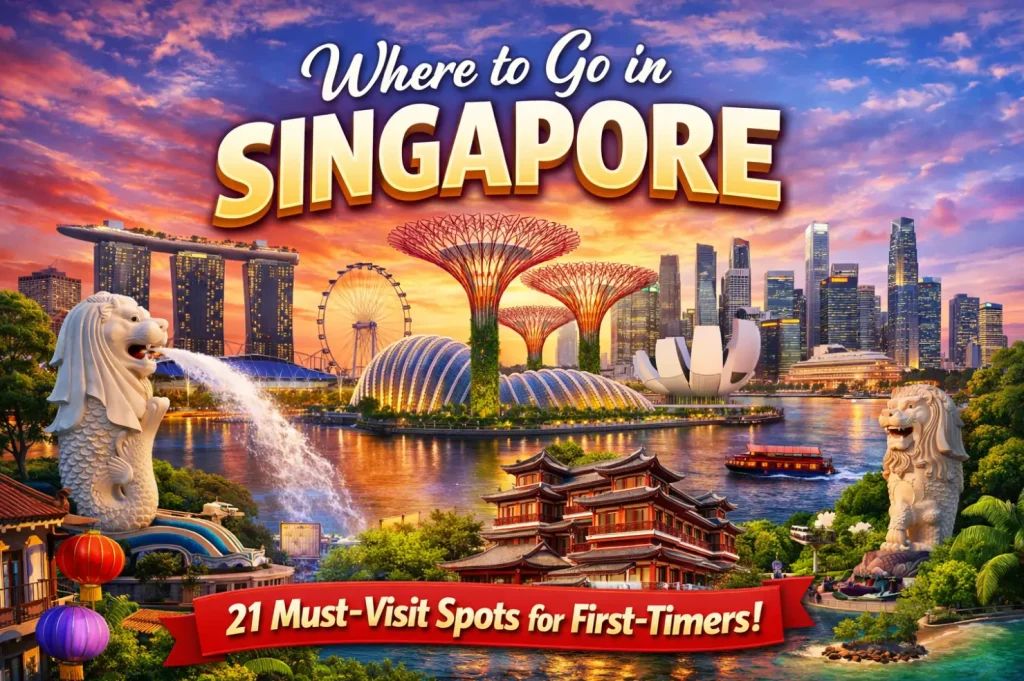
This guide shares 21 must-visit spots in Singapore, written in simple English and designed to help you plan your first trip with confidence.
Table of Contents
How Many Days Do You Need in Singapore?
If this is your first visit, 3 to 5 days is ideal.
- 1–2 days: Focus on Marina Bay, Gardens by the Bay, and one cultural area like Chinatown or Little India.
- 3–4 days: Add Sentosa Island, a museum or zoo, and more neighborhoods.
- 5 days: Slow down with nature walks, more food stops, and time to revisit your favorite places.
You don’t need a car. The MRT (metro) and buses are enough for almost every attraction, and you can walk comfortably in many central areas.
If you’re still deciding where to stay, you can also check my guide to the best luxury hotels in Singapore for first-timers and special trips—it walks you through 5-star options in simple, honest language.
1. Marina Bay Sands & Waterfront
If you close your eyes and imagine Singapore, you probably see Marina Bay Sands—the famous hotel with a “boat” on top of three tall towers. Even if you don’t stay there, the area around it is a must.

What to do:
- Walk along the Marina Bay waterfront in the late afternoon or evening.
- Cross the Helix Bridge for beautiful photos.
- Go up to the SkyPark Observation Deck or a rooftop bar for sunset and night views.
Why first-timers love it:
You get the full city wow-factor in one place—glass towers, water, lights, and that world-famous skyline.
2. Gardens by the Bay (Supertrees, Cloud Forest, Flower Dome)
Gardens by the Bay is one of the most unique attractions in the world. It combines nature, technology, and art in a huge, futuristic garden beside Marina Bay.

Highlights:
- Supertree Grove: Giant “trees” that light up at night with a music and light show.
- Cloud Forest: A cool, misty indoor mountain and waterfall with lots of plants.
- Flower Dome: A large glass dome with flowers and plants from different climates.
Tips:
- Visit the Cloud Forest and Flower Dome in the daytime to enjoy the details.
- Stay for the Garden Rhapsody light show at night under the Supertrees.
- Book your tickets online in advance to save time.
3. Merlion Park
The Merlion is a statue with the head of a lion and the body of a fish. It is one of Singapore’s main symbols and a classic photo spot.

Why go:
- Take the “I was in Singapore” photo with Marina Bay Sands in the background.
- Combine it with a walk around the bay or a river cruise.
Best time:
Come early in the morning for fewer crowds, or visit at night to see the city lights reflecting on the water.
4. Singapore Flyer
The Singapore Flyer is a huge observation wheel that slowly lifts you above the city in air-conditioned cabins.

Good for:
- Travelers who prefer sitting indoors instead of standing outside on a rooftop.
- Families and people who want a comfortable, slow-paced view.
From the top, you can see Marina Bay, the Central Business District, and, on clear days, views reaching towards Malaysia.
5. Jewel Changi Airport
Most airports are places you just pass through. Changi Airport is different. Jewel is a massive glass dome attached to the airport, with the world’s tallest indoor waterfall in the center.

Why first-timers should visit:
- Easy to see on arrival, before departure, or during a long layover.
- Surrounded by trees, bridges, walking paths, shops, and restaurants.
- Great photo spot, especially at night when the waterfall is lit.
If you have only a few hours in Singapore, this is one of the best places to spend them.
6. Singapore Botanic Gardens & National Orchid Garden
The Singapore Botanic Gardens is a UNESCO World Heritage Site and one of the best places to relax in nature without leaving the city.

What you’ll find:
- Large green lawns, lakes, and walking paths under big trees.
- The National Orchid Garden, with hundreds of colorful orchid varieties.
Perfect for:
- Morning walks, when the weather is cooler.
- Slow days between heavy sightseeing, picnics, and photo sessions.
7. Fort Canning Park
Fort Canning Park is a small hill in the city with leafy paths, old fort walls, and one very popular spiral staircase where people love to take photos.

Reasons to go:
- A bit of greenery and history in the middle of the city.
- Easy to combine with museums, Clarke Quay, and the river.
If you like quiet corners and city views through trees, this park is a nice break.
8. Southern Ridges & Henderson Waves
If you enjoy walking and light exercise, the Southern Ridges is a great choice. It’s a network of walking trails that connects parks on raised paths and bridges.

Key highlight:
- Henderson Waves: A wavy, wooden bridge and the highest pedestrian bridge in Singapore.
Why it’s worth your time:
- You see both nature and skyline views at the same time.
- It shows you how Singapore mixes city life with green spaces.
Try visiting early in the morning or close to sunset to avoid the hottest hours.
9. Bukit Timah Nature Reserve
Bukit Timah is one of the best places to see real tropical rainforest in Singapore.

Expect:
- Steeper paths and a more “proper hike” compared with city parks.
- Dense jungle, birds, and sometimes monkeys.
It’s a good choice if you like nature, don’t mind sweating, and want to remember that this modern city is still built on a tropical island.
10. Singapore River & the Quays
The Singapore River is lined with old shophouses, restaurants, and bars in three main areas: Boat Quay, Clarke Quay, and Robertson Quay.

What to do:
- Take a bumboat river cruise in the evening to see key landmarks from the water.
- Walk beside the river, stop for dinner or drinks, and enjoy the night atmosphere.
This is a relaxing way to end a busy day of sightseeing, especially if you want city views without more walking.
11. Chinatown
Chinatown is one of the most interesting areas for first-time visitors. It mixes history, religion, street life, and food in a compact neighborhood.

Don’t miss:
- Buddha Tooth Relic Temple and its detailed interior.
- Street markets and side alleys full of shops and souvenirs.
- Local meals at hawker centres like Chinatown Complex or nearby food courts.
Come hungry and try classics like chicken rice, char kway teow (stir-fried noodles), and satay (grilled skewers).
12. Little India
Little India is colorful, busy, and full of life. It feels very different from the glass towers of downtown, and that contrast is part of its charm.
Top spots:
- Sri Veeramakaliamman Temple, with detailed decorations and statues.
- Mustafa Centre, a famous 24-hour shopping center where you can find almost anything.
- Streets filled with sari shops, gold stores, and Indian restaurants.
This is a great place to enjoy Indian curries, biryani, and sweets like gulab jamun or ladoo.
13. Kampong Glam & Haji Lane
Kampong Glam is the historic Malay-Arab quarter, now a mix of tradition and trendy cafés.
Highlights:
- Sultan Mosque with its golden dome.
- Arab Street for Middle Eastern food, textiles, and carpets.
- Haji Lane for colorful murals, small shops, and cool coffee spots.
It’s very photogenic and has a creative, relaxed feel—perfect for an afternoon of walking and café-hopping.
14. Joo Chiat & Katong
Joo Chiat and Katong show a more local side of Singapore and are especially known for Peranakan culture.
What makes it special:
- Rows of pastel-colored Peranakan shophouses with detailed tiles and shutters.
- Traditional bakeries and Peranakan restaurants serving dishes like laksa and kueh (local sweets).
- A real neighborhood feel, with fewer big crowds.
If you enjoy architecture, culture, and calmer streets, this area is a must.
15. Wet Markets & Hawker Centres
To understand how locals live and eat, you need to visit a hawker centre and, if possible, a wet market.
At a hawker centre, you’ll find:
- Many small food stalls, each specializing in one or two dishes.
- Affordable prices and big variety—from Hainanese chicken rice and laksa to satay and sugarcane juice.
A wet market shows you how locals buy fresh fish, meat, vegetables, and spices. It’s busy, a little noisy, and very real.
Tip:
Go early in the morning for the wet market, and visit a hawker centre at lunch or dinner time for the best food experience.
16. Sentosa Island
Sentosa is Singapore’s “fun island,” full of attractions, beaches, and hotels. It’s very easy to reach by MRT, monorail, taxi, or even by walking across a boardwalk.
Why first-timers like it:
- You can enjoy a beach day without leaving the city.
- There are many things to do in one place: theme parks, aquariums, shows, and more.
Sentosa is great for families, couples, and anyone who wants a more relaxed, resort-style day.
If you prefer hotels with pools, views, or club lounges, my Luxury Hotels in Singapore guide gives you more detail on which properties fit honeymooners, families, or digital nomads.
17. Universal Studios Singapore
Universal Studios Singapore is a theme park on Sentosa with movie-themed rides and shows.
Good for:
- Families with kids or teenagers.
- Travelers who love rides, characters, and playful photos.
Plan at least half a day, but a full day is better if you want to try most rides and watch some shows without rushing.
18. Singapore Zoo & Night Safari
The Singapore Zoo is one of the most famous zoos in the region, known for natural-looking enclosures and a focus on animal care.
Next door, the Night Safari offers something different: you ride a tram through dimly lit areas to see animals active at night.
Why it’s special:
- Two very different experiences in one area: daytime zoo and nighttime safari.
- Great for children and adults who love animals and want more than city attractions.
If you visit both, plan an afternoon at the zoo and stay on for the Night Safari.
19. Singapore Oceanarium
The Singapore Oceanarium, on Sentosa, is an indoor world of marine life with large tanks, tunnels, and themed exhibits.
It’s a good choice if:
- You need a break from the heat or a rainy-day plan.
- You’re already on Sentosa and want a calmer activity between more energetic attractions.
This is especially fun for families and anyone interested in oceans and conservation.
20. Rooftop Bars & Skyline Viewpoints
Singapore’s skyline is one of its biggest attractions, and rooftop bars and viewpoints let you enjoy it in style.
General tips:
- Aim for sunset: arrive a little before, watch the city turn gold, and stay as the lights come on.
- Check dress codes and age limits—some rooftops are more formal than others.
- You don’t need to drink alcohol; most places also offer juices and mocktails.
Even if you only visit one rooftop, the views will likely be one of your favorite memories.
21. Guided Bike or Walking Tours
If planning every detail feels stressful, a guided tour is a smart option.
Popular choices:
- City walking tours covering Marina Bay, Chinatown, and Kampong Glam.
- Bike tours along the river, through older neighborhoods, or on park connectors.
Benefits:
- A local guide explains history, culture, and daily life in simple ways.
- You get practical tips on what to eat, where to shop, and how to avoid common mistakes.
This can be a great way to start your trip, then explore more on your own later.
FAQ
Is Singapore safe?
Yes. Singapore is one of the safest cities in the world, with low crime and strict laws. You should still use normal common sense, but most visitors feel very comfortable here.
How do I get around Singapore?
Use the MRT and buses. They are clean, fast, and easy to use. You can tap in and out with a contactless bank card or mobile wallet, so you don’t need to buy a special travel card unless you want to.
Is Singapore expensive?
Singapore can be expensive for hotels, bars, and some attractions. But you can save a lot by eating at hawker centres, using public transport, choosing mid-range hotels or hostels, and enjoying free activities like parks and waterfront walks.
Where should I stay as a first-timer?
If it’s your first visit, stay in or near Marina Bay, the Civic District, or Orchard Road for easy access to major sights. Sentosa is good if you want a more resort-style holiday with beaches and family attractions.
Is 3 days enough in Singapore?
Three days is enough for the main highlights like Marina Bay, Gardens by the Bay, one or two cultural neighborhoods, and either Sentosa or the zoo. If you have 4–5 days, you can add more nature, food places, and local areas.
How to Use This List to Plan Your Trip
If you have:
- 2 days
- Day 1: Marina Bay Sands, Gardens by the Bay, Merlion Park, river walk or rooftop view at night.
- Day 2: Chinatown or Little India, Kampong Glam, and a hawker centre for lunch or dinner.
- 3–4 days
- Add Sentosa Island, Universal Studios or the Oceanarium, and the Singapore River at night.
- Explore Joo Chiat & Katong, or do the Southern Ridges walk for more nature.
- 5 days
- Mix in Bukit Timah Nature Reserve, more time at the Botanic Gardens, and extra food stops at different hawker centres.
- Allow yourself one “slow day” to revisit your favorite places.
Before any big trip, including Singapore, I like to double-check flights on tools like Skyscanner and Google Flights, compare hotel deals on Booking.com or Agoda, and then drop everything into a planning app like Wanderlog or TripIt so my itinerary lives in one place.
For deeper research, I still browse guides from sites like Lonely Planet and read round‑ups of the best trip‑planning tools such as this list of online travel planning resources, and I always watch a few YouTube vlogs to get a feel for neighborhoods and food spots in real life.

I’m Jean Palabrica, known in the industry as Jin Grey—a name reflecting my specialized expertise in Grey Hat SEO.
With over 18 years of experience as a “Chief Everything Officer,” I provide data-driven strategies for high-competition niches like iGaming. As a Senior SEO and Digital Marketing Consultant, I help brands navigate complex markets, optimize technical systems, and scale sustainably