
best Vietnamese dishes to try Key Takeaways
Saigon’s street food scene is one of the most exciting in the world, and knowing the best Vietnamese dishes to try will transform your trip from good to unforgettable.
- The best Vietnamese dishes to try in Saigon include pho, banh mi, com tam, bun thit nuong, banh xeo, goi cuon, and hu tieu.
- Each dish has a unique story and a local twist that makes it a Saigon specialty.
- First-timers should focus on street stalls and small family-run restaurants for the most authentic experience.
Table of Contents
- Why Saigon Is the Ultimate Destination for the Best Vietnamese Dishes to Try
- 7 Best Vietnamese Dishes to Try in Saigon (Local Favorites)
- 1. Pho – The Soul of Vietnamese Cuisine
- 2. Banh Mi – The Perfect Vietnamese Sandwich
- 3. Com Tam – Broken Rice with Grilled Pork
- 4. Bun Thit Nuong – Vermicelli Noodles with Grilled Pork
- 5. Banh Xeo – Vietnamese Sizzling Pancake
- 6. Goi Cuon – Fresh Spring Rolls
- 7. Hu Tieu – A Southern Noodle Soup
- Useful Resources
- Where to Find the Best Vietnamese Dishes to Try in Saigon: A Neighborhood Guide
- District 1: The Tourist Hub with Hidden Gems
- District 3: The Heart of Local Saigon Food
- District 5: Chinatown for Unique Flavors
- Practical Tips for Navigating Saigon’s Street Food Scene
- Understanding the Core Ingredients of Saigon’s Best Dishes
- Fresh Herbs and Greens
- Fish Sauce (Nước Mắm)
- Rice and Noodles
- Chili and Lime
- Common Mistakes to Avoid When Trying Saigon’s Street Food
- What is the best Vietnamese dish to try for a first-time visitor?
- Is street food safe to eat in Saigon?
- What are the best Vietnamese dishes to try in Saigon for vegetarians?
- How much does a typical street food meal cost in Saigon?
- What is the difference between pho and hu tieu?
- Where can I find the best banh mi in Saigon?
- Do I need to speak Vietnamese to order food?
- What is the most popular late-night food in Saigon?
- Is it rude to tip at food stalls?
- What are the best Vietnamese dishes to try in Saigon for spicy food lovers?
- Can I find vegan versions of traditional dishes?
- What drink should I pair with Vietnamese street food?
- Is it safe to eat raw vegetables on the street?
- What is the best time to eat banh xeo?
- Can I take Vietnamese street food to go?
- What is the most unique dish on this list?
- Do I need to worry about food allergies?
- What is the most affordable dish on the list?
- How can I find authentic street food away from tourist areas?
- What is the best Vietnamese dish to try in Saigon for a seafood lover?
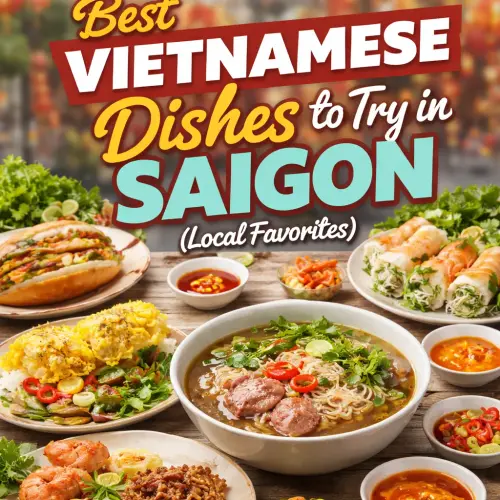
Why Saigon Is the Ultimate Destination for the Best Vietnamese Dishes to Try
Saigon, or Ho Chi Minh City, is a culinary playground where centuries-old traditions meet modern energy. The city’s food reflects its history as a trading hub: you’ll taste influences from China, France, Thailand, and Cambodia in almost every dish. For first-time visitors, the sheer variety can feel overwhelming—but that’s part of the fun.
Street vendors, night markets, and hidden alleyways are where the real magic happens. Locals don’t eat at fancy restaurants when they want a truly good meal; they head to a favorite plastic-stool spot on the sidewalk. That’s where you’ll find some of the best Vietnamese dishes to try in Saigon. For a related guide, see Best Coffee Shops in Ho Chi Minh: 5 Hidden Gems You Must Try.
Pro tip: Carry small bills (20,000–50,000 VND) because many street vendors don’t accept cards. And always look for the stall with the longest queue—that’s a sure sign of quality.
7 Best Vietnamese Dishes to Try in Saigon (Local Favorites)
1. Pho – The Soul of Vietnamese Cuisine
Pho is the dish that put Vietnam on the global food map. It’s a fragrant broth made from beef or chicken, served with flat rice noodles, fresh herbs, and a squeeze of lime. In Saigon, the broth tends to be sweeter and clearer than the Northern version. The beef is often served rare so it cooks gently in the hot soup.
Why it’s a local favorite: Saigonese eat pho for breakfast, lunch, or late-night supper. It’s comforting, affordable, and endlessly customizable with chili, hoisin sauce, and bean sprouts.
Pro tip: Try pho bo (beef pho) at Pho Hoa Pasteur or Pho Le for an authentic bowl that locals swear by.
2. Banh Mi – The Perfect Vietnamese Sandwich
Banh mi is a crispy baguette stuffed with savory fillings like grilled pork, pate, ham, pickled carrots, daikon, cucumber, cilantro, and a smear of mayonnaise. The French introduced the baguette; the Vietnamese perfected the filling. It’s a handheld meal that packs a punch of flavor.
Why it’s a local favorite: It’s fast, cheap (around 20,000–30,000 VND), and available on almost every corner. Many Saigonese grab one for breakfast or a quick lunch.
Pro tip: For a classic version, head to Banh Mi Huynh Hoa on Le Thi Rieng Street—expect a queue, but it’s worth it.
3. Com Tam – Broken Rice with Grilled Pork
Com tam is broken rice grains that were once considered lower quality but are now prized for their fluffy texture. The dish is topped with grilled pork chop, shredded pork skin, a fried egg, and a side of pickled vegetables and fish sauce. It’s hearty, smoky, and deeply satisfying.
Why it’s a local favorite: It’s a staple lunch dish for workers and families alike. The combination of savory grilled meat, salty-sweet fish sauce, and the soft rice is unbeatable.
Pro tip: Visit Com Tam Bui on Bui Thi Xuan Street for a consistently excellent plate. Add a sunny-side-up egg for extra richness.
4. Bun Thit Nuong – Vermicelli Noodles with Grilled Pork
Bun thit nuong features cold rice vermicelli noodles topped with charred grilled pork, fresh herbs, crushed peanuts, crispy spring rolls, and a drizzle of sweet fish sauce. It’s a refreshing, balanced dish perfect for hot Saigon afternoons.
Why it’s a local favorite: It’s lighter than pho but still filling, and the contrast of cold noodles with hot grilled meat is addictive.
Pro tip: Look for stalls that grill the pork over charcoal for that authentic smoky flavor. Bun Thit Nuong Chi Tuyen in District 1 is a classic choice.
5. Banh Xeo – Vietnamese Sizzling Pancake
Banh xeo is a crispy crepe made from rice flour, turmeric, and coconut milk, filled with shrimp, pork, bean sprouts, and scallions. It’s cooked in a hot pan until golden and crispy, then eaten wrapped in lettuce with fresh herbs and dipped in a tangy fish sauce.
Why it’s a local favorite: The texture—crunchy outside, tender inside—is irresistible. Plus, wrapping your own rolls is a fun, interactive way to eat.
Pro tip: Don’t let the crepe sit too long or it will get soggy. Eat it immediately. Banh Xeo 46A in District 1 is a famous spot among locals.
6. Goi Cuon – Fresh Spring Rolls
Goi cuon are translucent rice paper rolls stuffed with shrimp, pork, rice vermicelli, lettuce, and fresh herbs, served with a peanut dipping sauce or hoisin sauce. Unlike fried spring rolls, these are light, fresh, and healthy.
Why it’s a local favorite: They’re a popular appetizer or snack, especially during hot weather. The combination of crunchy veggies, tender protein, and creamy dip is classic.
Pro tip: Dip them generously in the peanut sauce—it’s what makes the dish shine. Street vendors often make them to order, so you get them at peak freshness.
7. Hu Tieu – A Southern Noodle Soup
Hu tieu is a noodle soup that originated from Chinese immigrants but became a Saigon specialty. It uses clear pork or seafood broth, chewy tapioca noodles, and toppings like shrimp, squid, pork, and quail eggs. Unlike pho, the broth is lighter and sometimes sweeter.
Why it’s a local favorite: It’s a staple of the Mekong Delta region and widely enjoyed in Saigon as a breakfast or lunch option. The noodles have a unique bounce that sets them apart.
Pro tip: Ask for the “dry” version (hu tieu kho) where the noodles are served with a separate bowl of broth on the side—it’s a Saigon twist that locals love.
Useful Resources
For more on Saigon’s food scene, check out Lonely Planet’s guide to Ho Chi Minh City food and Eater’s map of essential street food spots in Saigon.
Where to Find the Best Vietnamese Dishes to Try in Saigon: A Neighborhood Guide
One of the most common questions first-timers ask is exactly where to find the best Vietnamese dishes to try in Saigon. The city is vast, and knowing which district to head to can save you hours of wandering. Different neighborhoods offer distinct specialties and atmospheres. Here’s a quick breakdown of Saigon’s key food zones.
District 1: The Tourist Hub with Hidden Gems
While District 1 is the most touristy, it’s also packed with excellent street food. The famous Bến Thành Market is here, but for a more authentic experience, explore the alleys off Bùi Viện Street. You’ll find everything from bánh xèo to bún thịt nướng served by vendors who have been cooking for decades. Don’t let the busy streets fool you — some of the best Vietnamese dishes to try are tucked away in these narrow lanes.
District 3: The Heart of Local Saigon Food
District 3 is where locals go to eat. It’s less chaotic than District 1 but equally rich in flavor. This is the place to find exceptional cơm tấm and hủ tiếu. The area around Nguyễn Thông Street is famous for its soup stalls. If you want a meal that feels like a true local experience, District 3 should be high on your list for the best Vietnamese dishes to try in Saigon.
District 5: Chinatown for Unique Flavors
District 5, or Cholon, is Saigon’s Chinatown and offers a unique fusion of Vietnamese and Chinese cuisines. Here, you’ll discover dishes like bánh bao (steamed buns) and cháo lòng (rice porridge with pork offal) that you won’t find in other districts. The markets here are less crowded and offer a more relaxed food adventure. For anyone serious about the best Vietnamese dishes to try, a visit to District 5 is essential. For a related guide, see Cheap Eats in Saigon: Best Filipino-Friendly Food Under $2.
Practical Tips for Navigating Saigon’s Street Food Scene
To fully enjoy your journey through the best Vietnamese dishes to try, a few practical insights can make all the difference. These tips will help you eat safely, save money, and get the most authentic experience possible.
- Embrace the Plastic Stools — Small, colorful plastic stools are the hallmark of street food in Saigon. They might look uncomfortable, but they are part of the experience. Sitting low to the ground invites you to slow down, watch the city pass by, and truly taste the food.
- Learn a Few Key Phrases — While many vendors in central districts speak some English, a simple “Cho tôi một phần” (One serving, please) and “Bao nhiêu?” (How much?) goes a long way. It shows respect and often leads to friendlier service.
- Follow the Crowds — The best indicator of a great food stall is a line of locals. If you see a queue forming outside a tiny shop in the afternoon, join it. It’s almost always worth the wait for some of the best Vietnamese dishes to try.
- Check the Hygiene Routine — Look for vendors who use fresh ingredients, wear gloves when handling cooked food, and have clean utensils. Don’t be shy about observing how they work before ordering.
- Try a Food Tour for Your First Day — If you feel overwhelmed, joining a guided food tour on your first day can be a smart investment. A local guide can introduce you to the best Vietnamese dishes to try in Saigon while teaching you how to navigate stalls on your own for the rest of your trip.
Understanding the Core Ingredients of Saigon’s Best Dishes
To truly appreciate the best Vietnamese dishes to try, it helps to understand the building blocks of this cuisine. Saigon’s food relies on a few key ingredients that appear again and again. Knowing them enhances your tasting experience.
Fresh Herbs and Greens
No dish is complete without a generous side of herbs. Mint, cilantro, Thai basil, and sawtooth herb are common. They aren’t just garnish — they add layers of freshness and complexity to every bite. Locals often add them to soups, rice dishes, and even spring rolls.
Fish Sauce (Nước Mắm)
Fish sauce is the backbone of Vietnamese cooking. It is used in marinades, dipping sauces, and broths. A good fish sauce is savory, salty, and slightly funky. When mixed with lime, sugar, and chili, it becomes the iconic nước chấm that accompanies nearly every meal. The best Vietnamese dishes to try almost always include this umami powerhouse.
Rice and Noodles
Rice and noodles are the foundation of the diet. You’ll encounter phở (rice noodles), bún (vermicelli), hủ tiếu (clear tapioca noodles), and cơm (rice). Each type of noodle or grain has its own texture and is chosen specifically for the dish it accompanies. Learning to identify them helps you navigate menus with confidence.
Chili and Lime
Spice and acidity are key to balancing flavors. Freshly sliced chilies and wedges of lime are always on the table. Adding them is a personal touch that lets you customize the heat and tang of your meal. For many, this is an essential step when enjoying the best Vietnamese dishes to try.
Common Mistakes to Avoid When Trying Saigon’s Street Food
Even the most enthusiastic food explorers make mistakes. Avoid these common pitfalls to ensure every meal is a highlight of your trip.
- Eating Only at Tourist Spots — The stalls and restaurants near major landmarks are often overpriced and mediocre. Walk a few blocks off the beaten path. The real magic of the best Vietnamese dishes to try in Saigon happens on quiet residential streets.
- Ignoring the Dipping Sauce — Many visitors skip the dipping sauce or drench their food in it. Take a small amount first, taste the dish, then add more if needed. The sauce is meant to enhance, not overpower.
- Forgetting to Hydrate with Coconut Water — Saigon is hot and humid. Street food is delicious, but it can be heavy. Grab a fresh nước dừa (coconut water) from a vendor. It’s refreshing, natural, and helps keep your energy up for more eating adventures.
- Not Asking for Half Portions — If you’re eating alone or want to sample multiple dishes, many vendors will serve a smaller portion if you ask. This is a great way to try more of the best Vietnamese dishes to try without overeating.
- Rushing Your Meal — Street food culture in Saigon is about leisurely dining. Take your time. Observe the rhythm of the street. Enjoy the conversation with the vendor if possible. Rushing diminishes the experience.
Frequently Asked Questions About the Best Vietnamese Dishes to Try in Saigon
What is the best Vietnamese dish to try for a first-time visitor?
Most first-timers start with pho because it’s familiar yet exotic. The warm broth and tender noodles make it an easy entry point into Vietnamese cuisine.
Is street food safe to eat in Saigon?
Yes, street food in Saigon is generally safe, especially if you choose stalls with high turnover and good hygiene practices. Look for busy spots where locals eat.
What are the best Vietnamese dishes to try in Saigon for vegetarians?
Goi cuon (fresh spring rolls) can be made vegetarian, and many banh mi stalls offer egg or tofu options. Com chay (vegetarian rice dishes) are also common.
How much does a typical street food meal cost in Saigon?
A filling bowl of pho or com tam costs between 30,000 and 60,000 VND (about $1.30–$2.50 USD). Banh mi is even cheaper, around 20,000–35,000 VND.
What is the difference between pho and hu tieu?
Pho uses flat rice noodles and a richer, beefier broth. Hu tieu uses tapioca noodles (more chewy) and a lighter, often sweeter broth made from pork or seafood.
Where can I find the best banh mi in Saigon?
Banh Mi Huynh Hoa on Le Thi Rieng Street is legendary. Banh Mi Nhu Lan is another popular spot with multiple branches across the city.
Do I need to speak Vietnamese to order food?
Not necessarily. Many vendors have pictures on menus, and pointing and smiling works fine. Learning a few basic words like “mot pho” (one pho) helps.
What is the most popular late-night food in Saigon?
Pho and hu tieu are common late-night staples. Many street stalls open from 6 PM until 3 AM to serve the after-work crowd.
Is it rude to tip at food stalls?
Tipping is not expected at street stalls, though leaving small change (5,000–10,000 VND) is appreciated. At nicer restaurants, a 10% service charge may already be included.
What are the best Vietnamese dishes to try in Saigon for spicy food lovers?
Bun bo Hue (spicy beef noodle soup from Hue) is available in Saigon and packs heat. You can also add fresh chili or chili oil to any dish.
Can I find vegan versions of traditional dishes?
Yes, many Buddhist restaurants in Saigon serve vegan versions of pho, banh mi, and com tam. Look for “chay” signs or ask for “do chay.”
What drink should I pair with Vietnamese street food?
Iced Vietnamese coffee (ca phe sua da) is a classic pairing. For a non-caffeinated option, try fresh sugarcane juice or a cold beer (bia saigon).
Is it safe to eat raw vegetables on the street?
Generally yes, but if you have a sensitive stomach, you can ask for no raw veggies or only eat at stalls with good hygiene practices.
What is the best time to eat banh xeo?
Banh xeo is typically eaten as a lunch or early dinner. Many stalls open around 11 AM and close by 9 PM.
Can I take Vietnamese street food to go?
Absolutely. Most vendors will pack your food in a plastic bag or foam container. Just ask “mang ve” (take away).
What is the most unique dish on this list?
Banh xeo is arguably the most unique because of its sizzling preparation and interactive eating style. It’s unlike anything else in the region.
Do I need to worry about food allergies?
Common allergens like peanuts, shrimp, and MSG are used frequently. Always communicate your allergies clearly, and consider bringing a translation card.
What is the most affordable dish on the list?
Banh mi is the most budget-friendly, often costing less than $1.50 USD. Goi cuon is also very affordable at around 15,000–25,000 VND per roll.
How can I find authentic street food away from tourist areas?
Venture into residential neighborhoods like District 3, Phu Nhuan, or Binh Thanh. Use Google Maps and look for places with hundreds of reviews in Vietnamese.
What is the best Vietnamese dish to try in Saigon for a seafood lover?
Hu tieu with seafood is a must-try. You can also find grilled oysters with scallion oil and peanuts at many street stalls near the river.
Saigon’s food scene is a journey of discovery, and these seven dishes are just the beginning. Whether you’re slurping pho on a tiny plastic stool or biting into a fresh banh mi, every meal tells a story. So grab a fork (or chopsticks) and start exploring. Your taste buds will thank you.
