
Quezon City Delicacies Guide. Forget the skyline. Quezon City’s 2026 food scene isn’t defined by its high-rises but by the steam rising from a midnight bowl of pares, the crackle of sizzling sisig hitting a table, and the quiet discipline of a carinderia that’s been perfecting its kare-kare for thirty years.
This is a landscape of everyday comfort, student-budget genius, and newly anointed destination restaurants. We’re talking unapologetically loud flavors: the blistered skin of a whole crispy pata, the icy salvation of halo-halo in April heat, and silog plates engineered to power you through a 12-hour day.
Here, campus food hubs, historic panciterias, and Michelin-noted neighborhood spots don’t compete—they co-exist. The epicenters: Tomas Morato–Scout, Cubao & Cubao X, and the restless UP Diliman–Maginhawa belt.
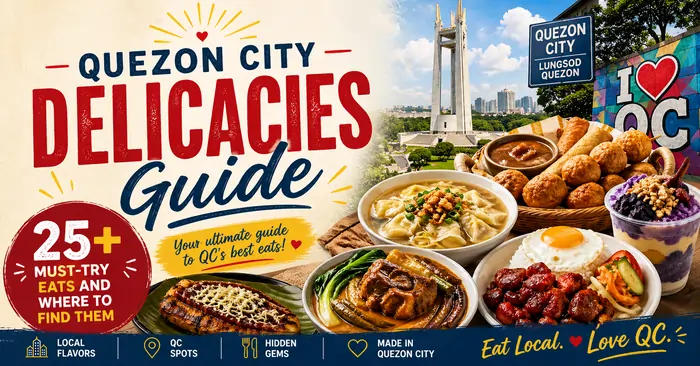
Table of Contents
Introduction: The Real Flavor of QC
Let me tell you something about Quezon City that most Manila guides get wrong.
They’ll frame QC as a bureaucratic grid, a traffic corridor, a concrete maze you endure on your way somewhere else. But if you’re like me—someone who navigates cities by scent, tracking the drift of garlic rice and smoking charcoal—Quezon City reveals itself as a table set for everyone.
Early on, I made the same mistake. I treated QC as a transit point, meeting friends at air-conditioned mall chains, eating food that tasted like it could have been served in any other postcode. The moment I slowed down and asked locals, “Saan ka ba talaga kumakain?”everything shifted. I found myself on side streets near campuses, squeezed into pares stalls past midnight, discovering halo-halo shacks tucked under flyovers, tasting breakfast plates that tasted less like recipes and more like inheritance.
I’m from Mindanao, now based in Davao City. I have a deep reflex for food that doesn’t perform. Food built for workers, students, and families—not for the algorithm. Quezon City’s delicacies are exactly that: direct, filling, heavy on the rice, and singular in purpose.
Pair this guide with a smart Metro Manila route to cluster Tomas Morato, Cubao, UP Diliman, and Maginhawa without punishing yourself in traffic. Think of what follows as your edible map—everything I’ve eaten, bookmarked, and returned to with friends.
Why Quezon City’s Food Scene Commands Your Attention
QC sits at a furious crossroads. It feeds the country’s largest student population, a sprawling working class, and a rising tier of destination diners. As Metro Manila’s most populous and sprawling city, it has to deliver on three non-negotiables: substance, affordability, and flavor.
And now, the global spotlight has found it. Several QC restaurants have landed spots in the Michelin Guide’s Bib Gourmand and Selected lists, marking a new era for places that have long served excellent food at honest prices. This recognition layers on top of a foundation built by decades-old eateries and nocturnal street food zones. The result: a city where breakfast is kakanin from a wet market, midnight is pares by the roadside, and dinner can be a Bib Gourmand Filipino feast—all without leaving the zip code.
Iconic Quezon City Delicacies You Cannot Miss
These are the heavy-hitters—the dishes QC is built on.
Crispy Pata
If QC elected a pulutan mascot, it would be a whole crispy pata. We’re talking blistered, glass-like skin giving way to spoon-tender meat beneath. The city’s best versions are deeply seasoned, barely need a knife, and arrive with a soy-vinegar dip that cuts through the richness. This is not a solo order. This is a table-centerpiece for barkada nights, payday feasts, and celebrations that require another round of beer.
- Best for: Group dinners, victories big and small.
- Where to try: Long-standing Filipino restos and beer houses along Tomas Morato and the Scout area.
Pares with Garlic Rice
Pares is Quezon City’s late-night pulse. A bowl of beef stew draped over garlic rice, flanked by a clear, hot soup. It fuels students on deadlines, BPO workers on break, and drivers who know the city at 3 AM. The sauce swings from subtly sweet to ferociously savory, and some shops push it into overdrive with bone marrow. Everyone here has a fiercely defended pares allegiance.
- Best for: After-hours hunger, budget comfort, solo dinners that restore you.
- Where to try: Roadside pares houses in Cubao and the Project areas, small eateries near terminals and hospitals.
Sizzling Sisig
In QC, sisig announces itself before it arrives. A crackling, spitting platter, a raw egg collapsing into the heat, the sharp scent of calamansi and chili. You’ll find classic pork sisig in no-frills beer joints, and modern riffs—oyster, tofu, sisig fries—in the gastropubs of Cubao X and Tomas Morato. A single bite should deliver crunch, fat, acid, and salt in quick succession. Many QC nights start and end right here.
- Best for: Pulutan, barkada sharing, a definitive beer partner.
- Where to try: Gastropubs around Tomas Morato and Scout, Cubao X hangouts, neighborhood Filipino restos.
Silog Meals (Tapsilog, Longsilog, and More)
Silog isn’t just a dish here; it’s timekeeping. Tapsilog, longsilog, tocilog, bangsilog—each one a study in how garlic rice absorbs a specific marinade. Some lean sweet, others smoky and sharp. The “best silog” in QC is rarely a big-name brand. It’s the stall closest to your dorm, your office, or your childhood home—the one that knows your order by the way you nod.
- Best for: Daily fuel, post-night-out recovery, affordable anytime dining.
- Where to try: UP Diliman and Katipunan food hubs, Maginhawa side streets, 24/7 turo-turo spots.
Palabok & Pancit
Noodle culture runs deep in QC’s veins. You’ll find palabok buried under a generous avalanche of chicharrón, hard-boiled egg, and bright shrimp sauce. Pancit bihon and canton are non-negotiable sharing dishes, while mami and lomi bowls anchor old-school eateries. Some small joints are neighborhood-famous for a pancit recipe that hasn’t changed in decades.
- Best for: Merienda, sharing plates, a quick, soulful carb fix.
- Where to try: Neighborhood panciterias, mall food courts with decades-old noodle stalls.
More Sweet Treats and Snacks
Halo-Halo
In Quezon City’s blinding summer, halo-halo is survival. From mall counters assembling towering versions to roadside stands sticking to the classics: finely shaved ice, balanced sweetness, a cascade of toppings. Pair it with palabok or pancit for the full merienda ritual that makes the heat bearable.
- Where to find: Roadside snack stalls, panciterias, dessert counters in malls and supermarkets.
Banana Cue, Turon, and Kakanin
Some of QC’s finest delicacies never see a plate. They’re handed over in plastic bags or paper trays. Turon with glassy caramel, dense bibingka, jewel-toned sapin-sapin—vendors near markets, schools, and churches have quietly served these for decades, amassing loyalists who track their schedules.
- Where to find: Public markets, sidewalk vendors near campuses and jeepney stops.
Lugaw & Goto
A hot bowl of lugaw or goto in QC is a reset button. Plain porridge lifted by spring onions and garlic chips, made substantial with tokwa’t baboy on the side. Goto brings the richness of tripe and beef. The city’s 24-hour lugawan are neighborhood anchors—always open, always filling.
- Where to find: Lugawan in residential pockets, eateries near hospitals and terminals.
Campus Favorites (Isaw, Burgers, and Desserts)
Quezon City’s identity as a student city is edible. Grilled isaw and barbecue, affordable burgers, shawarma, and creative desserts cluster around universities. These stalls survive on repeat customers: students, nostalgic alumni, and professionals who never outgrew their campus eating habits.
- Where to find: Near UP Diliman, Katipunan, and other QC campuses; inside food parks.
Savory QC Dishes Worth Seeking Out
Kare-Kare
Good QC kare-kare is a quiet masterpiece: a deep, peanut-thick sauce, oxtail surrendering to the spoon, vegetables still vibrant, and bagoong that hums with salt and funk. This is the centerpiece of family tables during reunions, birthdays, and Sunday lunches that stretch into the afternoon.
- Where to try: Heritage-style Filipino restaurants, family-run gems in Tomas Morato and Scout.
Inihaw na Liempo & Barbecue
Across QC, smoke from charcoal grills is part of the landscape. Inihaw na liempo, chicken barbecue, and skewers are staples of nighttime streets, often served with unlimited rice and sawsawan bars where you build your own dipping sauce. It’s fast, primal, and deeply satisfying.
- Where to try: Street-side inihaw stalls, beer gardens, budget-friendly “inihaw + rice” spots near campuses.
Fried Chicken and Wings
QC’s fried chicken game is ferocious. From Korean-style double-fried birds to local breaded versions and unlimited wings promos, this is the default group order when decisions are impossible. Soy-garlic, Buffalo, or simply classic—paired with rice, fries, or an ice-cold beer.
- Where to try: Small wing joints in food parks, Korean restos, casual dining spots around malls and campus hubs.
Campus-Style Burgers and Rice Meals
QC has bred its own class of “campus food”: thick patties with simple toppings, sisig rice bowls, tapa rice, and gravy-drenched plates. The charm isn’t originality; it’s value, volume, and the familiar taste of a Thursday night between classes.
- Where to try: Campus-adjacent burger stands, food halls, and food parks.
Unique Finds for Adventurous Eaters
Isaw and Street Innards
Grilled chicken and pork intestines, balunbalunan, and other offal skewers are QC classics. Under the glow of bare bulbs at night, rows of skewers sizzle over charcoal. Dip them in vinegar, add a sting of chili, and stand shoulder-to-shoulder with everyone else balancing plastic plates.
- Where to find: Near campuses, side streets in residential areas, small night markets.
Tokneneng and Kwek-Kwek
Orange-battered, deep-fried to a perfect shell—quail (kwek-kwek) or chicken (tokneneng) eggs are the ultimate street snack. Sliced and drenched in spiced vinegar or a sweet-sour sauce, they’re a cheap, filling bridge between commutes.
- Where to find: Street carts near jeepney stops, tricycle terminals, and public markets.
Bulalo Pares and Bone Marrow Bowls
This is pares evolved into something heavier, richer, and deeply personal. Collagen-rich broth, soft tendon, and marrow you scoop and spread across rice like butter. These bowls demand your full attention—and a light schedule afterward.
- Where to find: Select pares houses with “bulalo pares” on their signboards, especially along main transport corridors.
Beverages That Taste Like QC
Sago’t Gulaman
The natural partner to QC’s salty, grilled, and fried delicacies. A cold mix of brown-sugar syrup, gelatin, and tapioca pearls, served in plastic cups or pitchers. It’s the sweet, icy counterpunch to a plate of sizzling sisig.
- Where to find: Carinderias, lugawan, and inihaw stalls.
Milk Tea, Coffee, and Student-Café Culture
Quezon City’s younger population fuels a sprawling café and milk tea scene. Independent coffee shops and study cafés double as second homes—places to cram for exams, work remote, or wait out traffic with something iced or hot.
- Where to find: Clustered around schools and office districts.
Ice-Cold Beer with Pulutan
Beer and pulutan are the anchors of QC nightlife. From simple plastic-chair setups to polished bars, you’ll find sisig, crispy pata, inihaw, and chicharon bulaklak listed next to buckets and towers of beer. It’s not a fancy experience—but it’s authentically Quezon City.
- Where to find: Beer houses, gastropubs, and any Filipino resto with a bucket special.
Where to Eat: Areas, Markets, and Food Hubs
Tomas Morato & Scout Area
QC’s long-standing restaurant row. This is your move for crispy pata, kare-kare, sisig, and polished group dinners that still respect your wallet. It’s walkable, dense, and home to some of the city’s most enduring Filipino and Asian concepts.
Cubao & Cubao X
A glorious chaos of transport hub and food maze. Here, you can crawl from shawarma to sisig, from pizza to craft cocktails, all within walking distance of bus terminals and the Cubao X creative pocket. Ideal for a multi-stop, no-plan food crawl.
UP Diliman, Campus Hubs, and Maginhawa
Pure, unfiltered food energy. Silog, katsu, burgers, milk tea, and pastil collide on streets where taste and value dictate survival. Many of these spots live and die by word-of-mouth, not signage—explore accordingly. Student-friendly prices, staggering variety.
Residential Gems and Neighborhood Carinderias
Some of QC’s best eating happens in small, unnamed spaces. Carinderias in quiet streets, lugawan tucked beside sari-sari stores, and long-time bakeries in older subdivisions quietly feed regulars day after day. This is where you’ll find the most “home-style” food—no branding needed.
“Pasalubong” and Take-Home Food from QC
Quezon City isn’t a traditional pasalubong province, but there are still smart take-home options.
| Delicacy | Shelf Life | Travels Well? | Best For | Price Range |
|---|---|---|---|---|
| Ready-to-heat crispy pata / lechon kawali | 1–2 weeks (frozen) | Yes (checked-in) | Family meals at home | ₱600–₱1,200 |
| Bottled Filipino dishes (kare-kare, adobo, callos) | 1–3 months (sealed) | Yes | OFW relatives, home cooks | ₱250–₱500/jar or pack |
| Sans rival, cakes, and pastries | 2–3 days (chilled) | Moderate | Close friends, special occasions | ₱150–₱900 |
| Kakanin and rice cakes | 1–2 days | Moderate | Office merienda, next-day sharing | ₱150–₱300/box |
| Packaged local snacks | 1–3 months | Yes | General pasalubong, snacking | ₱50–₱200 |
Packing Tips:
- Frozen or chilled dishes: Insulated bag with ice packs for travel.
- Cakes and pastries: Hand-carry to prevent squishing.
- Kakanin: Don’t overbuy; best shared same-day or next-day.
Food Stops to Add to Your Quezon City Day Trip
Weave food into your QC route strategically.
- Stop 1: Quezon City Hall Area (Morning)
Execute your government or business errand, then grab simple silog or lugaw at a nearby carinderia for a real breakfast. - Stop 2: UP Diliman (Lunch)
Explore campus food hubs for silog plates, burgers, or isaw. Wash it down with a cold, sweet drink. - Stop 3: Cubao (Afternoon into Evening)
Have halo-halo or pancit in or around the malls. As night falls, post up in Cubao X for drinks and sizzling sisig. - Stop 4: Tomas Morato / Scout Area (Late Night)
End the night with a whole crispy pata, rich kare-kare, and pulutan at a sit-down Filipino resto or gastropub.
Final Word from Jin
Quezon City taught me that a city’s delicacies aren’t always wrapped in cellophane or tied to a festival. Sometimes, they are the foods that quietly, relentlessly keep a population going. Pares at midnight. Silog before a shift. Crispy pata shared after payday. Halo-halo during the crush of dry season.
I recognize this culture. It’s the same spirit that powers Mindanao’s pastil stalls and Davao’s carinderias: meals that don’t need translation, only appetite.
So yes, chase the newly recognized spots and see why food writers are paying attention. But also—sit at a plastic table, order what the stranger next to you is having, and let the city feed you the way it feeds its own. The traffic can wait. Finish your plate first.
Frequently Asked Questions: Your QC Food Trip, Answered
1. What is the one absolute must-try dish in Quezon City?
It’s a tie between Crispy Pata for group dinners and Pares with Garlic Rice for a solo, late-night experience. Both define the city’s soul.
2. Where can I find the best pares in QC?
There’s no single winner, as it’s a fiercely personal debate. Start your search at the roadside pares houses in Cubao and the Project areas, especially those packed past midnight.
3. Are there any Michelin-recognized restaurants in Quezon City?
Yes. Several QC restaurants have earned spots in the Michelin Guide’s Bib Gourmand and Selected lists, putting the city on the global food map for excellent, reasonably priced food.
4. What is the best food zone for a first-time visitor?
Tomas Morato and the Scout Area is the most walkable and concentrated restaurant row, offering everything from iconic Filipino dishes to gastropubs.
5. I’m on a tight budget. Where should I eat?
Head straight to the UP Diliman–Maginhawa belt. You’ll find the highest concentration of student-budget silog, burgers, and rice meals in the city.
6. What’s the quintessential late-night food in QC?
Pares and Sizzling Sisig. These two dishes anchor the city’s after-hours culture, paired with garlic rice and an ice-cold drink or beer.
7. Is there a hub for street food like isaw and kwek-kwek?
Street food thrives near campuses (UP, Ateneo), around major jeepney and tricycle terminals, and in small night markets tucked into residential areas.
8. Where can I get the best halo-halo?
You’ll find excellent halo-halo everywhere from mall counters to roadside shacks. For an authentic experience, seek out small eateries that also sell pancit and palabok.
9. What is a “silog” meal and where can I find it?
“Silog” is a portmanteau of sinangag (garlic rice) and itlog (egg), paired with a protein like tapa (tapsilog) or longganisa (longsilog). It’s everywhere, but the most iconic are from 24/7 turo-turo spots and campus-side stalls.
10. Is Quezon City good for a food crawl?
Absolutely. Cubao & Cubao X is ideal for crawling from shawarma and sisig to craft beer, while Maginhawa is perfect for hitting multiple cheap eats on one long street.
11. What’s a good pasalubong from QC?
Since QC isn’t a dried-fish or fruit region, go for bottled Filipino dishes (kare-kare, adobo) or a Sans rival cake from a famous bakeshop. Frozen ready-to-heat crispy pata also travels well.
12. Are there vegetarian options among these classic dishes?
While the classics are meat-heavy, many modern gastropubs offer variations like tofu sisig. You’ll also find egg-based snacks like tokneneng and plenty of kakanin (rice cakes).
13. Where do locals actually eat, away from the malls?
They eat at neighborhood carinderias, lugawan on the corner, and tiny panciterias that have been in their barangay for decades.
14. What is “bulalo pares”?
It’s a richer, more indulgent evolution of classic pares, featuring collagen-heavy broth, soft tendon, and bone marrow you scoop out and spread on rice.
15. How do I plan a day trip that combines food and errands in QC?
Cluster your stops. Do a morning errand near City Hall, have lunch around UP Diliman, an afternoon snack in Cubao, and a final dinner in the Tomas Morato/Scout area to avoid chasing traffic across the city.
16. What makes QC’s food scene different from other Metro Manila cities like Makati or BGC?
Scale and soul. QC’s food scene is defined by its massive student and working-class base, making it more affordable, unpretentious, and grounded than the often corporate-driven centers of Makati or BGC.
17. Can I find good food in QC 24/7?
Yes. Many lugawan and pares houses are open 24 hours, and there are always silog spots ready to feed the city’s round-the-clock workforce.
18. What’s the best pulutan (beer food) in QC?
Sizzling Sisig and Crispy Pata are the undisputed kings of pulutan, found in almost any beer house or gastropub.
19. What are “kakanin” and where can I buy them fresh?
Kakanin are traditional Filipino rice cakes like bibingka, sapin-sapin, and kutsinta. The freshest are found at public markets and from sidewalk vendors near churches early in the morning.
20. Is this guide suitable for a solo traveler?
100%. The food is designed for individual fuel—a solo bowl of pares, a silog plate, or a cup of goto is exactly how the city eats daily. You’ll fit right in.

Jin Grey is a Filipino Senior SEO Consultant and AI-First SEO Strategist who helps international brands grow through modern search strategies. She specializes in technical SEO, semantic keyword research, and AI-ready content creation. She is also the owner of JinGrey.com.
As a digital nomad, she loves exploring the world and trying different cuisines during her free time.