
A Filipino chef in Bali gives you something you won’t get from a standard “international” private chef: real Asian comfort food with Filipino soul, adapted to Bali’s ingredients and villa lifestyle.
Instead of just another Western‑leaning menu with one “Asian night,” your villa dinners can feel like home for Asian guests and excitingly different for everyone else.
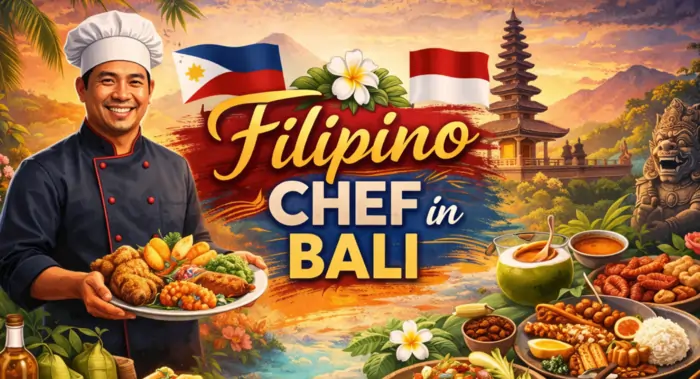
This guide explains how Filipino Chef in Bali: Bringing Asian Flavors to Your Villa fits into your Bali trip or event—what makes Filipino-led cooking special, who it’s perfect for, and how to brief a chef like Juan Gadi for couples, families, and groups.
What Makes a Filipino Chef in Bali Different?
Chef Juan Gadi is a clear example of this profile: a Filipino private chef who built Kilig Bali, a Filipino-inspired warung in Ubud, and then extended that philosophy into private villa dining. That combination—Filipino roots, Bali context, villa execution—is exactly what “Filipino chef in Bali” means here.
Key differences vs a generic private chef:
- Filipino & Asian comfort first
Kilig started as a way to serve Filipino and Asian comfort food in Ubud—rice bowls, grilled meats, stews, and seafood built for Asian palates, not just Western interpretations. - Menus made for Asian and mixed groups
Juan’s private menus are built via conversation around allergies, preferences, lifestyle (vegan, keto, pescatarian), and flavour direction: “more Filipino,” “more Indonesian,” or “fusion.” - Same philosophy, moved into your villa
Instead of you going to Kilig, the spirit of Kilig comes to your villa: honest, flavour-driven dishes; respect for ingredients; and that Filipino-style hospitality that makes people feel at home.
If you want the full story on Juan’s background and core service, read:
Private Chef in Bali – Asian Villa Dining Experience by Chef Juan Gadi and
Best Private Chef in Bali: Hire Chef Juan Gadi.
Why Filipino-Led Asian Flavors Work So Well in a Bali Villa
Villa and private-chef content shows that some of the best villa meals in Bali come from Asian‑first chefs who understand rice, umami, and comfort food. Filipino cuisine slots into this perfectly:
- Comfort-forward, yet flexible
Filipino food is built around stews, grills, noodles, and rice—adobo, sinigang, inihaw, pancit, kare‑kare, etc.—which adapt easily to Bali’s produce and to shared villa tables. - Naturally fusion-friendly
Filipino cuisine already blends Spanish, Chinese, American, and regional influences, so moving between Filipino‑Indonesian fusion or Filipino‑Western plates feels organic. - Perfect for mixed groups
Villa menus and chef platforms note how important it is to feed both Asian and Western guests in the same group. Filipino‑led menus can sit in that middle ground—satisfying rice‑centric appetites while still feeling approachable to Western travellers.
That’s why Juan’s menus are often positioned as “Flavors of Indonesia / Asia”, Filipino‑leaning feasts, and Asian tasting menus rather than strict, purist Filipino only.
For the broader argument for going Asian-first, tie in:
Asian Private Chef in Bali: Why Choose Asian Cuisine for Your Event.
Who a Filipino Chef in Bali Is Perfect For
1. Filipino and Southeast Asian Guests on Holiday
If you’re Filipino, from elsewhere in Southeast Asia, or hosting SEA clients/friends, a Filipino chef brings familiar comfort without repeating exactly what you get at home:
- Real rice and noodle dishes that feel “correct,” not like Westernised sides.
- Sauces and condiments that make sense to people who grew up in Asia.
- A chef who understands chilli, sourness, and richness in the same way you do.
Kilig and similar Filipino-led spots in Bali position themselves as places where Filipinos feel “seen” and non-Filipinos get a gateway into Filipino hospitality and flavour.
2. Mixed Groups in a Bali Villa
Traveloka’s villa-with-chef overview and villa menus show groups often include:
- Some people who want local/Asian food daily.
- Others who need more Western or lighter options.
Juan’s private chef materials emphasise that he designs mixed menus: Balinese flavours plus Western favourites, vegetarian and kids’ options, and varied spice levels. That’s ideal for:
- Family trips with parents, kids, and older relatives.
- Group getaways where some guests are more cautious eaters.
3. Experience-Focused Guests (Not Just “Foodies”)
DigiLamon’s own pages frame Juan’s service as a full experience:
- Menu planning as a conversation.
- Fresh ingredient sourcing (fish from Jimbaran, produce from Bedugul).
- In‑villa cooking, serving, and complete cleanup.
For guests who care less about the technicalities of cuisine and more about “no hassle, great vibe, Asian comfort food,” a Filipino private chef hits that sweet spot.
Example Formats: How Filipino Flavors Show Up in the Villa
From DigiLamon’s pricing table and experience descriptions for Juan:
- Flavors of Indonesia / Asia (~IDR 500.000 – 650.000+ per person)
Casual family feasts or mixed‑age group dinners. Think Filipino‑Indonesian comfort dishes, shared rice and sides, grilled items, stews, and vegetables. - Signature Seafood BBQ (~IDR 900.000 – 1.300.000+ per person)
Ideal for birthdays and group dinners. Filipino and Asian-seasoned seafood, grilled over fire, balanced by salads, rice, and dipping sauces. - Gourmet Tasting Menu (5–7 courses, ~IDR 1.500.000 – 2.500.000+ per person)
Honeymoons, anniversaries, or special nights, where Filipino flavours might appear as sauces, broths, or course themes inside a more fine‑dining structure. - Whole Babi Guling (IDR 3.700.000 – 7.000.000+ per event)
While Babi Guling is Balinese, a Filipino-led chef used to roasted meats and big feasts can handle this as part of a broader Asian feast.
These formats all show Filipino and Asian flavours integrated into how the meal is served (family-style, BBQ, tasting menu, feast), not just in a single token dish.
For inspiration on individual dishes and menu design, link users to:
Top Asian Dishes Perfect for Private Dining in Bali and
Custom Asian Tasting Menu for Private Villa Dining in Bali.
Filipino Chef + Bali: Perfect for Romance and Events
Romantic & Couple Experiences
DigiLamon’s romantic guide shows exactly how a chef like Juan fits into romantic villa nights:
- Sunset villa dinners with Asian‑leaning tasting menus.
- Filipino/Asian comfort dishes dressed up for an anniversary or honeymoon.
- Flexible pacing so couples can swim, talk, and relax between courses.
If the focus is romance, connect this page to:
- Romantic Private Dinner in Bali: The Ultimate Villa Experience
- Honeymoon Couples Best Private Chef Experience in Bali for Honeymoon Couples
Birthdays, Retreats, and Welcome Dinners
Filipino and Asian food is naturally sharing‑friendly, so a Filipino chef is also strong for:
- Birthday villa parties – Filipino‑influenced Asian buffets, seafood BBQs, or family-style feasts.
- Corporate retreats – nourishing, familiar, rice‑centered meals that support work sessions without being heavy Western fare.
- Wedding welcome dinners – Filipino‑leaning Asian menus that still speak to Indonesian/Balinese context.
For these angles, connect this article to:
- Private Chef in Bali for Birthday Parties & Celebrations
- Hiring a Private Chef in Bali for Corporate Retreats
- Private Chef for Wedding Welcome Dinners in Bali
How to Brief a Filipino Chef in Bali for Your Villa
To actually use Filipino Chef in Bali: Bringing Asian Flavors to Your Villa as a real experience, your inquiry should include:
- Who you are & who’s coming
- Couple, family, group of friends, or corporate team.
- Rough idea of guests’ backgrounds (e.g., majority Asian, mixed, mostly Western).
- Occasion
- Romantic dinner, birthday, retreat dinner, welcome party, or “just because.”
- Cuisine direction
- “More Filipino comfort,” “Filipino‑Indonesian mix,” or “Asian fusion with Filipino touches.”
- Menu preferences & restrictions
- Allergies (nuts, shellfish, gluten, dairy).
- Dietary (no pork, halal‑leaning, pescatarian, vegan).
- Spice tolerance (mild/moderate/spicy).
- Format & budget
- Family-style feast, BBQ, buffet, or tasting menu.
- Per‑person or total budget range tied loosely to described ranges (e.g., aiming for Flavors of Asia vs full tasting menu).
You can borrow the framing from DigiLamon’s Juan article:
“We’d like a Filipino‑leaning Asian menu in our villa, with [X] people, focusing on [family feast / seafood BBQ / romantic tasting menu]. These are our dietary needs: […]. Our rough budget is around [IDR X per person]. Can you suggest menu options that fit?”
For the full booking flow, link to:
How to Book a Private Chef in Bali for Your Villa and
What’s Included When You Hire a Private Chef in Bali?.
Final Thoughts: Why Choose a Filipino Chef in Bali
Choosing a Filipino chef in Bali is about more than trying a new cuisine. It’s about:
- Making your villa dinners feel like Asian comfort instead of anonymous “international” food.
- Giving Filipino and Asian guests a sense of home, and everyone else a deeper connection to the region.
- Working with a chef whose natural language is rice, umami, and shared plates—perfectly suited to Bali villas.
Use this article to:
- Decide if Filipino‑led Asian flavours should anchor your villa dining.
- See where they fit best (romance, family trips, events, retreats).
- Brief chefs like Juan so they can design menus that feel unmistakably Asian, warmly Filipino, and perfectly at home in Bali.
Then plug it into the rest of your Asian cuisine cluster:
- Asian Private Chef in Bali: Why Choose Asian Cuisine for Your Event
- Top Asian Dishes Perfect for Private Dining in Bali
- Custom Asian Tasting Menu for Private Villa Dining in Bali
- Fusion Asian Dining Experience with a Private Chef in Bali
Together, they position Filipino and Asian cuisine as a clear, compelling reason to choose a private chef in Bali in the first place.

I’m Jean Palabrica, known in the industry as Jin Grey—a name reflecting my specialized expertise in Grey Hat SEO.
With over 18 years of experience as a “Chief Everything Officer,” I provide data-driven strategies for high-competition niches like iGaming. As a Senior SEO and Digital Marketing Consultant, I help brands navigate complex markets, optimize technical systems, and scale sustainably