
Written by Jin Grey | DigiLamon.com | April 2026
Bohol Delicacies Guide – Bohol’s 2026 culinary scene is defined by its geological heritage and colonial history. Key must-try delicacies include Peanut Kisses (modeled after the Chocolate Hills), Calamay sa Albur (sticky rice in coconut shells), and the aromatic Ube Kinampay. Unique to the region are the egg-yolk-based Broas and Torta, traditional pastries originating from 18th-century church construction. For savory fans, the spicy Hinalang and fresh Kinilaw are essential. Best shopping spots include Tagbilaran Public Market and the specialized bakeries of Baclayon.
Let me tell you something about Bohol that most travel guides gloss over.
Yes, the Chocolate Hills are magnificent. The tarsiers are adorable. The beaches of Panglao rival anywhere in the country. But for me—someone who travels primarily through my stomach—Bohol’s real magic lives in its delicacies.
I learned this the hard way on my first trip. I was so focused on checking off the tourist circuit that I barely paid attention to the food beyond grabbing quick meals between stops. It was only on my second visit, when I deliberately slowed down, that I discovered what I’d missed: calamaysimmered for hours in coconut shells, ube kinampay so fragrant it fills an entire market stall, and peanut-based treats shaped like the hills I’d just climbed.
As a Mindanaoan born in Isulan, Sultan Kudarat, and now calling Davao City home for over two decades, I have a deep appreciation for regional Filipino food. The kind of food that doesn’t need to be fancy—just honest, rooted in place, and made with patience. Bohol’s delicacies embody exactly that.
Before diving into the food, if you’re still planning the rest of your trip, make sure to check out my full Bohol Travel Guide for everything from Chocolate Hills logistics to where to stay on Panglao.
This guide covers everything I’ve eaten, loved, and brought home across multiple visits. Consider it your edible map of Bohol.
Why Bohol’s Food Scene Deserves Your Attention
Bohol’s cuisine sits at the intersection of geography, history, and pure resourcefulness.
Being an island province, seafood is abundant and fresh—fish caught that morning, crabs pulled from mangrove estuaries, sea urchins harvested by hand. But Bohol is also agricultural. The limestone soil and tropical climate produce exceptional root crops, particularly the legendary ube kinampay purple yam found nowhere else in the Philippines.
The Spanish colonial period left its mark too. According to local historical accounts, when Baclayon Church was being built, egg whites were used as binding material for the coral stones. The leftover yolks? Local women turned them into delicate broas (ladyfinger cookies)—a pastry tradition that survives centuries later.
This blend of native ingredients, colonial influences, and Boholano creativity produces a food culture that feels both familiar and distinctly local. The flavors aren’t aggressive. They’re comforting, coconut-rich, often sweet, and deeply tied to community celebrations.
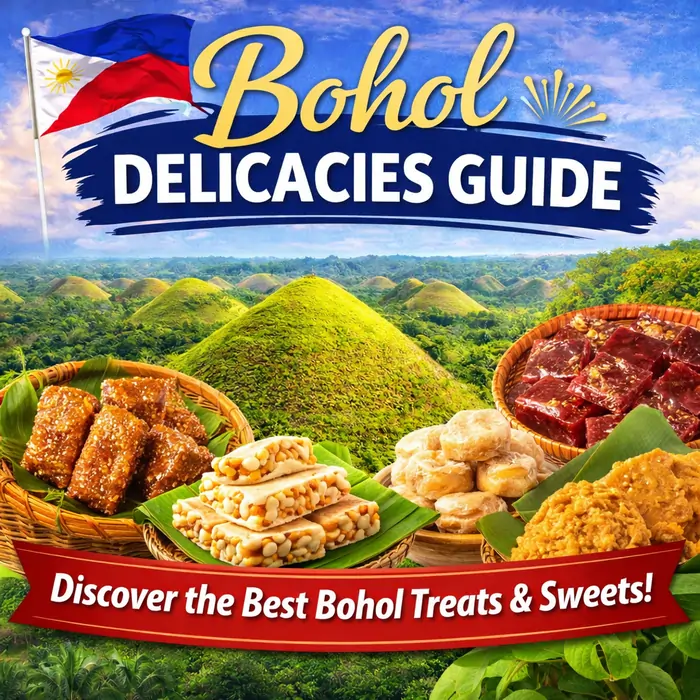
Table of Contents
Iconic Bohol Delicacies You Cannot Miss
These are the heavy hitters—the treats Bohol is famous for across the Philippines.
Peanut Kisses (Biskwit nga Mani)
If Bohol had a culinary mascot, this would be it.
Peanut Kisses are bite-sized cookies shaped like miniature Hershey’s Kisses—or, more fittingly, like the Chocolate Hills themselves. Made from finely ground roasted peanuts, sugar, and egg whites, they’re baked until golden and crisp. The texture is crunchy but dissolves into nutty sweetness. They’re addictively simple.
I’ve eaten these straight from the box while waiting for a delayed flight at Panglao Airport. They hold up.
Best for: Pasalubong, snacking, coffee pairing
Where to buy: Island City Mall, Alturas, Aproniana Gift Shop, airport stalls
Calamay sa Bohol
This is Bohol’s soul in a coconut shell.
Calamay is a sticky rice cake made from glutinous rice (pilit), coconut milk, and brown sugar. The mixture is stirred continuously over low heat for hours—a labor-intensive process that transforms simple ingredients into a thick, caramelized, intensely sweet paste. The traditional packaging is genius: halved coconut shells sealed with red cellophane. It’s rustic, functional, and unmistakably Boholano.
The version from Alburquerque (often labeled “Calamay sa Albur”) and Jagna are considered the gold standards. Open a shell, spoon out the sticky goodness, and eat it with bread, with coffee, or straight from the shell like I do.
Best for: Pasalubong (short shelf life—consume within a few days), dessert
Where to buy: Alburquerque market, Jagna Public Market, Tagbilaran Public Market
Ube Kinampay
Not all ube is created equal.
The kinampay variety grown in Bohol (particularly Panglao and Guindulman) is distinct: deeper purple, more aromatic, and naturally sweeter than common ube. Locals consider it sacred—a crop that sustained communities through hardship. The annual Ubi Festival in January celebrates this prized root crop.
You’ll find kinampay transformed into halaya (thick jam), ice cream, pastillas, polvoron, and even baked goods. The jam is velvety, with an earthy sweetness that commercial ube products can’t replicate.
Best for: Serious pasalubong, home baking, ice cream lovers
Where to buy: Local markets, specialty stores, Ubi Festival (January), Bohol Bee Farm (ice cream)
Broas (Ladyfingers)
Baclayon’s historical cookie deserves your attention.
Broas are light, crisp ladyfinger cookies with a delicate sweetness. They’re perfect for dipping—into coffee, hot chocolate, or even ice cream. The texture is airy, almost melt-in-your-mouth.
The origin story connects directly to Baclayon Church. During the Spanish era, egg whites were used as binding material for the coral stone church. Rather than waste the yolks, local women developed pastries—including broas. The same traditional baking methods survive in Baclayon’s bakeries today.
Best for: Coffee lovers, delicate snack, historical food experience
Where to buy: Baclayon bakeries near the church, Aproniana Gift Shop
Torta de Baclayon
Not to be confused with Spanish tortilla or Mexican torta.
Bohol’s torta is a soft, fluffy cake made with flour, eggs, sugar, and traditionally lard. Its defining feature is the caramelized sugar crust—crunchy, sweet, and the perfect contrast to the tender interior. It’s merienda food at its finest: simple, satisfying, and best enjoyed with strong coffee.
Best for: Breakfast, merienda, coffee pairing
Where to buy: Baclayon bakeries and pasalubong centers
More Sweet Treats and Snacks
Beyond the iconic five, Bohol’s bakeries and markets offer a deep bench of sweets.
Bibingka
A classic Filipino rice cake made from rice flour, coconut milk, sugar, and butter, traditionally cooked in banana leaves. Bohol’s versions are soft, slightly chewy, and fragrant from the leaves.
Where to find: Roadside stalls, markets, Astoria Bohol’s Pamana restaurant
Biko
Sticky rice cake topped with latik—caramelized coconut curds that add texture and deep coconut flavor. Rich, chewy, and a fiesta staple across Bohol.
Where to find: Local markets, during fiestas and celebrations
Maruya (Banana Fritters)
Saba bananas dipped in batter, fried until golden, and rolled in sugar. Crispy exterior, soft sweet interior. Street food perfection.
Where to find: Street food stalls, public markets, Dauis vendors
Peanut Kringles and Mani con Leche
Peanut Kisses get the fame, but Bohol’s peanut repertoire runs deeper. Peanut Kringles are crispy wafer rolls coated in chopped peanuts. Mani con Leche are soft, oblong cookies made with condensed milk—rich, creamy, and dangerously easy to finish in one sitting.
Where to buy: Souvenir shops, Island City Mall
Binagol
A lesser-known delicacy from eastern Bohol. Made from taro (gabi), coconut milk, and sugar, cooked inside a coconut shell and sometimes topped with peanuts. Similar to calamay in concept but with taro’s distinct earthy note.
Where to find: Roadside stalls in Carmen, Jagna market
Alupe (Bilar)
A soft, chewy dessert from the town of Bilar made from grated cassava, milk, and sugar. Steamed or baked to a delicate texture—subtle, comforting, and perfect with hot tea.
Where to find: Bilar vendors, local markets
Savory Boholano Dishes Worth Seeking Out
Desserts dominate the delicacy conversation, but Bohol’s savory side deserves equal attention.
Hinalang na Baboy (Spicy Pork Stew)
Bohol’s answer to sinigang and tinola—but with heat. Pork ribs simmered with ginger, chili, and pepper leaves create a soul-warming broth that clears sinuses and satisfies deeply. The spice level varies by cook; Boholanos tend to favor a proper kick.
Where to try: Local carinderias in Tagbilaran and Loboc
Kinilaw na Isda
Fresh raw fish cured in vinegar, calamansi, ginger, onions, and chili. Bohol’s version is bolder and spicier than other regions—Boholanos don’t shy away from heat. The fish must be impeccably fresh; the best versions use catch from that morning.
Where to try: Panglao beachside restaurants, Talibon eateries, any reputable seafood spot
Humba
Pork belly slow-cooked in soy sauce, vinegar, garlic, and brown sugar until it collapses into tenderness. The sauce reduces to a glossy, sweet-savory glaze. Some versions include black beans or dried banana blossoms for complexity. This is celebration food—fiestas, family gatherings, special occasions.
Where to try: Local eateries, especially during weekends and fiestas
Sizzling Tinuom
A unique dish from Alburquerque: chicken soup with lemongrass and chili, wrapped in banana leaves and grilled. The grilling infuses smokiness into the herbal broth. Unwrap at the table and the aroma hits immediately.
Where to try: Alburquerque Public Market
Balbacua
Slow-cooked beef stew featuring skin and tendons simmered until gelatinous and rich. Deep, savory, and satisfying—especially on rainy days or cool evenings.
Where to try: Small carinderias in Loay and Tagbilaran
Mud Crab from Loay
Loay’s mangrove estuaries produce exceptional mud crabs (alimango). Large, sweet-fleshed, and often prepared simply—steamed with dipping sauce, adobo-style, or buttered garlic. Worth the trip to Loay’s coastal restaurants.
Where to try: Loay seafood restaurants and markets
Carabao Milk Products (Ubay)
Ubay’s carabao (water buffalo) dairy industry produces exceptionally creamy milk—richer than cow’s milk with a distinct flavor. Transformed into fresh cheese, yogurt, pastillas, and ice cream. These products support local farming communities and offer a taste of Bohol’s agricultural heritage.
Where to buy: Ubay markets and dairy farms
Unique Finds for Adventurous Eaters
For those who want to venture beyond the familiar.
Chichaworms
Yes, actual superworms—crunchy, seasoned with sugar, salt, and chili powder. Texture similar to crispy shrimp shells. Popular as pulutan (beer food) and conversation starter.
Where to buy: Select souvenir shops, specialty snack stores
Roasted Corn Coffee
A caffeine-free alternative made from roasted corn kernels. Mild, toasty, slightly sweet—smoother and less acidic than coffee. A unique Bohol souvenir that captures the province’s agricultural roots.
Where to buy: Bohol Bee Farm, specialty shops
Sea Urchin (Swaki)
Seasonal delicacy: fresh sea urchins harvested from Bohol’s waters. Eaten raw, the roe is creamy and briny—an intense taste of the ocean. Ask locals about availability and preparation.
Where to find: Local markets (seasonal), coastal communities
Proben (Chicken Gizzard Skewers)
Deep-fried chicken gizzards on sticks—crispy exterior, chewy interior, and strangely addictive. Street food staple found near Dauis and Tagbilaran.
Where to find: Dauis street vendors, Tagbilaran night market
Ukoy (Shrimp Fritters)
Crispy fried patties of small shrimp and vegetables, served with spiced vinegar dip. Perfect texture contrast—crunchy outside, soft inside.
Where to find: Tagbilaran City night market, street stalls
Beverages That Taste Like Bohol
Sikwate (Tablea Hot Chocolate)
Traditional hot chocolate made from tablea—pure cacao tablets dissolved in hot water or milk. Rich, slightly bitter, deeply chocolatey. Often paired with puto maya (sticky rice) and ripe mango for breakfast.
Where to try: Local breakfast spots, Bohol Bee Farm
Calamansi Juice
Freshly squeezed calamansi (Philippine lime)—tart, refreshing, and packed with vitamin C. The perfect antidote to tropical heat. Available everywhere, from restaurants to street stalls.
Tuba (Coconut Wine)
Traditional wine made from fermented coconut sap. Slightly sweet, mildly alcoholic, and deeply rooted in rural Boholano culture. Strength varies by fermentation time. Ask locals for recommendations.
Where to try: Rural communities, during local celebrations
Where to Buy: Markets, Shops, and Bakeries
Tagbilaran City Public Market
The central hub for all things local. Fresh produce, seafood, prepared delicacies, and pasalubong. Go early (before 8 AM) for the best selection and to watch the market come alive.
Aproniana Gift Shop (Bool)
Convenient stop along the countryside tour route near the Blood Compact Shrine. Curated selection of Bohol delicacies with modern packaging. Good for one-stop pasalubong shopping.
Island City Mall (ICM)
Tagbilaran’s major mall. Specialty kiosks sell packaged Peanut Kisses, ube products, and other Bohol treats. Air-conditioned and convenient. The Alturas supermarket inside also carries local products.
Baclayon Local Bakeries
For fresh broas and torta, go directly to the source. Bakeries near Baclayon Church still use traditional methods. The freshness difference is noticeable.
Alburquerque Public Market
The go-to for fresh seafood and the town’s famous calamay. Also the best place to try sizzling tinuom.
Jagna Public Market
Home of the best calamay, according to many Boholanos. Also good for binagol and other eastern Bohol specialties.
Bohol Bee Farm (Panglao)
Organic-focused destination with excellent ice cream in local flavors (malunggay, durian, ube kinampay). Also sells homemade spreads, breads, roasted corn coffee, and carabao milk products.
Dauis Night Market
Affordable street food hub—grilled corn, pork barbecue, sweet treats. Lively evening atmosphere.
Pasalubong Buying Guide: What to Bring Home
| Delicacy | Shelf Life | Travels Well? | Best For | Price Range |
|---|---|---|---|---|
| Peanut Kisses | 2-3 months | Yes—very well | General pasalubong, office sharing | ₱50-150/box |
| Calamay | 3-5 days (refrigerate) | Moderate—can leak | Immediate family, short trips | ₱80-150/coconut shell |
| Ube Halaya | 1-2 weeks (refrigerated) | Yes—sealed jars | Foodie friends, home bakers | ₱150-300/jar |
| Broas | 2-3 weeks | Yes—but fragile | Coffee lovers, elderly relatives | ₱80-150/pack |
| Torta | 3-5 days | Moderate—can dry out | Immediate consumption | ₱100-200/loaf |
| Peanut Kringles | 1-2 months | Yes | Kids, sweet snack lovers | ₱60-120/pack |
| Roasted Corn Coffee | 6+ months | Yes—excellent | Coffee alternative drinkers | ₱150-250/pack |
| Carabao Milk Pastillas | 1-2 weeks | Yes | Dairy lovers, kids | ₱100-200/pack |
Packing Tips from Someone Who’s Done This Many Times:
- Calamay: Keep upright. Double-bag in plastic. Refrigerate upon arrival.
- Broas: Pack in carry-on if possible. They’re fragile.
- Ube Halaya: Sealed jars travel fine. Check airline liquid restrictions if carrying multiple jars.
- Peanut Kisses: Indestructible. Perfect for checked luggage.
Food Stops to Add to Your Countryside Tour
Integrate these into the standard Chocolate Hills circuit for a more delicious experience:
Stop 1: Blood Compact Shrine (Bool)
After viewing the monument, walk to nearby Aproniana Gift Shop for delicacy shopping—good for calamay, Peanut Kisses, and ube products.
Stop 2: Baclayon Church
Visit the centuries-old church, then hit the local bakeries for fresh broas and torta. The contrast between historical site and historical pastry is satisfying.
Stop 3: Loboc River Cruise
The onboard buffet typically includes local dishes. Look for biko and sikwate among the offerings.
Stop 4: Tarsier Sanctuary (Corella)
Roadside stalls near the sanctuary sell native snacks and fresh fruits. Good for quick bites between stops.
Stop 5: Chocolate Hills (Carmen)
After climbing the viewing deck, check roadside stalls for binagol and calamay from Carmen vendors.
Final Word from Jin
Bohol’s delicacies taught me something about traveling.
On my first visit, I treated food as fuel—something to grab between the “real” attractions. I bought a box of Peanut Kisses at the airport because that’s what you do, right? Checked the box. Moved on.
My second visit was different. I sat at a carinderia in Tagbilaran and let the owner explain how her grandmother’s calamay recipe required five hours of continuous stirring. I watched ube halaya being made at a market stall, the cook’s arm moving in steady circles as the purple mixture thickened and released its fragrance. I ate broas from a Baclayon bakery and finally understood why something so simple—flour, eggs, sugar—could taste like history.
Bohol’s food isn’t trying to impress anyone. It’s just… honest. Made with whatever the land and sea provide. Made the way it’s been made for generations. Made to be shared.
As someone from Mindanao, I recognize this. It’s the same spirit that animates Davao’s kinilaw and Sultan Kudarat’s pastil. Food that doesn’t need translation. Food that tastes like home even when you’re far from yours.
So yes—buy the Peanut Kisses. Bring home the calamay. Stuff your luggage with ube halaya. But also sit down somewhere. Eat something made that morning. Ask where it came from. Let Bohol feed you properly.
The Chocolate Hills will still be there when you’re done eating.
Jin Grey is the founder of DigiLamon.com, a food and travel site documenting honest eats and adventures across the Philippines and beyond. Born in Isulan, Sultan Kudarat, he has called Davao City home since 2003. SHe writes about food that tastes like place—and places that taste like home.
Connect with Jin Grey
📧 Email: ceo@jingrey.com | jeaniusseo@gmail.com
🌐 Personal Website: jingrey.com
🍜 DigiLamon: digilamon.com
📘 Facebook: Jin Grey
💼 LinkedIn: Jean Diaz Palabrica
📝 Medium: jin-grey-seo
Summary This Guide
General: Bohol delicacies guide 2026, Bohol food guide, Bohol pasalubong, must-try food Bohol, Bohol culinary tourism
Specific Delicacies: Peanut Kisses Bohol, calamay sa Bohol, ube kinampay, broas Baclayon, torta de Baclayon, binagol Bohol, alupe Bilar, hinalang na baboy, kinilaw Bohol, humba Bohol, tinuom Alburquerque, balbacua Bohol, chichaworms, roasted corn coffee
Where to Buy: Tagbilaran Public Market, Aproniana Gift Shop, Island City Mall Bohol, Baclayon bakeries, Bohol Bee Farm, Alburquerque market, Jagna market
Beverages: Sikwate Bohol, tablea hot chocolate, tuba coconut wine, calamansi juice
Related Terms: Bohol sweets, Filipino rice cakes, Visayan delicacies, ube halaya, latik, pasalubong Philippines, Bohol snacks, native delicacies Bohol
Cultural Context: Ubi Festival Bohol, Baclayon Church pastries, Boholano cuisine, Filipino food heritage
This guide was last updated April 2026. Information is accurate to the best of my knowledge. Prices in Philippine Pesos (₱).
