
Pampanga Halayang Ube and Tibok-Tibok Combo Key Takeaways
The Pampanga Halayang Ube and Tibok-Tibok Combo is a legendary dessert pairing from the culinary capital of the Philippines.
- The Pampanga Halayang Ube and Tibok-Tibok Combo showcases the best of Kapampangan dessert-making: rich, creamy, and delicately sweet.
- Halayang Ube is a slow-cooked ube jam that requires patience and premium purple yam, while Tibok-Tibok is a soft cornstarch pudding made from fresh carabao milk.
- This duo is a staple at fiestas, celebrations, and pasalubong centers in Pampanga, and is now gaining recognition among dessert lovers worldwide.
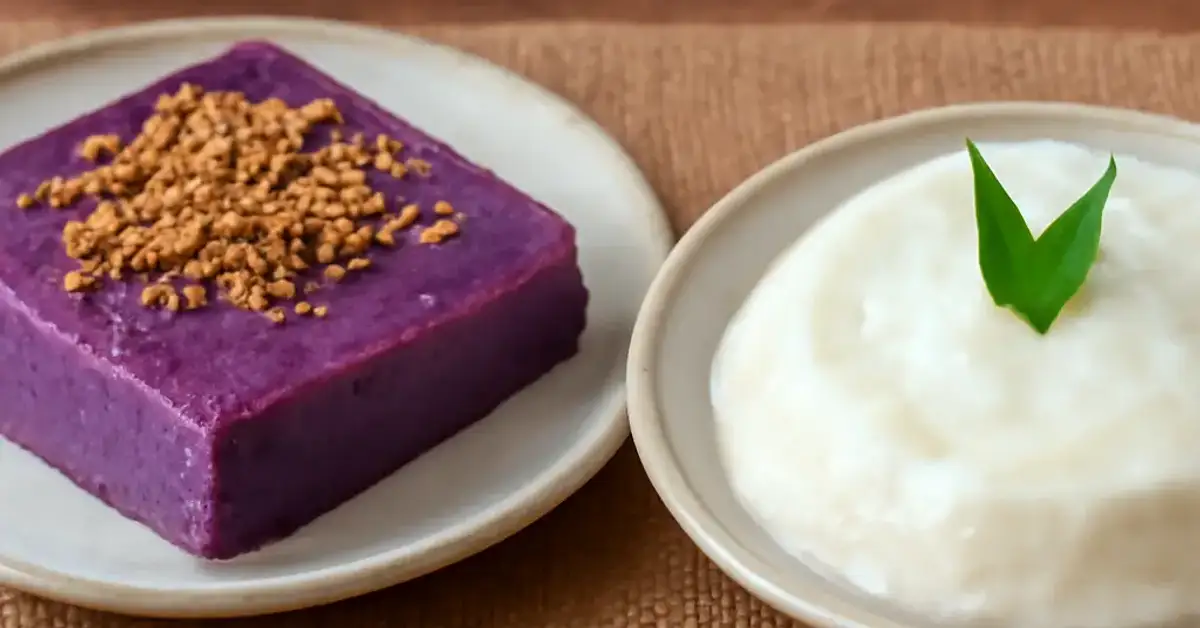
What Is the Pampanga Halayang Ube and Tibok-Tibok Combo?
I still remember the first time I tasted this legendary pair. I was sitting at a small table in a Kapampangan eatery near Angeles City, and the server placed two small bowls side by side—one deep violet and glossy, the other pure white and jiggly. I took a spoonful of each, and in that moment, I understood why people travel miles for this dessert combination.
The Pampanga Halayang Ube and Tibok-Tibok Combo is exactly what it sounds like: a serving of Halayang Ube (ube jam) paired with Tibok-Tibok (carabao milk pudding). It’s not a fusion or a mix; rather, the two are served together so you can enjoy each bite separately or combine them on your spoon. The contrast between the earthy, sweet ube and the clean, milky notes of the pudding is simply unforgettable.
This pairing has become a signature of authentic Pampanga delicacies and is often found in pasalubong shops, local bakeries, and restaurant dessert menus across the province. Whether served during town fiestas or as a daily Filipino dessert pair, it represents the artistry of Kapampangan cooks who have perfected the balance of sweetness, texture, and tradition. For a related guide, see Pampanga Chicharon: Crispy Pork Rind Delicacies with a Kapampangan Twist.
Why Are Halayang Ube and Tibok-Tibok Considered Iconic Kapampangan Desserts?
Pampanga is known as the culinary capital of the Philippines for a reason. The province has a deep-rooted food culture that values precision, quality ingredients, and generations-old techniques. Kapampangan desserts like Halayang Ube and Tibok-Tibok are not afterthoughts—they are centerpieces of celebration and pride.
Halayang Ube: A Purple Treasure
Halayang Ube recipe traditions in Pampanga date back to the Spanish colonial period, when cooks learned to preserve fruit and root crops in sugar. Ube, or purple yam, grew abundantly in the region, and turning it into a thick, velvety jam became a way to extend its shelf life while creating a luxurious treat. Every Kapampangan grandmother has her own version: some add butter for shine, others use coconut milk for depth, but all agree that the slow stirring process is non-negotiable.
Tibok-Tibok: The Heart of Carabao Milk
Tibok-Tibok recipe traditions are equally revered. The name itself mimics the sound of a beating heart—tibok—which refers to the gentle, trembling motion of the finished pudding. Made primarily from fresh carabao milk, cornstarch, and sugar, Tibok-Tibok is a delicate dessert that relies on the quality of the milk. Carabao milk has a higher fat content than cow’s milk, giving Tibok-Tibok its signature richness and creamy mouthfeel. It’s often topped with latik (coconut caramel) or grated cheese for a salty-sweet contrast.
Together, these two desserts represent the pinnacle of traditional Kapampangan sweets. They are not flashy or trendy—they are honest, time-honored recipes that demand respect for the ingredients and the process.
How Is Traditional Halayang Ube Made in Pampanga?
Making authentic Halayang Ube is a labor of love. I watched a third-generation cook in Guagua prepare it once, and what struck me most was how little she relied on measuring cups. Everything was by feel—the consistency of the grated ube, the sweetness of the sugar, the sheen of the butter.
Here is how traditional Kapampangan cooks do it:
- Selecting the ube: Only deep purple, firm ube roots are used. Pale or fibrous yams are rejected.
- Steaming and grating: The ube is steamed whole, then peeled and finely grated. Some cooks pound it in a mortar for a smoother texture.
- Cooking the jam: The grated ube is combined with condensed milk, evaporated milk, butter, and sugar in a heavy-bottomed pan. The mixture is stirred constantly over low heat for 45 minutes to over an hour until it thickens and releases from the sides of the pan.
- Finishing touches: A touch of ube extract or ube powder deepens the color, and a final pat of butter adds gloss before the jam is transferred to jars.
The result is a spreadable, velvety jam that tastes intensely of ube—earthy, slightly nutty, and sweet without being cloying. This is the heart of the Pampanga Halayang Ube and Tibok-Tibok Combo.
What Ingredients Are Used in Authentic Tibok-Tibok?
Tibok-Tibok is deceptively simple. Only five ingredients are needed, but each one must be of the highest quality.
| Ingredient | Role in the Dessert | Substitution Notes |
|---|---|---|
| Fresh carabao milk | Base flavor, richness, creamy texture | Whole cow’s milk can be used, but the result will be thinner |
| Cornstarch | Thickening agent that gives the pudding its jiggle | Rice flour or arrowroot powder (less stable) |
| Sugar (white or brown) | Sweetener, affects color if using brown sugar | Muscovado for a deeper caramel note |
| Vanilla or pandan extract | Aroma and flavor depth | Optional but traditional in some versions |
| Salt | Balances sweetness, enhances milk flavor | Fine sea salt preferred |
The process is straightforward: combine milk, sugar, and salt in a pot and bring to a gentle simmer. Dissolve cornstarch in a small amount of cold milk, then pour it into the hot mixture while stirring continuously. Cook until it thickens into a soft, pudding-like consistency, then pour into a greased dish to set. Top with latik or toasted grated coconut and serve warm or chilled.
The best Tibok-Tibok should quiver when you shake the plate—hence the name. Kapampangan food culture treasures this dessert for its simplicity and the way it lets the carabao milk shine.
Why Do Halayang Ube and Tibok-Tibok Pair So Well Together?
The pairing works on multiple levels: flavor, texture, temperature, and even color.
Flavor contrast: Halayang Ube is rich, sweet, and earthy, while Tibok-Tibok is mild, milky, and subtly sweet. The ube’s intensity is tempered by the pudding’s gentleness, creating a balance that keeps you coming back for more.
Texture play: The jam is dense and spreadable; the pudding is soft and jiggly. When you scoop both onto one spoon, you get a creamy, melt-in-your-mouth experience with just enough body to feel satisfying.
Visual appeal: The vibrant purple against the pristine white is stunning on any dessert plate. It’s no wonder this combo is a favorite for Filipino celebration desserts and social media food photography.
For dessert lovers, trying the Pampanga Halayang Ube and Tibok-Tibok Combo is like discovering a perfect duet—two distinct voices that sound even better together.
What Makes This Dessert Combination Popular During Celebrations?
In Pampanga, no town fiesta is complete without a dessert table laden with authentic Pampanga delicacies. The Pampanga Halayang Ube and Tibok-Tibok Combo appears at baptisms, weddings, Christmas gatherings, and especially during the annual Pampanga Food Festival.
Part of its appeal is that both desserts can be made in large batches and served either cold or at room temperature. They also keep well for several days, making them ideal for catering. But beyond logistics, there is a cultural reason: these desserts represent the warmth of Kapampangan hospitality. Offering a guest the best ube jam Philippines has to offer, paired with a silky carabao milk dessert, is a gesture of generosity and pride.
As I traveled across Pampanga sampling different versions, I noticed that each town has a slight variation. In San Fernando, the Halayang Ube is thicker and darker; in Mexico, the Tibok-Tibok is lighter, almost like a cloud. This local diversity adds to the excitement of exploring the Pampanga food heritage.
What Is the History of Halayang Ube in Kapampangan Cuisine?
The story of Halayang Ube begins with the Spanish introduction of preservation techniques using sugar. The native ube, already a staple root crop in pre-colonial Philippines, was transformed into a jam that could last through the dry season. Kapampangan cooks, known for their refined palates, elevated this simple preserve into a delicacy by adding butter, condensed milk, and meticulous slow cooking.
By the early 20th century, Halayang Ube had become a symbol of Kapampangan culinary sophistication. It was served to visiting dignitaries and became a prized pasalubong—a gift brought home from travels. Today, it remains one of the most beloved traditional Kapampangan sweets and is often the first thing tourists buy when visiting Pampanga. For a related guide, see Pampanga Tamales: Wrapped Rice Delicacies for Festive Occasions.
How Did Tibok-Tibok Become a Pampanga Specialty?
Tibok-Tibok has equally deep roots. Carabao milk has been a staple in Kapampangan households for centuries, used in everything from cheese to candies. The pudding likely originated as a way to use up excess milk, thickened with native starches like cornstarch or arrowroot.
The name came from the way the pudding trembles when you touch the plate—like a heartbeat. Kapampangan cooks took pride in achieving the perfect wobble, which indicated the right ratio of milk to thickener. Over time, Tibok-Tibok became a specialty of towns like Candaba and Arayat, where carabaos graze on rich pastures. It is now counted among the most iconic authentic Pampanga delicacies and is protected as part of the province’s intangible cultural heritage.
What Do Halayang Ube and Tibok-Tibok Taste Like?
Let me paint you a picture with flavors. Halayang Ube tastes like the essence of purple yam concentrated into a silky, buttery jam. It has a natural earthiness—not at all artificial—with notes of vanilla and a gentle sweetness that builds slowly. Each spoonful coats your tongue and lingers.
Tibok-Tibok is completely different. It tastes like fresh milk concentrated into a soft pudding, with a clean finish and a slight hint of vanilla or pandan. The top layer of latik adds a caramelized crunch and a touch of saltiness that cuts through the sweetness. When you eat them together, the ube jam takes on a creamier, almost mousse-like texture, while the Tibok-Tibok gains a subtle earthy note. It’s a traditional Kapampangan sweets pairing that dessert connoisseurs dream about.
When Are These Sweet Delicacies Commonly Served?
Although these desserts are available year-round in Pampanga, they shine during specific occasions:
- Fiestas and town celebrations: Every barangay fiesta in Pampanga features a dessert table, and the Halayang Ube and Tibok-Tibok combo is almost guaranteed.
- Christmas and New Year: Families prepare these sweets as part of the Noche Buena and Media Noche spreads.
- Weddings and baptisms: The elegance of the pairing makes it suitable for formal celebrations.
- Pasalubong stops: Travelers buy jars of Halayang Ube and boxes of Tibok-Tibok to bring home to relatives.
- Café menus: Many Kapampangan cafés serve this combo as a featured dessert year-round.
Can Halayang Ube and Tibok-Tibok Be Prepared at Home?
Absolutely. While the traditional methods require patience, both desserts are achievable in a home kitchen. The key is using high-quality ingredients and following the steps closely.
For a Halayang Ube recipe at home, you will need:
- 1 kg ube (purple yam), steamed and grated
- 1 can (300 ml) condensed milk
- 1 can (370 ml) evaporated milk
- ½ cup unsalted butter
- ½ cup white sugar (adjust to taste)
- 1 teaspoon ube extract (optional for color)
Cook everything in a non-stick pan over low heat, stirring constantly, until the mixture thickens and leaves the sides clean. It takes about 45 minutes to an hour.
For a Tibok-Tibok recipe at home:
- 4 cups fresh carabao milk (or whole cow’s milk as a substitute)
- ½ cup cornstarch
- ¾ cup sugar
- 1 teaspoon vanilla extract
- ¼ teaspoon salt
- Latik (coconut caramel) for topping
Mix a portion of the milk with the cornstarch to make a slurry. Heat the remaining milk with sugar and salt, then whisk in the slurry. Cook until thick and glossy, then pour into a greased dish. Refrigerate until set. Top with latik before serving.
Home bakers and home cooks will find that mastering these desserts brings immense satisfaction. They are also excellent projects for culinary students and food bloggers looking to share authentic regional Filipino recipes.
What Are the Best Occasions for Serving This Dessert Pair?
The Pampanga Halayang Ube and Tibok-Tibok Combo is versatile enough for any gathering where you want to impress guests with something uniquely Filipino. Here are some specific occasions where it works beautifully:
- Dinner parties with a Filipino theme: Serve the duo in small glass cups or on a wooden board for a rustic presentation.
- Holiday buffets: The vibrant purple and white add color to any dessert table.
- Potluck gatherings: Both desserts travel well and can be made a day ahead.
- Café or restaurant dessert specials: If you are a restaurant owner or café owner, adding this combo to your menu can attract customers looking for traditional Filipino desserts.
- Food photography and content creation: Food content creators and travel bloggers will find this pairing visually stunning and rich in storytelling potential.
Where Can You Find Authentic Halayang Ube and Tibok-Tibok in Pampanga?
For those planning a food trip to Pampanga, here are trusted places to find the best versions:
- Casa de Lazaro (San Fernando): Known for premium Halayang Ube made from traditional recipes.
- Razon’s of Guagua (multiple branches): Their Halayang Ube is consistently good and widely available.
- Pampanga’s Best (Dau, Mabalacat): A one-stop pasalubong shop with excellent Halayang Ube and Tibok-Tibok.
- Nayong Malinis (San Fernando): Famous for Tibok-Tibok with generous latik topping.
- Local bakeries in Mexico and Arayat: Many small bakeries sell homemade versions that are absolutely authentic.
Tourists visiting Pampanga can easily incorporate dessert stops into their itinerary. The combos are often sold in jars or boxes, making them perfect pasalubong for family and friends.
How Do These Desserts Reflect Kapampangan Culinary Heritage?
Kapampangan cuisine is characterized by its bold flavors, French-inspired techniques, and reverence for fresh, local ingredients. Both Halayang Ube and Tibok-Tibok embody these principles.
The slow cooking process of Halayang Ube mirrors the patience Kapampangan cooks apply to dishes like sisig and bringhe. The use of carabao milk in Tibok-Tibok reflects the agricultural roots of the province, where water buffalo are a familiar sight in rice fields. Heritage desserts Pampanga are not just sweets—they are edible stories of the land and its people.
By preserving and promoting these desserts, cultural food researchers and heritage cuisine advocates are helping future generations understand what makes Pampanga’s food culture so special.
Why Is the Halayang Ube and Tibok-Tibok Combo a Must-Try for Dessert Lovers?
If you call yourself a dessert lover, this is a non-negotiable tasting experience. The Pampanga Halayang Ube and Tibok-Tibok Combo offers something rare: a perfect harmony of two distinct textures and flavors that are deeply rooted in a single region’s tradition. It is not a fusion dessert created for Instagram (though it photographs beautifully); it is a genuine expression of Kapampangan home cooking elevated to an art form.
Food bloggers, pastry chefs, and Philippine cuisine enthusiasts will find endless inspiration in understanding how these two sweets complement each other. For gastronomic tourists and travel bloggers, tasting this combo in its homeland is an essential part of the Pampanga culinary tour. And for Filipino food lovers scattered around the world, recreating this pair at home can be a delicious way to stay connected to heritage.
Useful Resources
For more information on Kapampangan desserts and where to find them, check out these helpful sources:
- Pampanga Culinary Heritage: The Story of Halayang Ube — A deep dive into the history and preparation of authentic ube jam from Pampanga.
- Pepper.ph: Classic Tibok-Tibok Recipe — A reliable step-by-step guide for making Tibok-Tibok at home with tips for achieving the perfect wobble.
Frequently Asked Questions About Pampanga Halayang Ube and Tibok-Tibok Combo
What is the Pampanga Halayang Ube and Tibok-Tibok Combo ?
It is a dessert pairing consisting of two iconic Kapampangan sweets: Halayang Ube (purple yam jam) and Tibok-Tibok (carabao milk pudding). They are served side by side so you can enjoy each on its own or combine them in one spoonful.
Why are Halayang Ube and Tibok-Tibok considered iconic Kapampangan desserts ?
Both desserts have deep roots in Pampanga’s food history, using locally sourced ingredients like ube and carabao milk. They represent the province’s culinary excellence and are served during celebrations, pasalubong stops, and everyday meals.
How is traditional Halayang Ube made in Pampanga?
Traditional Halayang Ube is made by steaming and grating fresh purple yam, then cooking it slowly with condensed milk, evaporated milk, butter, and sugar. The mixture is stirred continuously over low heat for about an hour until it thickens into a jam-like consistency.
What ingredients are used in authentic Tibok-Tibok?
Authentic Tibok-Tibok requires fresh carabao milk, cornstarch, sugar, vanilla or pandan extract, and a pinch of salt. It is often topped with latik (coconut caramel) or grated cheese for added flavor and texture.
Why do Halayang Ube and Tibok-Tibok pair so well together?
The pairing works because of contrasting flavors and textures: the sweet, earthy richness of ube jam balances the mild, creamy milk pudding, while the dense jam complements the soft jiggly pudding. The purple and white visual contrast is also stunning.
What makes this dessert combination popular during celebrations?
Both desserts can be made in large batches, kept for several days, and served at room temperature or chilled. They are also traditional offerings during fiestas, weddings, and Christmas celebrations in Pampanga.
What is the history of Halayang Ube in Kapampangan cuisine?
Halayang Ube traces back to the Spanish colonial period when preservation techniques using sugar were applied to native ube. Kapampangan cooks refined the recipe into a buttery, slow-cooked jam that became a symbol of the province’s culinary sophistication.
How did Tibok-Tibok become a Pampanga specialty?
Tibok-Tibok originated as a way to use excess carabao milk, thickened with native starches. The name comes from the wobbling motion of the finished pudding, which cooks perfected as a mark of quality. It became a specialty of towns like Candaba and Arayat.
What do Halayang Ube and Tibok-Tibok taste like?
Halayang Ube tastes intensely of purple yam—earthy, slightly nutty, and sweet—with a buttery, silky texture. Tibok-Tibok tastes like fresh milk concentrated into a soft, delicate pudding, with a clean finish and a hint of vanilla or pandan.
When are these sweet delicacies commonly served?
They are served year-round in Pampanga but are especially popular during town fiestas, Christmas and New Year celebrations, weddings, baptisms, and as everyday desserts in local cafés and restaurants.
Can Halayang Ube and Tibok-Tibok be prepared at home?
Yes, both desserts are achievable at home with the right ingredients. Halayang Ube requires patience for the slow cooking process, while Tibok-Tibok is relatively quick to prepare. Recipes are widely available for home cooks.
What are the best occasions for serving this dessert pair?
This pair is ideal for dinner parties with a Filipino theme, holiday buffets, potlucks, café dessert specials, and any event where you want to introduce guests to authentic Filipino flavors. It also works beautifully for food photography and content creation.
Where can you find authentic Halayang Ube and Tibok-Tibok in Pampanga?
Trusted sources include Casa de Lazaro in San Fernando, Razon’s of Guagua, Pampanga’s Best in Dau, Nayong Malinis in San Fernando, and local bakeries in Mexico and Arayat. Many pasalubong centers also carry both desserts.
How do these desserts reflect Kapampangan culinary heritage?
They reflect the Kapampangan values of patience (slow cooking), quality ingredients (fresh ube and carabao milk), and reverence for tradition. Both desserts have been passed down through generations and remain central to the province’s food identity.
Why is the Halayang Ube and Tibok-Tibok combo a must-try for dessert lovers?
This combo offers a unique flavor and texture experience that encapsulates the best of Kapampangan dessert-making. It is a genuine, traditional pairing that you cannot find elsewhere, making it a must-try for anyone passionate about Filipino sweets.
What is the best way to eat this dessert combo?
Many prefer to take a spoonful of Halayang Ube and a separate spoonful of Tibok-Tibok together, allowing both flavors to mingle in the mouth. Others dip a piece of the pudding into the jam. Either way, the contrast is delightful.
Can I use cow’s milk instead of carabao milk for Tibok-Tibok?
Yes, whole cow’s milk can be used as a substitute, but the texture will be thinner and the flavor less rich. For the most authentic result, fresh carabao milk is strongly recommended.
How long do Halayang Ube and Tibok-Tibok last in the refrigerator?
Halayang Ube can last for up to 2 weeks when stored in an airtight container in the refrigerator. Tibok-Tibok is best consumed within 3 to 4 days, as it tends to weep water and lose its texture over time.
Are there vegan versions of these desserts?
Vegan versions exist using plant-based milk and vegan butter for Halayang Ube, and coconut milk or almond milk with agar-agar for Tibok-Tibok. However, these variations will not taste exactly like the traditional versions.
What other Kapampangan desserts pair well with this combo?
Other traditional Kapampangan sweets like puto seko, maja blanca, and sanikulas (rice cookies) also complement Halayang Ube and Tibok-Tibok well. Some cafés serve all three together for a dessert sampler.

Jin Grey is a Filipino Senior SEO Consultant and AI-First SEO Strategist who helps international brands grow through modern search strategies. She specializes in technical SEO, semantic keyword research, and AI-ready content creation. She is also the owner of JinGrey.com.
As a digital nomad, she loves exploring the world and trying different cuisines during her free time.