
Pampanga Longganisa Key Takeaways
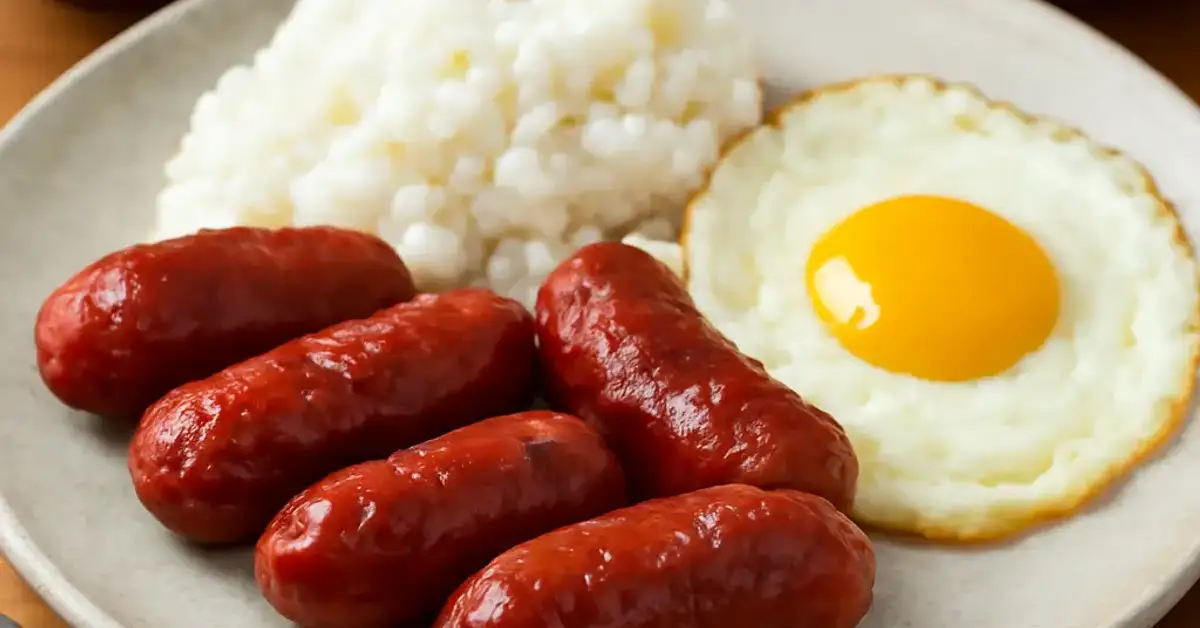
Pampanga Longganisa is a garlicky, slightly sweet Filipino sausage that defines Kapampangan breakfast culture.
- Pampanga Longganisa stands out for its high garlic content and coarse texture — no annatto, no heavy vinegar brine like Vigan or Lucban versions.
- Authentic Kapampangan longganisa relies on simple ingredients: pork belly or shoulder, whole garlic cloves, brown sugar, sea salt, and a touch of curing salt for preservation.
- Cooking is easy: pan-fry with a little water until the liquid evaporates, then continue frying until golden and slightly caramelized — no oil needed.
What Readers Should Know About Pampanga Longganisa
I’ll never forget the first time I bit into Pampanga Longganisa. I was sitting at a small turo-turo in Angeles City, across from an elderly Kapampangan woman who insisted on spooning extra garlic onto my plate. “The secret,” she said with a knowing smile, “is that we put garlic even inside the garlic.” I laughed, but after one taste I understood exactly what she meant. The sausage was juicy, coarsely ground, and so gloriously garlicky that it lingered on my breath — and in my memory — for hours. For a related guide, see Pampanga Delicacies Guide: New Twists on Old Favorites in Angeles City.
As a Digital Nomad born and raised in Mindanao, Isulan Sultan Kudarat, now based in Davao City, I’ve made it my mission to discover the best regional dishes the Philippines has to offer. Pampanga Longganisa quickly earned a permanent spot on that list. It’s not just a breakfast food; it’s a celebration of Kapampangan resourcefulness, a heritage preserved in a humble pork casing. For a related guide, see Pampanga Chicharon: Crispy Pork Rind Delicacies with a Kapampangan Twist.
In this guide, I’ll walk you through the history, ingredients, cooking methods, and cultural joys of Pampanga Longganisa — the garlicky breakfast delicacy locals truly love.
What Is Pampanga Longganisa? A Garlicky Filipino Sausage with a Rich Heritage
At its core, Pampanga Longganisa is a type of fresh pork sausage that belongs to the broader family of garlicky Filipino sausage known as longganisa. Unlike linguiça in Spain or chorizo in Latin America, Filipino longganisa has its own distinct personality — and the Kapampangan version is arguably the boldest of them all.
The sausage is made from coarsely ground pork — typically from the belly or shoulder — mixed with a generous amount of minced garlic, brown sugar, sea salt, and a small amount of curing salt (saltpeter) for preservation and that signature pinkish-red hue. The mixture is then stuffed into natural pork casings and formed into small, plump links. Because it is not fermented or dried, Pampanga Longganisa is a “fresh” sausage that must be refrigerated and cooked thoroughly before eating.
What makes it so beloved is the intense garlic punch. Each link releases a fragrant, savory aroma as it sizzles in the pan, making it irresistible even before you take a bite.
How Is Pampanga Longganisa Different from Other Filipino Longganisa Varieties?
The Philippines is home to many regional longganisa styles, each with its own unique seasoning and preparation. Pampanga Longganisa is different from others in several key ways:
- Vigan Longganisa (Ilocos Sur): Smaller, drier, and much tangier due to a high vinegar content in the cure. It also includes a lot of fat, giving it a slightly sour, salty profile with very little sweetness.
- Lucban Longganisa (Quezon): Boldly seasoned with garlic and oregano, giving it a herbal, almost Mediterranean flair. Lucban longganisa is also fermented for a day or two, developing a distinct sour note.
- Pampanga Longganisa: Sweet, garlicky, and coarsely ground. It relies on brown sugar and a relatively high proportion of garlic, with very little to no vinegar in the marinade. The texture is more rustic, with visible pieces of fat and flecks of garlic.
These differences reflect the local terroir: Pampanga’s sweet and garlicky longganisa fits perfectly with the Kapampangan love for balanced, intense flavors — not too sour, not too salty, but always aromatic.
What Ingredients Are Used in Authentic Pampanga Longganisa?
The beauty of authentic Pampanga Longganisa lies in its ingredient simplicity. There’s nothing exotic or hard to find — just careful ratios of a few key components:
- Pork (Belly or Shoulder): Provides the ideal ratio of lean meat to fat — roughly 70:30. The fat keeps the sausage moist during cooking.
- Garlic (lots of it): Minced or crushed, garlic is the star performer. A typical recipe uses 25-30% garlic by weight relative to the meat — far more than other longganisa styles.
- Brown Sugar: Adds sweetness and helps with caramelization during pan-frying. It also balances the sharpness of the garlic and salt.
- Sea Salt and Curing Salt (Prague powder #1 or saltpeter): Salt seasons the meat, while the curing salt preserves the color and prevents spoilage. Use sparingly — curing salt is potent.
- Pork Casings: Natural casings give the sausage its characteristic snap. If unavailable, you can shape them into “skinless” patties.
Some modern home cooks add a splash of soy sauce or a pinch of black pepper, but purists insist on keeping the recipe minimal. The goal is to let the pork and garlic shine.
Why Is Pampanga Longganisa Known for Its Garlicky Flavor?
If you’ve ever tried Pampanga Longganisa, you probably noticed that the garlic isn’t just a background note — it’s the main melody. The reason is both cultural and practical.
Kapampangan cuisine has a long-standing affinity for garlic. It is used generously in many regional classics — from bringhe (a Kapampangan rice dish) to morcon (stuffed beef roll). In the case of longganisa, the raw minced garlic releases its pungent oils as it mixes with the pork fat, infusing every bite. During cooking, the garlic softens and sweetens, but its aromatic intensity remains.
Additionally, before refrigeration became widespread, garlic acted as a natural preservative. Its antimicrobial properties helped extend the shelf life of fresh sausages in Pampanga’s tropical climate. So what started as a necessity evolved into a defining flavor profile.
How Is Traditional Kapampangan Longganisa Made?
Making traditional Kapampangan longganisa at home is a rewarding process that connects you directly to Kapampangan culinary heritage. Here’s a simplified step-by-step look:
Step 1: Prepare the Meat
Choose well-chilled pork belly or shoulder. Cut it into chunks and grind it coarsely using a meat grinder with a 10mm or 12mm die. If you don’t have a grinder, you can chop it finely by hand — but the texture should remain chunky, not pasty.
Step 2: Mix the Seasonings
In a large bowl, combine the ground pork, minced garlic, brown sugar, sea salt, and curing salt. Mix thoroughly with your hands until everything is evenly distributed. The mixture should feel sticky and smell intensely garlicky.
Step 3: Stuff the Casings
Soak natural pork casings in warm water for 30 minutes. Rinse them inside under running water. Using a sausage stuffer or a piping bag, carefully fill the casings with the pork mixture. Do not overstuff — leave some slack for twisting.
Step 4: Link and Rest
Twist the filled casing into 3-4 inch links. Refrigerate the links overnight (or at least 4 hours) to let the flavors meld and the curing salt work. This resting step is crucial for authentic taste.
Step 5: Cook or Freeze
Pampanga Longganisa can be cooked immediately after resting or frozen for up to 3 months. To freeze, wrap each link individually in plastic wrap, then place inside a freezer bag.
What Does Pampanga Longganisa Taste Like?
The flavor of Pampanga Longganisa is a study in contrasts. The first thing you notice is the hit of garlic — fragrant, slightly pungent, but never harsh. Right behind it comes a gentle sweetness from the brown sugar, cutting through the savory pork fat. The salt is present but balanced, and there’s a subtle tang from the curing salt that keeps everything bright.
Texture-wise, the sausage is juicy but not greasy. The coarse grind means you can still feel the distinct texture of the meat. When pan-fried until the casing blisters and the edges caramelize, each link delivers a crunchy-tender experience that pairs perfectly with a side of steaming white rice.
Many locals describe the taste as “unapologetically garlicky” — it’s not a sausage for shy palates. But for those who love bold breakfasts, it’s pure comfort.
Why Is Pampanga Longganisa a Favorite Breakfast Delicacy Among Locals?
Walk into any Kapampangan household on a Sunday morning, and you’ll likely find Pampanga Longganisa sizzling on the stove. It’s fast, forgiving, and incredibly satisfying. The reasons for its breakfast reign are simple:
- Ease of cooking: It goes from pan to plate in about 15 minutes.
- Affordable indulgence: A small pack serves a family without breaking the bank.
- Pairing versatility: It goes with fried rice, sunny-side-up eggs, fresh tomatoes, pickled papaya (atchara), and even garlic vinegar dip — all staple breakfast items.
- Cultural comfort: For locals, the aroma of Pampanga Longganisa triggers childhood memories of weekends and family gatherings.
In Pampanga, longganisa isn’t just breakfast — it’s an edible declaration of home.
What Is the History of Pampanga Longganisa?
Longganisa in the Philippines traces its roots to Spanish colonialism, when the Spaniards introduced the art of sausage-making. Local cooks in Pampanga adapted the technique to their own palate — swapping out paprika and garlic-sausage traditions for a flavor profile that leaned heavily on native garlic and muscovado sugar.
Pampanga, often called the culinary capital of the Philippines, has a long history of cross-cultural exchange due to its proximity to Manila and early trade routes. The kapampangan culinary tradition prized bold, layered flavors. Over time, the sausage evolved into its current form: more garlic, coarser texture, and a sweeter finish compared to other regional longganisa variants.
Today, Pampanga Longganisa is recognized by the Department of Trade and Industry as part of the One Town, One Product (OTOP) program, further cementing its status as a heritage product worth preserving.
How Do You Cook Pampanga Longganisa Properly?
Cooking Pampanga Longganisa is deceptively simple, but a few techniques yield the best result. Here’s a reliable method:
Pan-Fry with Water First
Place the frozen or thawed links in a cold frying pan. Add about 1/4 cup of water (enough to cover the bottom) and turn on the heat to medium. Let the water simmer until it evaporates — this step gently cooks the inside without burning the casing.
Caramelize in its Own Fat
Once the water is gone, the sausages will release their own fat. Continue frying them in this rendered fat, turning frequently, until all sides are golden brown and slightly caramelized — about 3-4 minutes more.
Optional: Add a Splash of Vinegar
For a classic Kapampangan finishing touch, drizzle a teaspoon of cane vinegar into the pan just before removing the sausages. Let it sizzle and coat the links for a subtle tang.
Avoid These Common Mistakes
- Do not prick the casing: Unlike other sausages, you want the juices to stay inside. Only prick them if the casings puff up too much during cooking.
- Do not use oil: The sausages release plenty of fat on their own. Adding oil makes them greasy.
- Do not overcook: Overcooking dries out the meat and makes the garlic bitter.
What Are the Best Side Dishes to Serve with Pampanga Longganisa?
No Pampanga Longganisa breakfast is complete without a plate of complementary sides. Here are five classic pairings that locals swear by:
- Sinangag (Garlic Fried Rice): Leftover rice stir-fried with more garlic — because you can never have too much.
- Itlog na Maalat na Itik (Salted Duck Egg): Its briny creaminess cuts through the sausage’s sweetness.
- Atchara (Pickled Green Papaya): The tangy crunch provides a refreshing contrast to the rich meat.
- Fresh Sliced Tomatoes and Cucumber: A simple salad with a squeeze of calamansi cleanses the palate.
- Spiced Vinegar Dipping Sauce: A saucer of sinamak (vinegar steeped with garlic, chili, and peppercorns) is practically mandatory.
Together, these sides transform a simple sausage into a complete breakfast experience worthy of a weekend feast.
How Does Pampanga Longganisa Compare to Vigan and Lucban Longganisa?
Each variety has its own passionate fan base. Here’s a quick comparison in table form:
| Variety | Flavor Profile | Key Ingredients | Texture |
|---|---|---|---|
| Pampanga Longganisa | Garlicky, sweet, mildly tangy | Pork, garlic, brown sugar, curing salt | Coarse, juicy |
| Vigan Longganisa | Sour, salty, less sweet | Pork, vinegar, garlic, achuete | Fine, dense |
| Lucban Longganisa | Savory, herbaceous, sour | Pork, garlic, oregano, vinegar | Coarse, slightly dry |
If you prefer a bold garlic sweetness, Pampanga Longganisa is your best bet. If sour notes appeal to you, go for Vigan. And if you want something almost Mediterranean, Lucban wins.
Where Can You Buy Authentic Pampanga Longganisa?
Finding authentic Pampanga Longganisa used to require a trip to Pampanga, but these days it’s much easier. Here are reliable sources:
- Pampanga’s Public Markets: The best pandesal and longganisa joints are often stalls at Mexico Public Market or Angeles City’s Dau Market. Vendors sell it fresh daily.
- Kapampangan Online Stores: Brands like Pampanga’s Best and Razon’s have online ordering. They ship frozen longganisa nationwide.
- Local Supermarkets (select branches): Some SM Supermarkets and Robinsons Supermarkets in Metro Manila and Davao carry frozen packs under local Pampanga brands.
- Direct from Facebook Groups: Many Kapampangan home-based business sell longganisa via Facebook pages with delivery options.
When buying, look for pale pink-colored sausages with visible garlic chunks. Avoid anything that looks unnaturally red or slimy.
Can Pampanga Longganisa Be Homemade?
Absolutely — and many Kapampangan families make their own homemade longganisa for fiestas and holidays. The recipe is forgiving, and the results are often superior to store-bought versions because you control the quality of pork and the amount of garlic.
For a reliable Filipino sausage recipe at home, you can find detailed tutorials on the website of Ang Sarap or watch step-by-step videos on the YouTube channel Panlasang Pinoy. Both offer variations that stay true to tradition while being accessible for beginners.
Why Is Pampanga Longganisa an Important Part of Kapampangan Food Culture?
Kapampangan food culture is built on pride, resourcefulness, and a deep reverence for communal meals. Pampanga Longganisa embodies all three. It’s a dish that requires patience — grinding, mixing, stuffing — and rewards those who take the time with a flavor that cannot be rushed.
It appears in everyday breakfasts as a practical protein, but it also shines during town fiestas served alongside lechon and bringhe. For Kapampangans, the sausage represents their ability to transform simple local ingredients — pork, garlic, sugar — into something world-class.
This is why it remains a cornerstone of Pampanga culinary heritage and why locals treat it with the same respect as their more elaborate festival dishes.
What Makes Pampanga Longganisa a Must-Try Delicacy for Visitors?
If you are planning a food trip to Pampanga (or even just browsing the frozen section of a Filipino grocery), Pampanga Longganisa should be at the top of your list. Here’s why:
- Unique flavor: No other regional longganisa delivers this level of garlicky sweetness.
- Versatility: It works for breakfast, lunch (sliced into fried rice), or even as a pulutan with ice-cold beer.
- Cultural story: Every link reveals centuries of Kapampangan ingenuity.
- Easy to enjoy: No complicated prep — just pan-fry and eat.
For tourists, stopping at a local carinderia for a plate of longganisa, sinangag, and itlog (the classic “longsilog”) is a rite of passage. It’s affordable, filling, and tells you more about the region’s soul than any museum exhibit.
Useful Resources
For those who want to dive deeper into making or appreciating Pampanga Longganisa, here are two excellent starting points:
- Ang Sarap — Homemade Longganisa Recipe: Ang Sarap’s Step-by-Step Longganisa Guide — This detailed recipe covers ingredient selection, curing tips, and stuffing techniques for beginners and experienced cooks alike.
- Panlasang Pinoy YouTube Channel: Panlasang Pinoy’s Filipino Sausage Video Tutorials — Visual learners will appreciate the clear demonstrations of grinding, mixing, and cooking authentic Kapampangan-style longganisa.
Frequently Asked Questions About Pampanga Longganisa
What is Pampanga Longganisa ?
Pampanga Longganisa is a fresh Filipino pork sausage from Pampanga province, known for its coarse texture, strong garlic flavor, and mildly sweet finish. It is typically pan-fried and served for breakfast.
How is Pampanga Longganisa different from Vigan longganisa?
Pampanga Longganisa is sweeter and more garlicky, with minimal vinegar, while Vigan longganisa is tangier, drier, and uses achuete for color. The Kapampangan version is also coarser in texture.
What does Pampanga Longganisa taste like?
It tastes intensely garlicky, savory, and mildly sweet, with a juicy, coarse texture. The flavor is bold but balanced, with no single element overpowering the others.
Is Pampanga Longganisa spicy?
No, traditional Pampanga Longganisa is not spicy. Its flavor comes from garlic, sugar, and salt, not chili. Some modern variants add chili, but authentic versions remain mild.
How many calories does Pampanga Longganisa have?
One link (about 50g) of Pampanga Longganisa contains approximately 120-150 calories, mostly from pork fat and sugar. Exact counts vary by recipe.
Can I cook Pampanga Longganisa without oil?
Yes. Start with a little water in the pan, then let the sausages cook in their rendered fat. Adding oil is unnecessary and can make them too greasy.
Should I boil Pampanga Longganisa before frying?
Boiling is not recommended because it leaches flavor and fat. Instead, use the water-start method: add water to the cold pan, cook until it evaporates, then fry in the rendered fat.
Why does my Pampanga Longganisa turn dry?
Overcooking is the usual culprit. Cook just until the water evaporates and the casings caramelize — about 8-10 minutes total. Also, avoid using too much lean meat; fat keeps it moist.
What is the best vinegar to dip Pampanga Longganisa in?
Cane vinegar (sukang iloko) or coconut vinegar (sukang niyog) with crushed garlic, chili, and a little salt is the classic Kapampangan dipping sauce.
Can I make Pampanga Longganisa without curing salt?
You can, but the sausage will be grayish-brown instead of pinkish-red, and its shelf life will be shorter. Curing salt is safe when used in the recommended amount (about 1/4 teaspoon per kilo of meat).
How long does homemade Pampanga Longganisa last in the fridge?
Uncooked homemade Pampanga Longganisa can be refrigerated for up to 5 days if made with curing salt. Without curing salt, use within 2 days. Frozen, it lasts up to 3 months.
What rice dish pairs best with Pampanga Longganisa ?
Garlic fried rice (sinangag) is the classic companion. The extra garlic amplifies the yellow sausage’s flavor, and the firm grains absorb its savory fat.
Is Pampanga Longganisa healthy?
Like most sausages, it is high in fat and sodium. Enjoy it in moderation as part of a balanced breakfast with vegetables and eggs. It is not a health food, but occasional indulgence is fine.
Can I use chicken or beef instead of pork?
Yes, some home cooks use ground chicken thigh or lean beef. The flavor will be less rich, and you may need to add more fat (like butter) to keep the texture moist.
Where can I buy Pampanga Longganisa online?
Brands like Pampanga’s Best, Razon’s, and various Kapampangan sellers on Shopee and Lazada offer frozen delivery nationwide. Facebook Marketplace also has many small producers.
What is longsilog?
Longsilog is a popular Filipino breakfast combo: longganisa, sinangag (garlic fried rice), and itlog (egg). Pampanga Longsilog uses Pampanga Longganisa as the sausage.
How do I reheat frozen Pampanga Longganisa ?
Do not microwave, as it makes the casing rubbery. Thaw in the fridge overnight, then cook using the water-start method. Alternatively, cook from frozen by increasing the water-cooking phase by a few minutes.
What is the difference between skinless longganisa and Pampanga Longganisa ?
Skinless longganisa is formed without casings, often shaped into cylinders or patties. While it can be made with the same seasoning, true Pampanga Longganisa is always stuffed into natural casings for better flavor and texture.
Why is Pampanga called the culinary capital of the Philippines?
Pampanga is celebrated for its rich, bold culinary traditions, including sisig, kare-kare, bringhe, and Pampanga Longganisa. Its history of trade and cultural exchange created a sophisticated food culture that influences the whole country.
Can tourists visit Pampanga to learn how to make longganisa?
Yes. Several culinary schools and tour operators in Angeles City and Mexico, Pampanga offer half-day workshops on longganisa-making. The Pampanga Food Crawl group on Facebook also organizes such activities.

Jin Grey is a Filipino Senior SEO Consultant and AI-First SEO Strategist who helps international brands grow through modern search strategies. She specializes in technical SEO, semantic keyword research, and AI-ready content creation. She is also the owner of JinGrey.com.
As a digital nomad, she loves exploring the world and trying different cuisines during her free time.